
Cuvier's beaked whale
Ziphius cavirostris
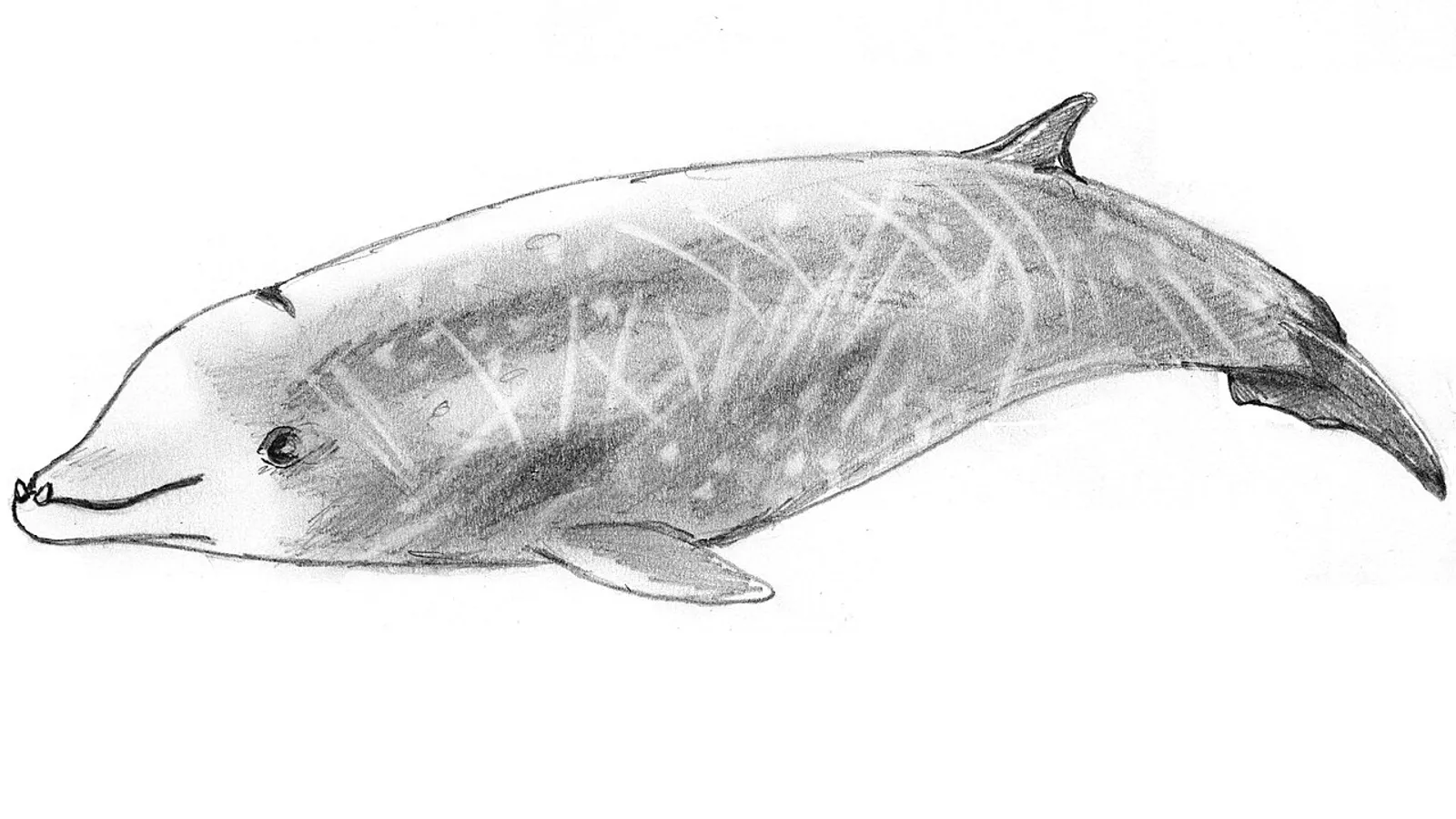
— Where the name comes from
Ziphius comes from the Greek xíphos, “sword”, for the pointed snout; cavirostris is Latin, “hollow-snouted”, for a depression in the skull in front of the blowhole. The English name, Cuvier’s beaked whale, recalls Georges Cuvier, who in 1823 described the species from a fossil skull found in Provence — and took it, as many did then, for an extinct animal.
— Facts
- Group
- Mammals · Mammalia
- Order
- Cetaceans
- Habitat
- Deep sea beyond a thousand metres, submarine canyons and slopes
- Range
- Every ocean but the polar seas; present in the Mediterranean
- Size
- 5.5–7 m, 2–3 tonnes
- Diet
- Carnivore — deep-water squid, abyssal fish
- Lifespan
- About 40 years
— Characteristics
- 01
It holds the absolute diving records among mammals: 2,992 metres and 3 hours 42 minutes.
- 02
The males have only two teeth, which emerge from the tip of the lower jaw.
- 03
It spends so little time at the surface that it is rarely seen, common though it is everywhere.
— What sets it apart
It is the most extreme breath-hold diver on the planet and also the species worst hit by military sonar. Naval exercises with mid-frequency sonar have been linked to mass strandings of beaked whales, with dead animals showing injuries consistent with decompression sickness — the divers’ bends. The idea is that the noise makes them break off a planned ascent, or drives them to the surface all at once. An animal that goes to three thousand metres unharmed, killed by a sound.
