
Castor bean tick
Ixodes ricinus
— Where the name comes from
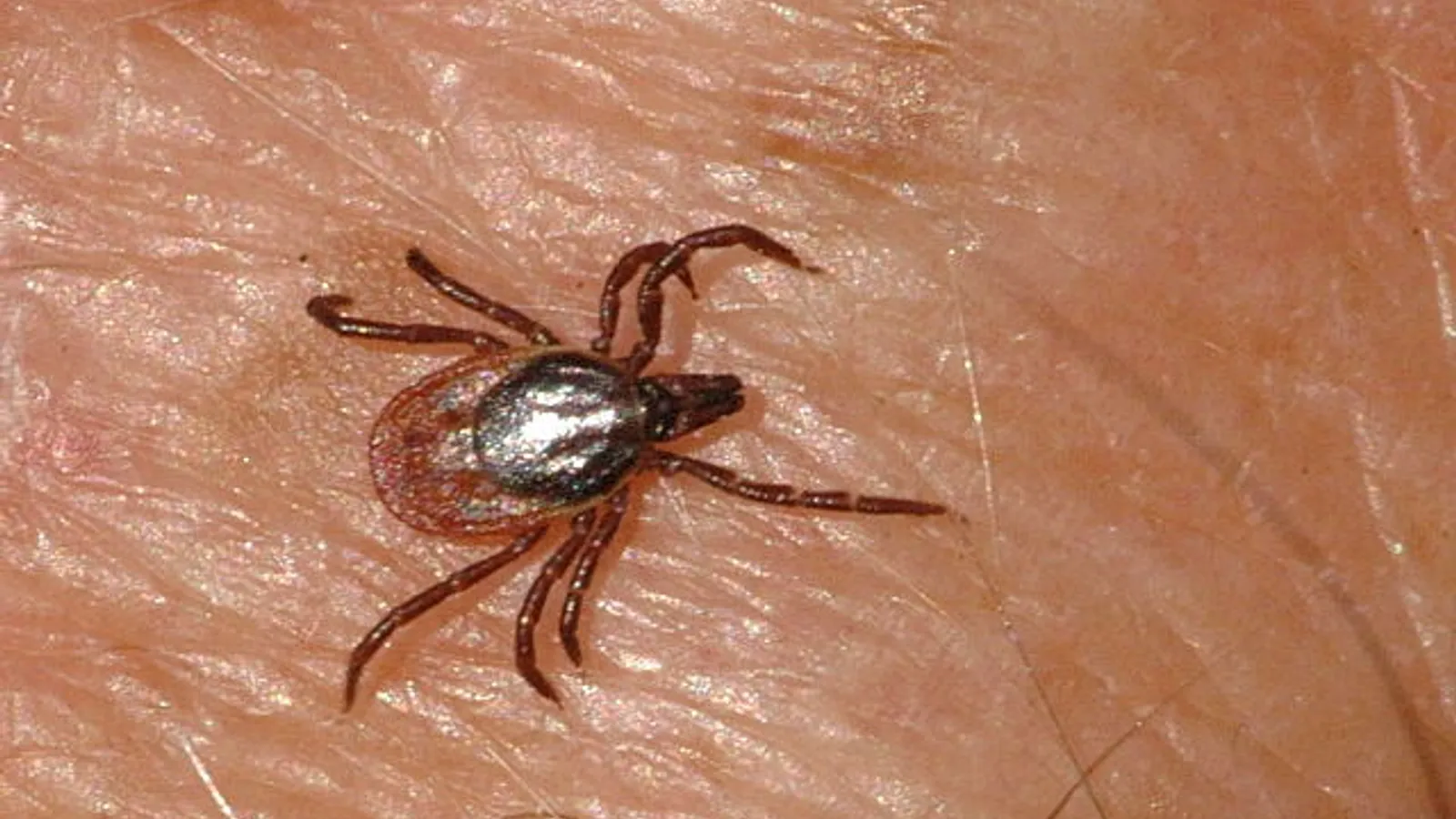
These are two plant names for an animal. Ixodes comes from the Greek ixṓdēs, “sticky”, which derives from ixós, mistletoe: the tick attaches and does not let go, like the birdlime made from mistletoe berries. Ricinus is the castor-oil plant, because a tick swollen with blood looks strikingly like one of its seeds. Whoever named it looked not at the animal but at two things in the plant world that recalled what it does and what it becomes.
— Facts
- Group
- Arachnids · Arachnida
- Order
- Ticks
- Habitat
- Undergrowth, tall grass, path edges up to 1,500 metres
- Range
- Europe and western Asia
- Size
- 2–4 mm unfed, up to 12 mm engorged
- Diet
- The blood of mammals, birds and reptiles
- Lifespan
- 2–3 years, nearly all of it waiting
— Characteristics
- 01
It waits on the tip of a grass blade with its front legs outstretched.
- 02
It finds a host by carbon dioxide, warmth and sweat.
- 03
It needs three meals in its whole life, one per stage.
— What sets it apart
It spends almost its entire existence waiting. It climbs a blade of grass, extends its first pair of legs — which carry an organ sensing carbon dioxide, ammonia, heat and vibration — and stays there for weeks or months until somebody passes. It neither jumps nor flies: it simply grips. The meal lasts days, during which it cements its mouthparts into the skin and injects anaesthetic saliva so the host does not notice; and it is in that saliva that the bacteria of Lyme disease and the encephalitis virus travel. Removing it early and whole, with tweezers and without squeezing, is what reduces the risk.
