
Scabies mite
Sarcoptes scabiei
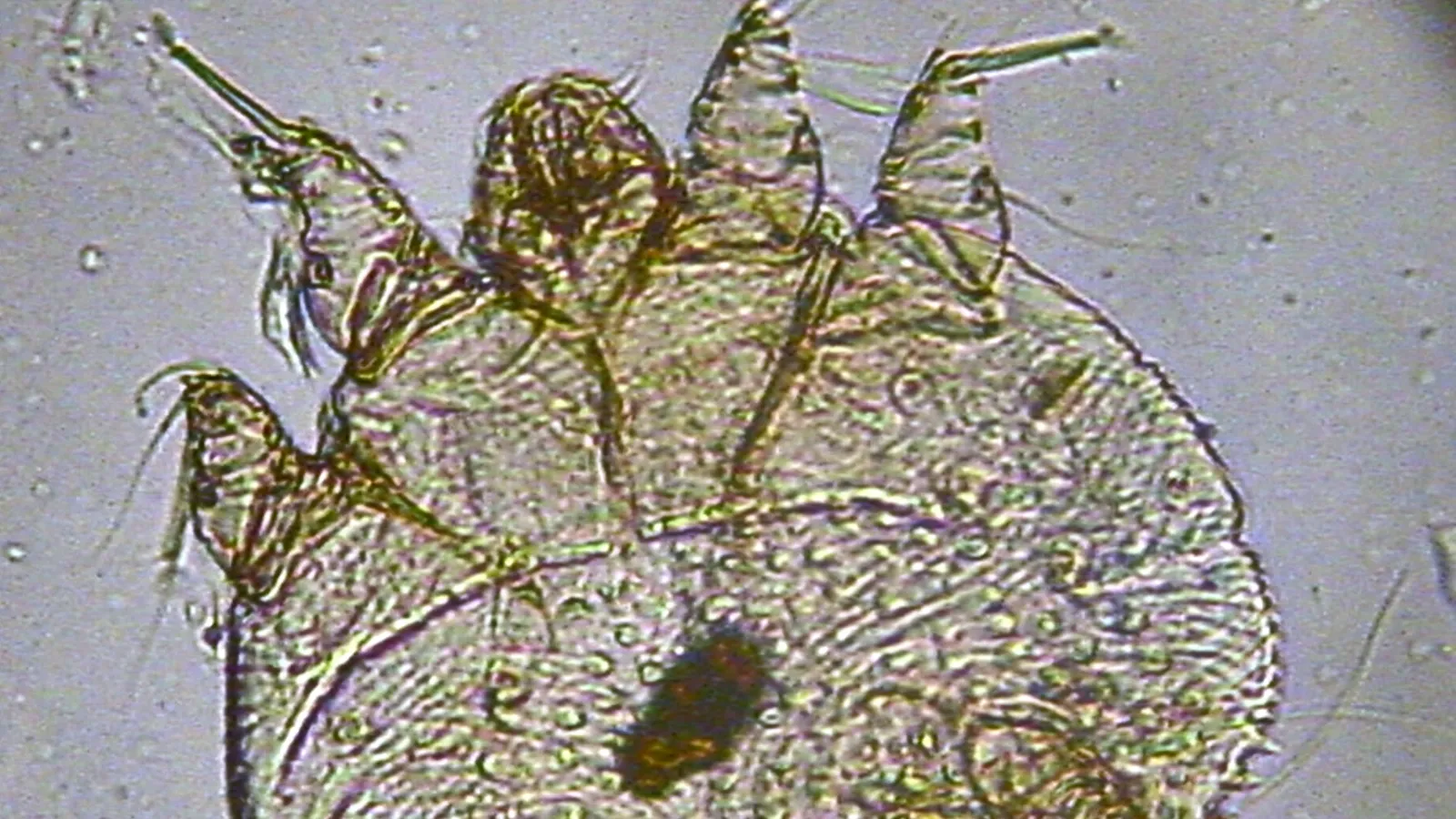
— Where the name comes from
Sarcoptes is “flesh-cutter”, from sárx, sarkós, and kóptō: the female digs a tunnel through the surface layer of the skin and advances along it eating. Scabiei comes from scabere, to scratch — the same root as the English scabies and the Italian scabbia. The name describes cause and effect in two words: the one who digs, and the scratching that follows.
— Facts
- Group
- Arachnids · Arachnida
- Order
- Sarcoptiform mites
- Habitat
- The horny layer of human skin, in excavated tunnels
- Range
- Worldwide
- Size
- 0.2–0.4 mm
- Diet
- Skin cells and fluids
- Lifespan
- 4–6 weeks on the host
— Characteristics
- 01
It is invisible to the naked eye: only the tunnel it leaves can be seen.
- 02
The female digs up to 2 mm a day, laying as she goes.
- 03
The itch is an allergic reaction, and begins weeks after infection.
— What sets it apart
The itching is caused not by the mite but by us. On a first infestation the animal digs undisturbed for four to six weeks without the patient feeling anything, then the immune system recognises its proteins and its faeces and mounts an allergic reaction: from that moment the itch is unbearable, and worse at night. On a second infestation the reaction starts within a couple of days. That is why scabies spreads so well: anyone catching it for the first time is contagious for more than a month before suspecting a thing.
