
Varroa mite
Varroa destructor
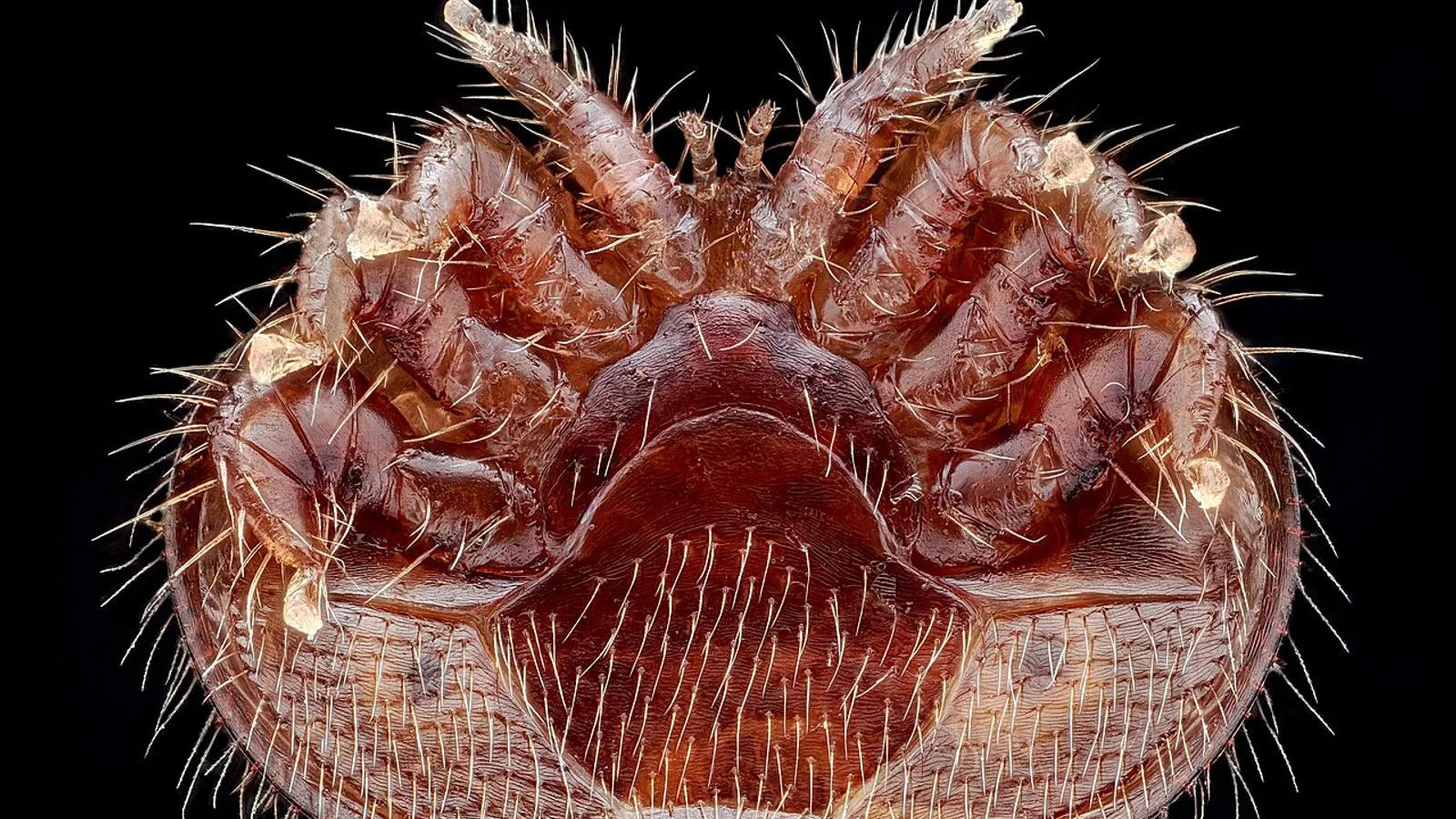
— Where the name comes from
Varroa remembers Marcus Terentius Varro, the Roman scholar whose De re rustica contains one of the oldest treatises on beekeeping we possess: a name chosen to honour the man who first wrote down how bees are kept. Destructor was added only in 2000, when it was realised that the species wiping out the world’s hives was not the one previously described. The destroyer named after the founder.
— Facts
- Group
- Arachnids · Arachnida
- Order
- Mesostigmatid mites
- Habitat
- Inside beehives, on adult bees and in brood cells
- Range
- Native to East Asia; today everywhere except Australia
- Size
- 1.1 × 1.7 mm
- Diet
- The fat body and haemolymph of bees
- Lifespan
- 2–3 months in summer, up to 8 in winter
— Characteristics
- 01
It enters the cell before it is capped and breeds on the larva.
- 02
It transmits viruses that deform the wings of the bees that emerge.
- 03
An untreated hive generally dies within two or three years.
— What sets it apart
It is the chief culprit in the worldwide crisis of the honeybee, and it made the jump between species very recently: it lived on the Asian honeybee, which resists it because the workers groom the mites off one another, and in the mid-twentieth century it moved to the European honeybee, which had no defences. It does not kill by itself but opens the way: by feeding on the fat body — the organ that in a bee serves as both liver and store — it weakens the animal and inoculates viruses, in particular deformed wing virus. For sixty years world beekeeping has lived with it through treatments, and the few populations that have survived unaided are teaching which behaviours to select for.
