
Common harvestman
Phalangium opilio
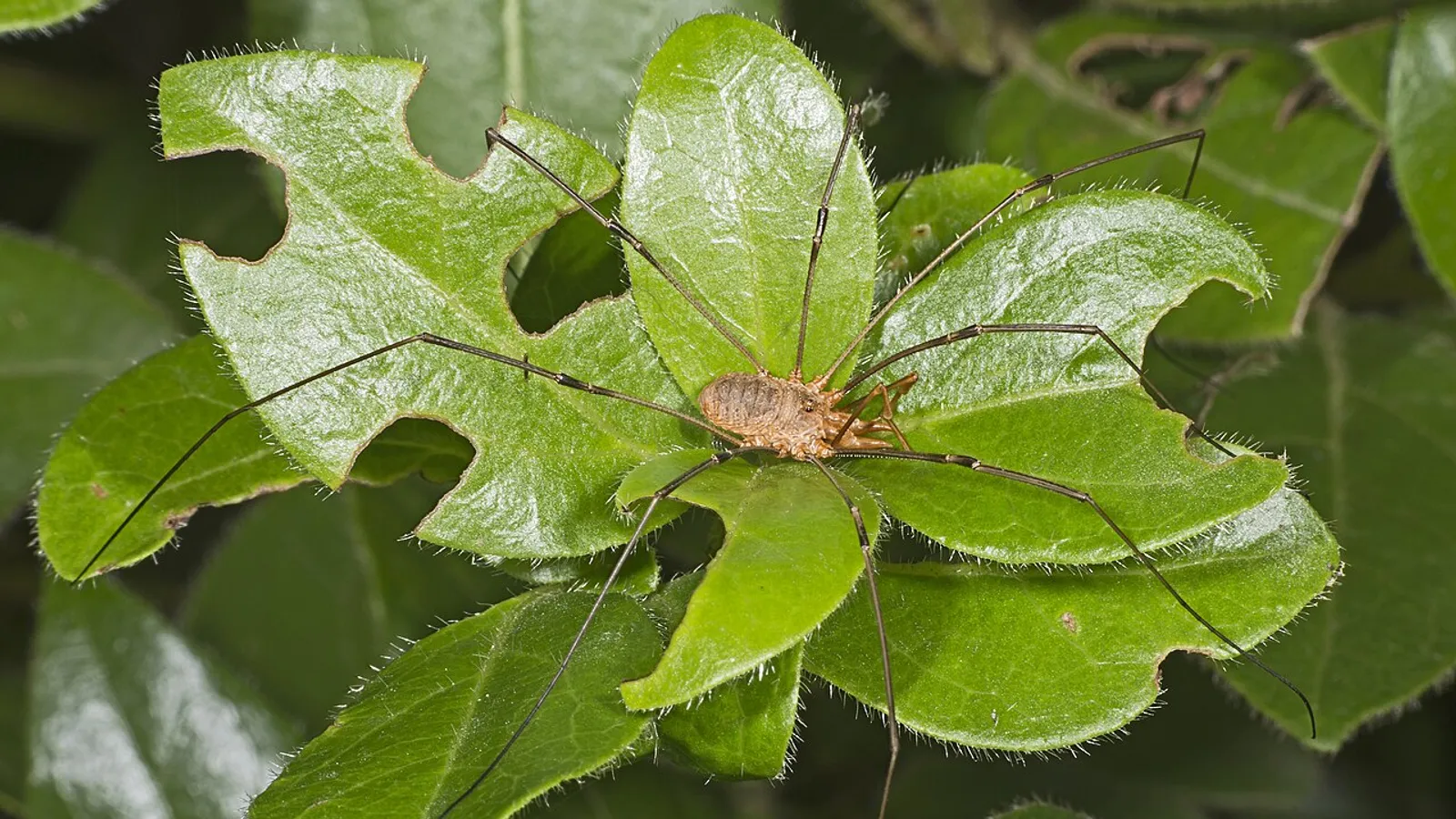
— Where the name comes from
Opilio in Latin is the shepherd, and the name comes from an agricultural image: the very long thin legs recalled the stilts shepherds stood on to watch their flocks across open country. English calls it harvestman, because it appears in numbers at the end of summer. Phalangium was the Greek name of a venomous spider — and here it is a mistake, because the harvestman is not a spider and has no venom.
— Facts
- Group
- Arachnids · Arachnida
- Order
- Harvestmen
- Habitat
- Meadows, walls, hedges, gardens; anywhere with damp
- Range
- Europe and Asia; introduced to North America
- Size
- Body 4–9 mm; legs up to 5 cm
- Diet
- Small invertebrates, fungi, droppings, rotting fruit
- Lifespan
- 1 year
— Characteristics
- 01
It is not a spider: one-piece body, no silk, no venom.
- 02
It has only two eyes, mounted on a turret in the middle of its back.
- 03
It sheds a leg if seized, and the leg goes on twitching by itself.
— What sets it apart
It is not a spider, and almost nobody knows it. In spiders the body is divided into two parts sharply separated by a waist; in the harvestman it is a single oval. It has no silk glands, no venom, and unlike every spider it can eat solid food, chewing it. A shed leg goes on twitching for minutes — a local impulse generator keeps it pulsing with no connection to the body — and serves to keep a predator busy while the animal escapes. But it does not regrow: a harvestman that loses two legs must manage for good with what is left.
