
Book scorpion
Chelifer cancroides
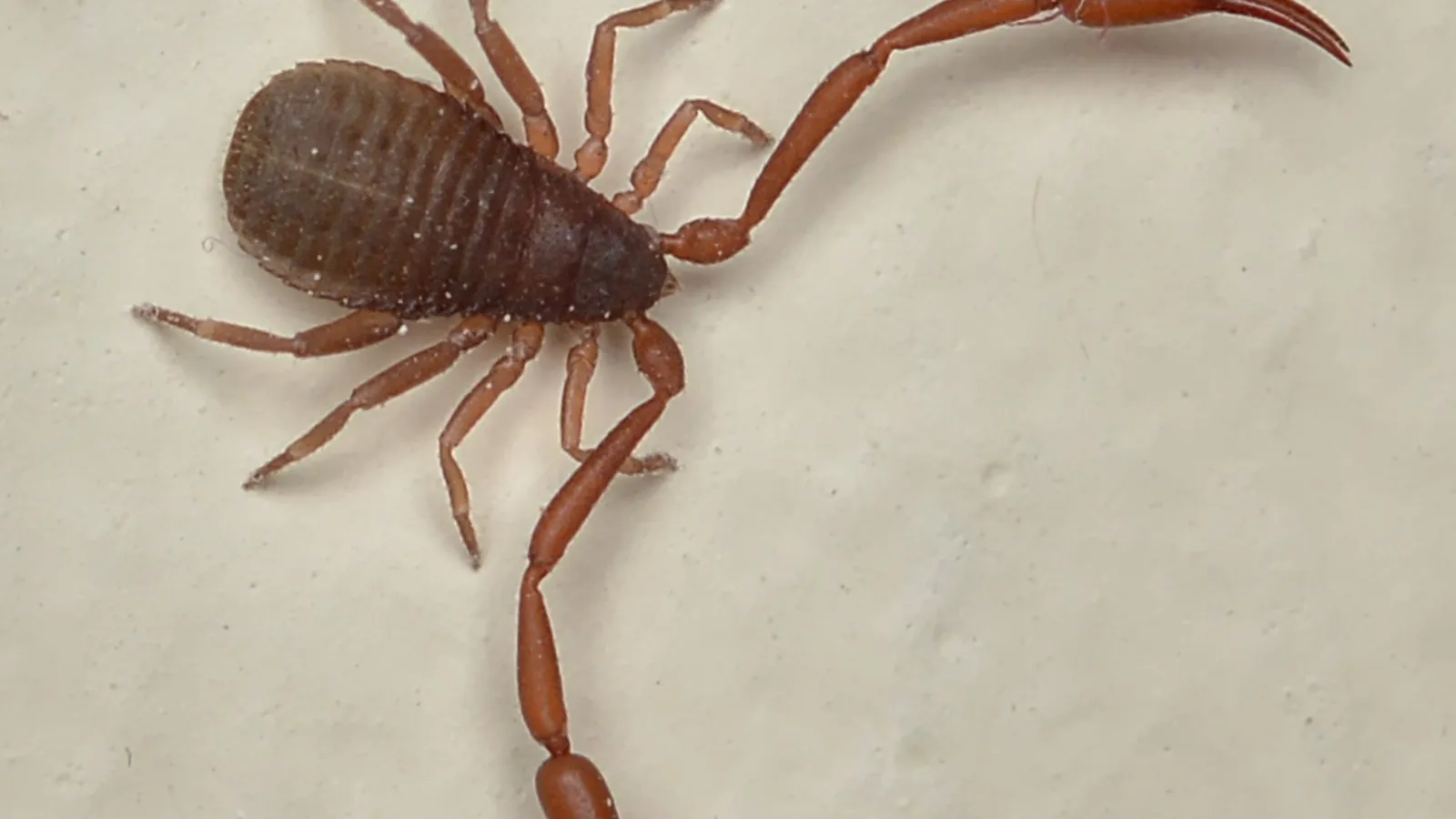
— Where the name comes from
Chelifer is “claw-bearer”, from the Greek chēlḗ and the Latin ferre; cancroides means “crab-like”. The order name is the most honest part: pseudoscorpions, false scorpions, because they have the pincers but neither tail nor sting. In English it is the book scorpion, and the name says where to find it: among the pages of old books, hunting what eats them.
— Facts
- Group
- Arachnids · Arachnida
- Order
- Pseudoscorpions
- Habitat
- Houses, libraries, barns, birds’ nests, under bark
- Range
- Cosmopolitan
- Size
- 2.5–4.5 mm
- Diet
- Dust mites, silverfish, larvae, booklice
- Lifespan
- 2–3 years
— Characteristics
- 01
Its venom is in the pincers, not the tail: it has no tail.
- 02
It walks backwards and sideways with equal ease.
- 03
It hitches rides by gripping the legs of flies.
— What sets it apart
It travels by hitching lifts. Having neither wings nor legs for distance, it grips the leg of a fly or a beetle with one pincer and lets itself be carried wherever chance takes it: the behaviour is called phoresy, and it is how this animal has colonised the world. In old libraries it is an ally — it eats the mites and booklice that ruin volumes — and restorers have known this for centuries. It also spins silk, but not to catch anything: with it it builds a cocoon in which to overwinter and to moult in safety.
