
Common house mosquito
Culex pipiens
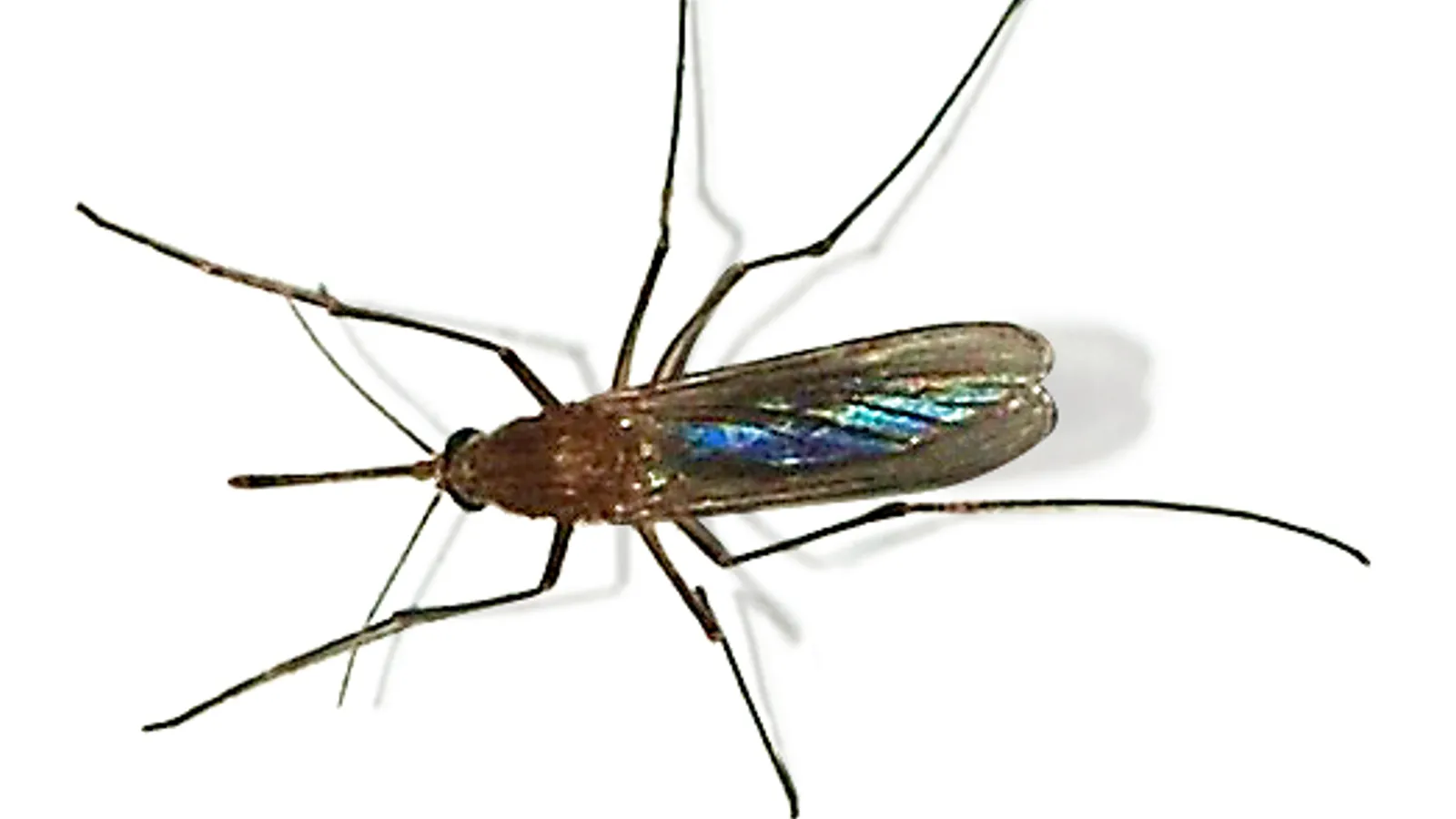
— Where the name comes from
Culex is the Latin name for the mosquito. Pipiens means “cheeping”, from the verb pipire that the Romans used for the sound of chicks: it is the high whine heard in the ear in the dark, described by those who suffered it as the peeping of a small bird. The Italian name comes instead from the vulgar Latin zinzala, equally imitative.
— Facts
- Group
- Insects · Insecta
- Order
- Flies
- Habitat
- Standing water even when foul: drains, cisterns, tanks, ponds
- Range
- All the temperate regions of the world
- Size
- 4–7 mm
- Diet
- Nectar; the female bites birds above all, and us when it must
- Lifespan
- 2 weeks for the male, up to several months for an overwintering female
— Characteristics
- 01
The whine is the wingbeat: about six hundred strokes a second.
- 02
The eggs float glued together as a raft, a hundred at a time.
- 03
The female spends the winter in a cellar, motionless, without feeding.
— What sets it apart
The whine is not an accidental noise but a call: when male and female meet in flight they adjust the frequency of their wingbeats until the two sounds agree on a shared harmonic, around twelve hundred hertz. It is a duet, and it serves to recognise the sexes. In the tunnels of the London Underground a form has become isolated that does not overwinter, bites mammals rather than birds, and no longer interbreeds with the surface population: a species in the making, born in a century and a half inside a tunnel.
