
Pale giant horse-fly
Tabanus bovinus
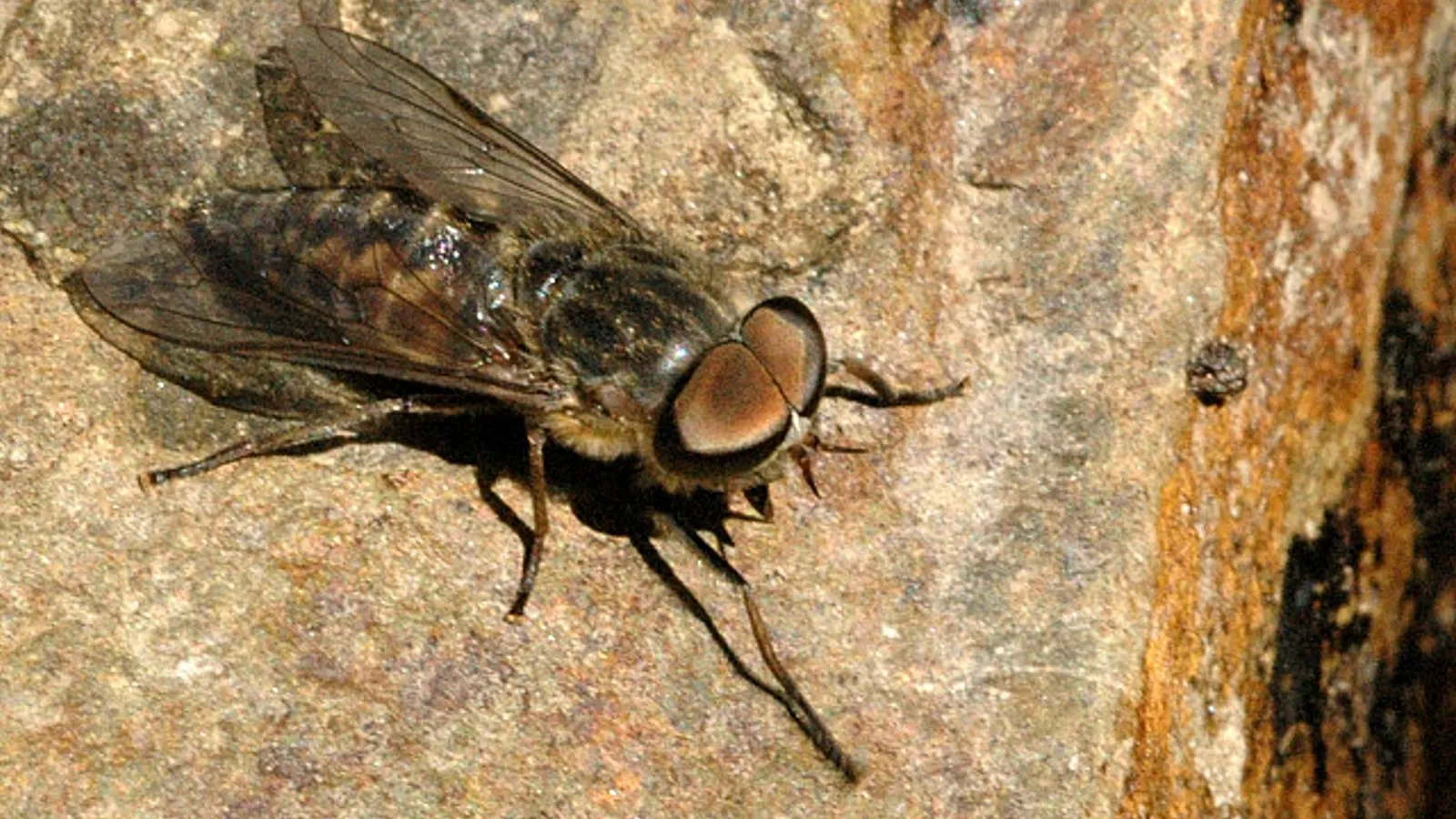
— Where the name comes from
Tabanus is the Latin name for the horsefly, and the word from which the Italian comes directly. Bovinus names the animal it frequents. The Greek for the same insect was oîstros, which meant both horsefly and frenzy: from the madness of cattle chased by horseflies comes the Italian estro, which today we use for a poet’s inspiration. The same word names a stampeding herd and the moment an artist has an idea.
— Facts
- Group
- Insects · Insecta
- Order
- Flies
- Habitat
- Pastures, damp clearings and woodland edges
- Range
- Europe and western Asia
- Size
- 19–24 mm, among the largest European flies
- Diet
- Nectar; the female the blood of large mammals
- Lifespan
- A few weeks as an adult; larvae live years in damp soil
— Characteristics
- 01
The female cuts the skin with her mandibles and laps the blood that flows.
- 02
It flies at over twenty kilometres an hour and chases running animals.
- 03
The male’s eyes meet on the forehead, the female’s do not.
— What sets it apart
It does not pierce like a mosquito: it cuts. The female’s mandibles work as blades and open a wound from which the blood flows on its own, while anticoagulant saliva keeps it liquid — which is why the bite hurts far more and bleeds for a long time. It is drawn to dark, warm, moving surfaces and to the carbon dioxide of breath, which explains why it follows swimmers and cars. The larvae, which live in mud for a couple of years, are predators and hunt worms and other larvae.
