
Marmalade hoverfly
Episyrphus balteatus
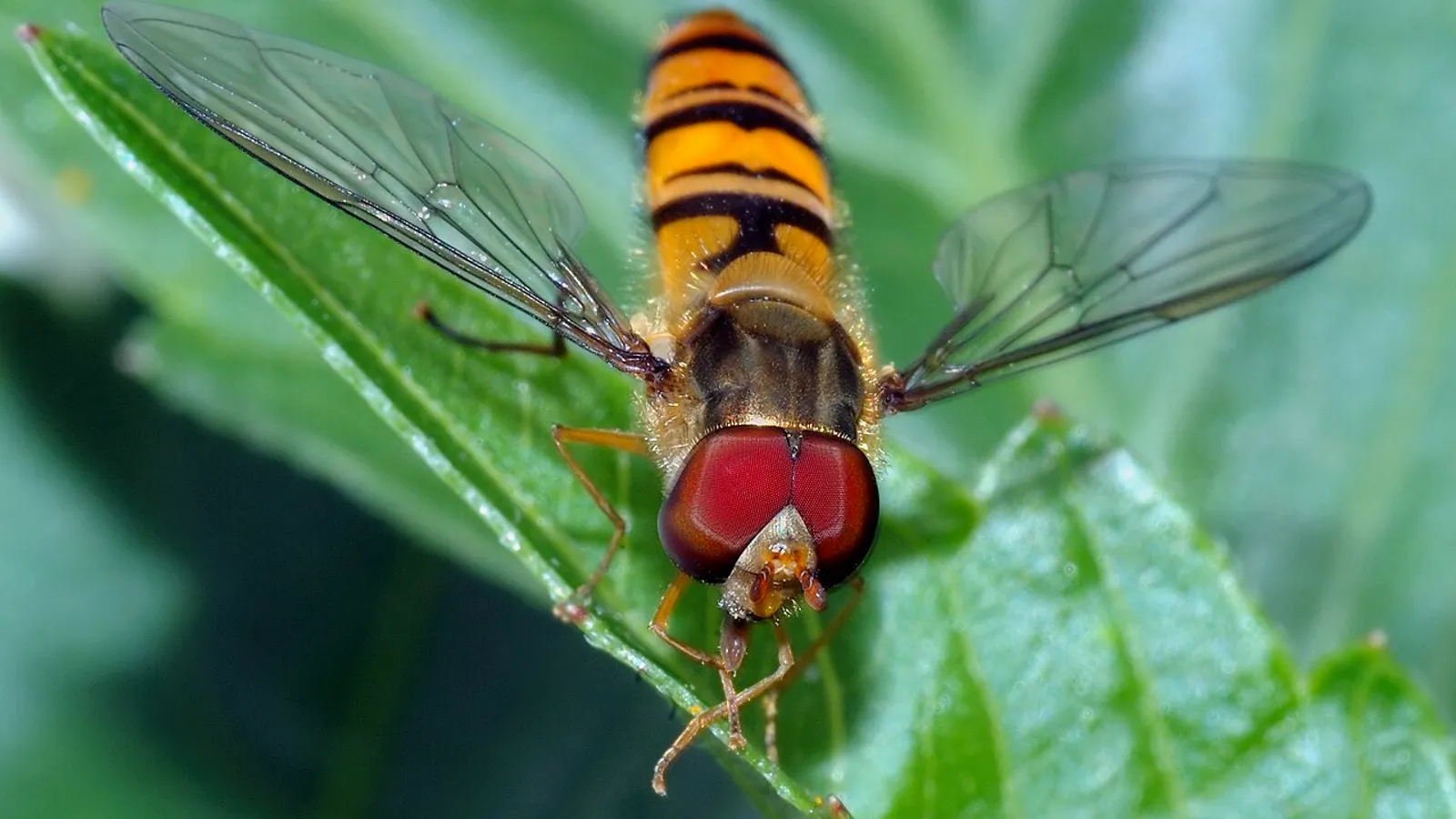
— Where the name comes from
Balteatus is the loveliest word in the name: in Latin the balteus was the leather belt a Roman soldier wore across the shoulder, and this fly seems to wear one on every segment of its abdomen. Episyrphus places the Greek syrphos, the gnat, under the preposition epí. The name therefore says “the belted gnat” — and the belt is the wasp costume that keeps it from being eaten.
— Facts
- Group
- Insects · Insecta
- Order
- Flies
- Habitat
- Gardens, flowering meadows, vegetable plots, field margins
- Range
- All of Eurasia, North Africa, Australasia
- Size
- 9–12 mm
- Diet
- Pollen and nectar as an adult; aphids as a larva
- Lifespan
- A few weeks; several generations a year
— Characteristics
- 01
It hangs motionless in mid-air and darts sideways without turning.
- 02
It mimics wasps and bees in colour but has no sting at all.
- 03
A single larva devours hundreds of aphids before pupating.
— What sets it apart
The costume is pure bluff: it has neither sting nor venom, and relies only on a bird that has already been stung by a wasp not wanting to try again. Every autumn millions of individuals cross the Pyrenees and the Alps heading south — radar entomology has put the numbers passing over European passes each year in the billions — and every spring their offspring make the journey back. They are among the most efficient pollinators after bees, and meanwhile their larvae keep garden aphids in check.
