
Tsetse fly
Glossina morsitans
— Where the name comes from
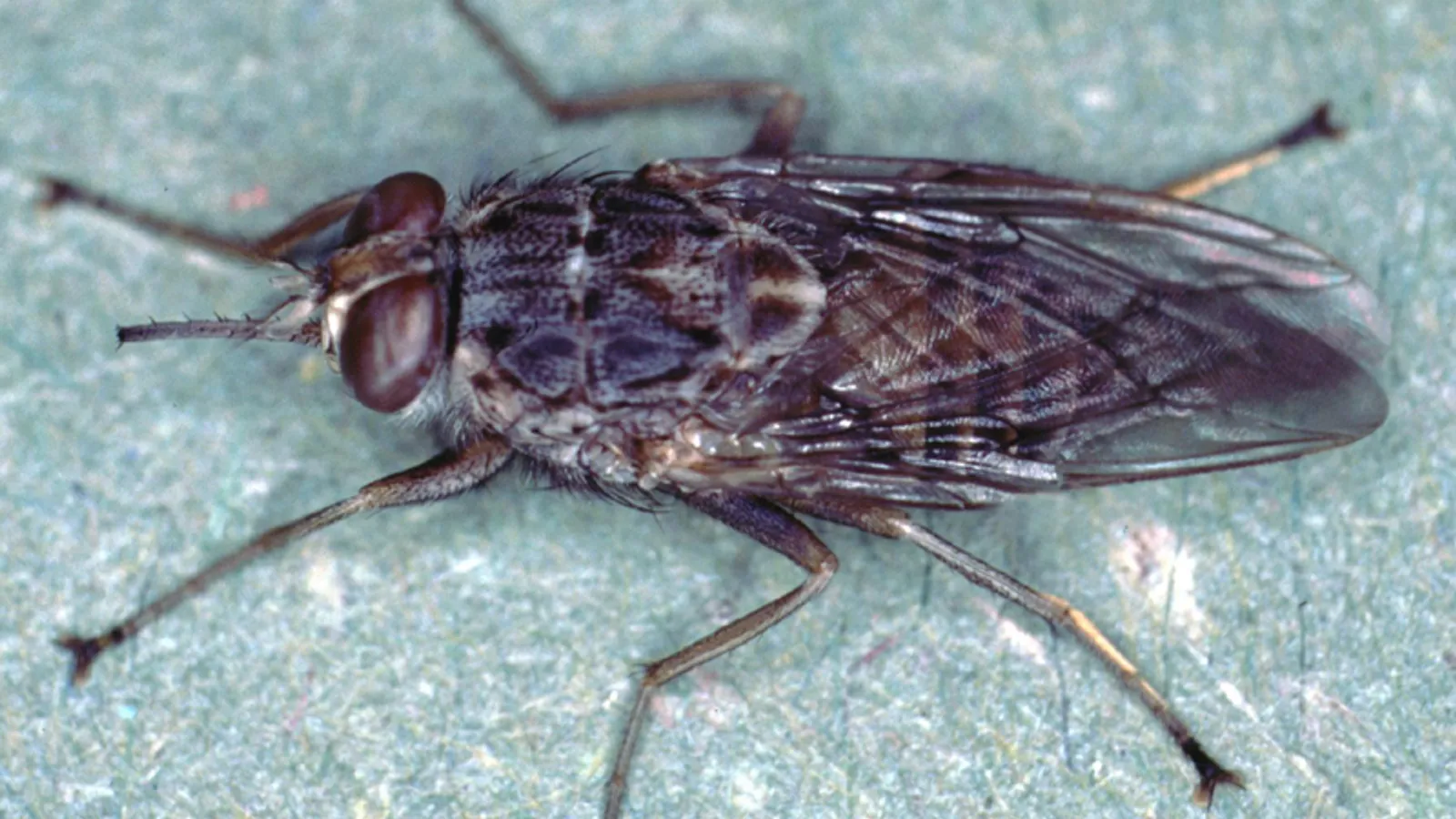
Glossina comes from the Greek glôssa, the tongue: this fly’s proboscis is a rigid stylet that juts forward like an outstretched tongue, and is visible even at rest. Morsitans is Latin for “constantly biting”. The common name comes from no European language at all: tsetse is a word from the Bantu languages of southern Africa, and reproduces the sound of the wingbeat.
— Facts
- Group
- Insects · Insecta
- Order
- Flies
- Habitat
- Wooded savannah and thicket along watercourses
- Range
- Sub-Saharan Africa
- Size
- 8–14 mm
- Diet
- Mammal blood; both sexes bite
- Lifespan
- 1–3 months
— Characteristics
- 01
At rest it folds its wings one over the other like the blades of scissors.
- 02
It lays no eggs: it gives birth to a larva ready to pupate.
- 03
The male drinks as much blood as the female, which is rare among flies.
— What sets it apart
It lays no eggs. The larva grows one at a time inside the mother’s body, fed by a gland that secretes something comparable to milk, and is born when it weighs as much as the mother herself: it burrows at once and pupates. A female, in her whole life, brings eight or ten offspring into the world — a mammal’s strategy, not an insect’s. It is also why the tsetse fly is vulnerable: few births mean populations that recover slowly, and that is the basis of the campaigns that release sterile males into areas afflicted by sleeping sickness.
