
Blue bottle fly
Calliphora vomitoria
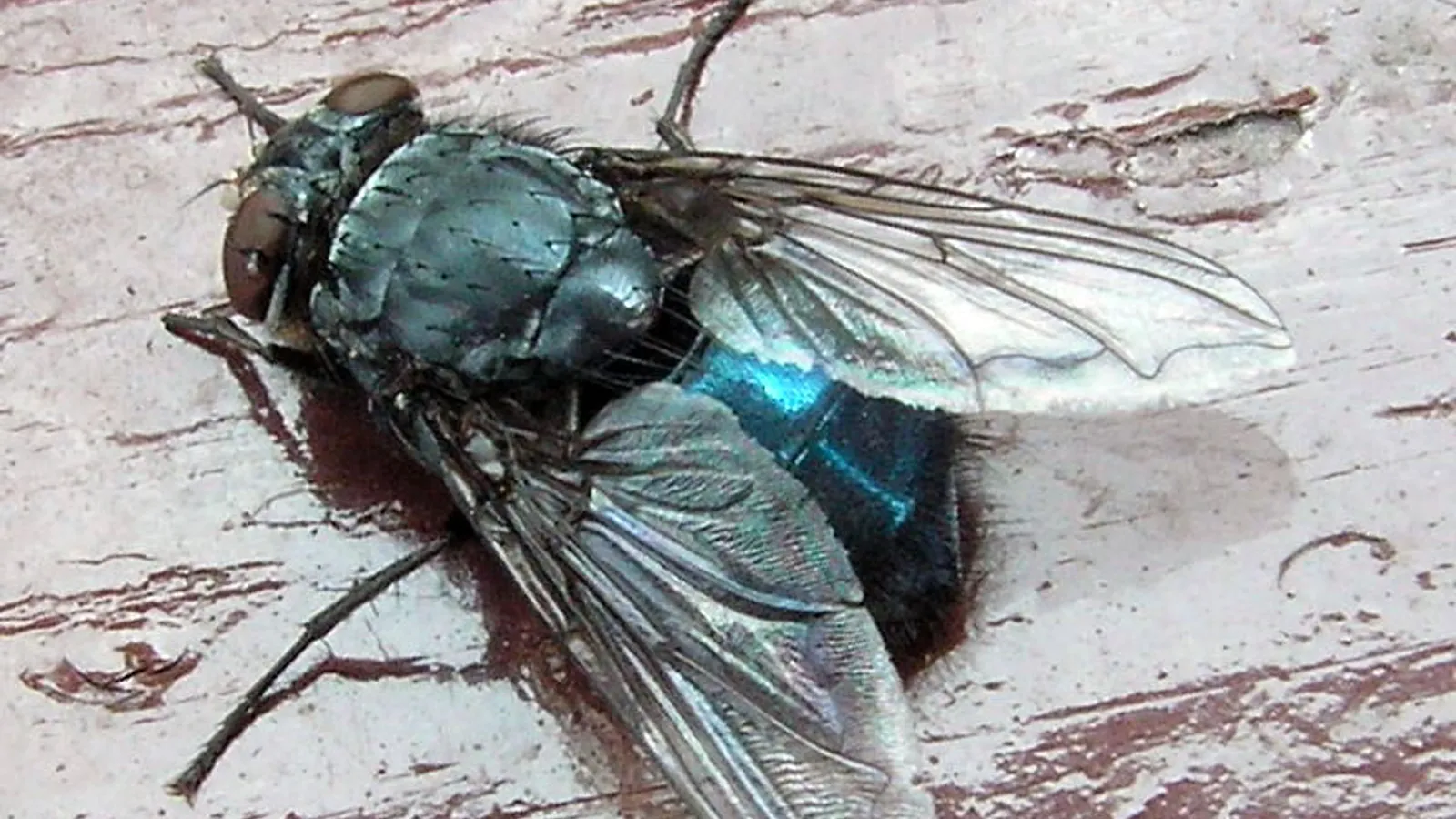
— Where the name comes from
The scientific name contains a perfect contradiction. Calliphora is Greek for “bearer of beauty”, from kállos, beauty, and phérō, to carry: after the metallic blue of the abdomen, which truly is splendid. Vomitoria is Latin, and names the habit of regurgitating onto food to dissolve it. The bearer of beauty that vomits: no other binomial says the two faces of one animal so well.
— Facts
- Group
- Insects · Insecta
- Order
- Flies
- Habitat
- Anywhere animal matter is decaying
- Range
- Europe, Asia, the Americas, North Africa
- Size
- 10–14 mm
- Diet
- Nectar and sugary liquids; the larvae decaying flesh
- Lifespan
- 2–8 weeks
— Characteristics
- 01
It smells a carcass from kilometres away.
- 02
Its larvae develop from egg to adult in two or three weeks.
- 03
Orange, hairy cheeks distinguish it from its relatives.
— What sets it apart
It is the first animal to arrive on a corpse, often within minutes of death, and an entire branch of forensic medicine rests on that punctuality. Forensic entomology measures the age of the larvae found on a body and derives from it, together with temperature, the interval since death — with an accuracy that in the first weeks beats any other method. The succession of species is as orderly as a calendar, and this fly is the page for day one.
