
African malaria mosquito
Anopheles gambiae
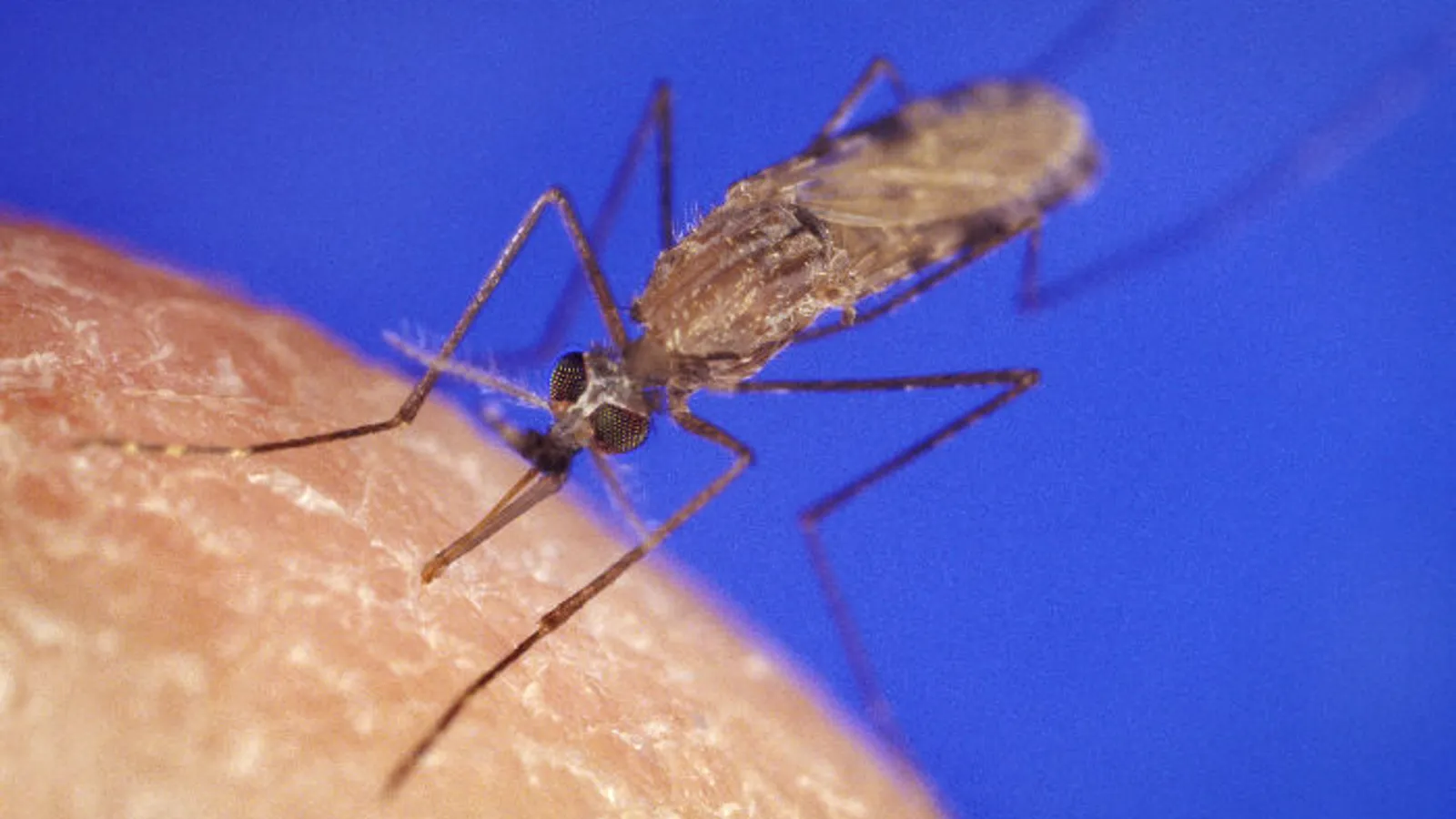
— Where the name comes from
Anopheles is Greek and means “useless, good for nothing”: an- privative before ōphélimos, useful. When Meigen coined it, in 1818, the mosquito was merely a purposeless nuisance. Eighty years later, in 1897, Ronald Ross would show that the malaria parasite travels inside that “good for nothing” — and the name has stayed, as one of the largest understatements in the history of zoology.
— Facts
- Group
- Insects · Insecta
- Order
- Flies
- Habitat
- Sunlit pools, rice paddies, temporary bodies of water
- Range
- Sub-Saharan Africa
- Size
- 3–6 mm; rests at an angle, abdomen raised
- Diet
- Nectar; the female feeds on blood, almost only human
- Lifespan
- 1–3 weeks as an adult
— Characteristics
- 01
It rests with the body oblique, not parallel to the surface like other mosquitoes.
- 02
Its larvae lie flat under the surface film rather than hanging head down.
- 03
It prefers human blood to that of any other animal.
— What sets it apart
It is the animal that has killed more human beings than any other, wars included: not by itself, but because it is the vector in which the malaria plasmodium spends half its life. Ronald Ross found the cycle in 1897 by dissecting mosquitoes fed on an infected patient, and won the Nobel prize for it. The fact that this species so markedly prefers human blood — a choice that is rare even among mosquitoes — is what makes it the most efficient vector on the African continent.
