
Yak
Bos grunniens
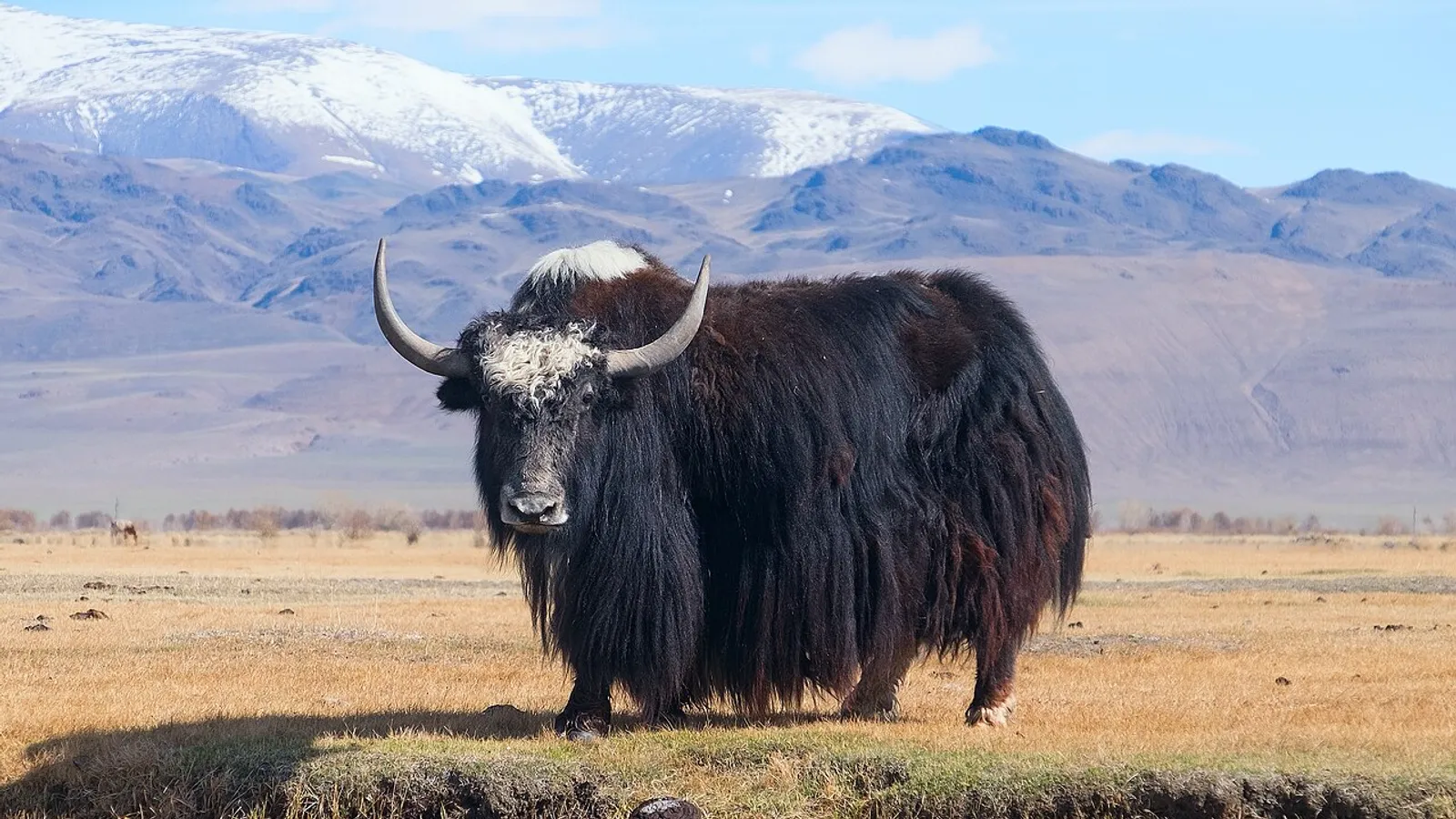
— Where the name comes from
Grunniens is the Latin participle of grunnire, “to grunt”: Linnaeus named it from the call, because this ox does not low, it grunts. Yak comes from the Tibetan གཡག, g.yag — which, however, names only the male. The female is dri. It follows that “yak milk” is, in Tibetan, a contradiction in terms, and in Himalayan valleys pointing the error out to tourists is something of a local sport.
— Facts
- Group
- Mammals · Mammalia
- Order
- Even-toed ungulates
- Habitat
- High plateau and pasture, between 3,000 and 5,500 m
- Range
- The Tibetan plateau, the Himalaya, Central Asia; domestic
- Size
- 200–330 cm of body, 300–580 kg
- Diet
- Herbivore — very high-altitude grasses and lichens
- Lifespan
- 20–25 years
— Characteristics
- 01
It has a third more lung alveoli than lowland cattle and blood richer in haemoglobin.
- 02
It has no functioning sweat glands: below 3,000 metres it suffers in the heat.
- 03
Its dried dung is the main fuel of the Tibetan plateau, where no trees grow.
— What sets it apart
Above four thousand metres it copes effortlessly; below two thousand it sickens and dies. It is an animal built for thin air — oversized lungs and heart, foetal haemoglobin retained into adulthood, no sweat glands — and every one of those advantages at altitude becomes a defect lower down. It is not an ox that can live in the mountains: it is an ox that can live only in the mountains, and that has made the Tibetan plateau habitable, where without it there would be no milk, no wool, no transport and no fire.
