
Common wombat
Vombatus ursinus
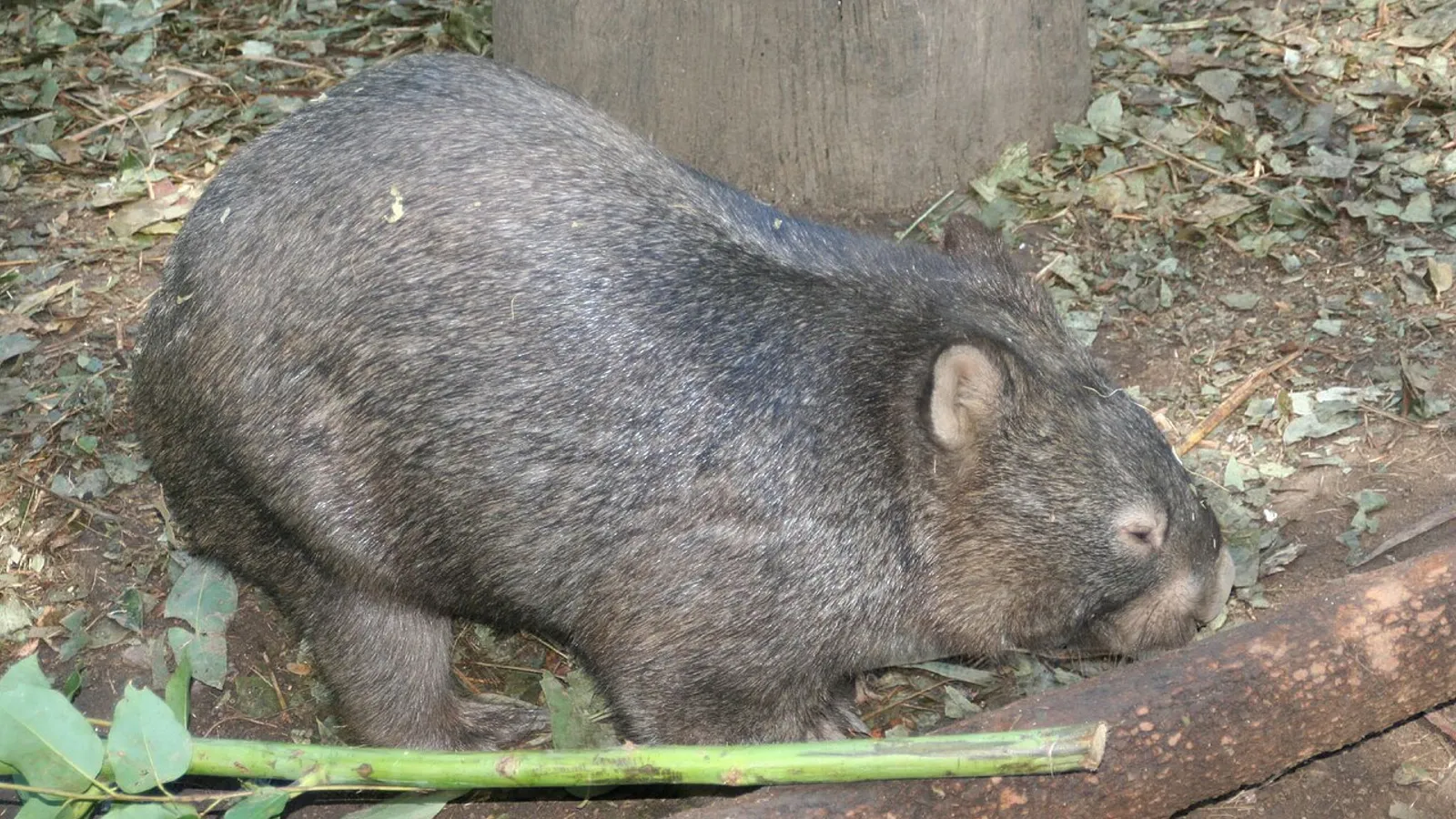
— Where the name comes from
Vombatus is the latinisation of wombat, a word of the Dharug language spoken by the Aboriginal people of the Sydney region, recorded by British colonists at the end of the 18th century. The epithet ursinus is Latin for “bear-like”, for the stocky build and flat-footed gait as they appeared to the first European naturalists. For some years the species was described as a kind of small Australian bear or badger, before its marsupial nature was recognised.
— Facts
- Group
- Mammals · Mammalia
- Order
- Diprotodont marsupials
- Habitat
- Temperate forest, scrub and montane heath with soils fit for digging
- Range
- South-eastern Australia, Tasmania and the islands of Bass Strait
- Size
- 80–130 cm, 20–35 kg
- Diet
- Herbivore — grasses, roots, bark and mosses
- Lifespan
- 5–15 years in the wild, up to over 25 in captivity
— Characteristics
- 01
Its pouch faces backwards, so that digging does not fill it with earth.
- 02
The rump is armoured with a thick shield of cartilage with which it plugs the entrance of the burrow.
- 03
Its metabolism is among the slowest of any mammal: digesting a meal can take up to fourteen days.
— What sets it apart
The wombat produces cube-shaped droppings, a case unique in the animal kingdom. The explanation is mechanical: the last stretch of the intestine has walls of uneven elasticity, with stiff zones and yielding ones that mould the dried faeces into blocks of square section. The purpose is territorial, because the cubes stay put on rocks and logs without rolling away, marking boundaries visible even in the dark. An animal that sees poorly and lives underground has solved the problem of communication by giving it a geometry.
