
Common shelduck
Tadorna tadorna
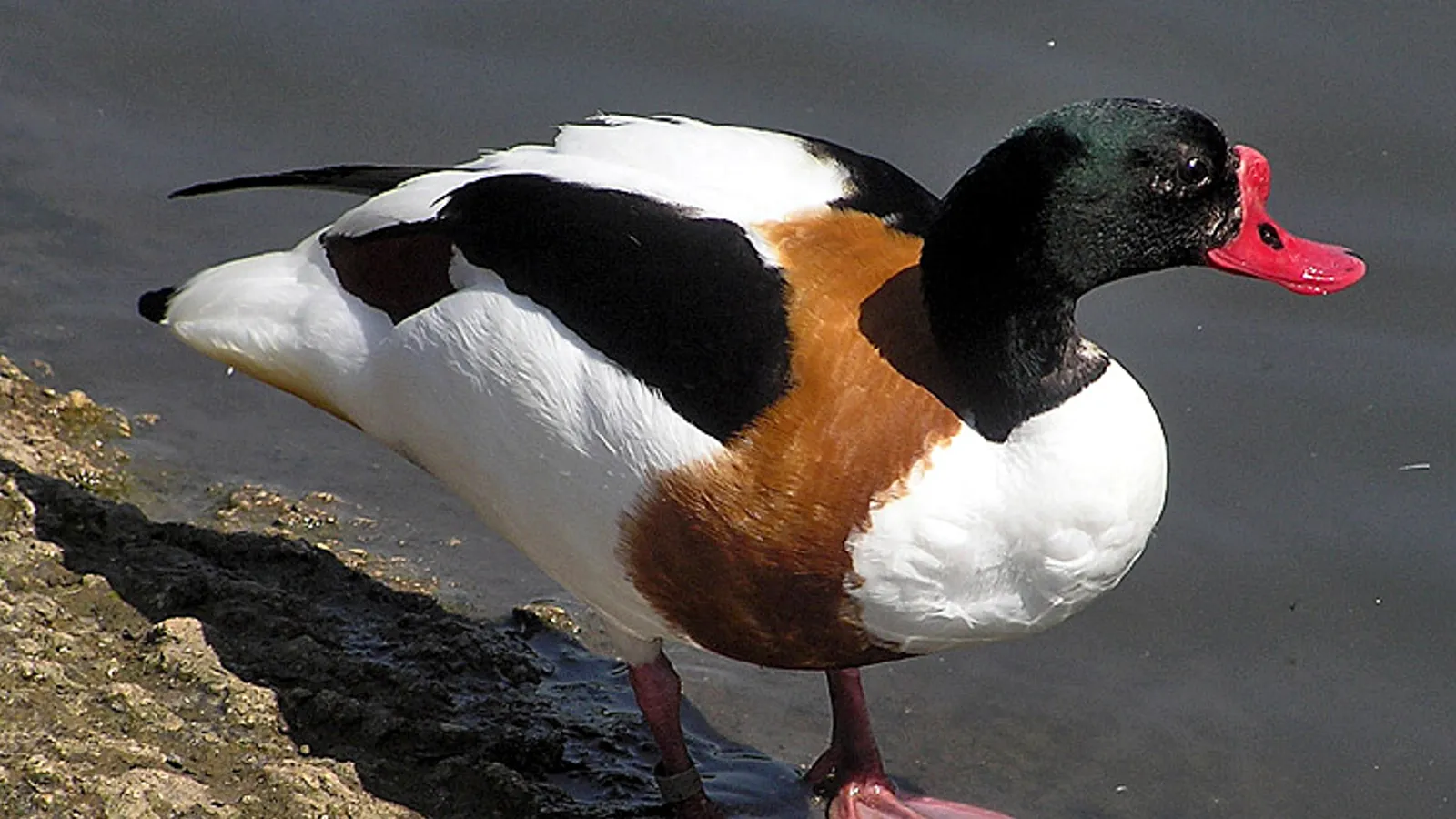
— Where the name comes from
Tadorna comes from the French tadorne, itself probably from a Celtic root meaning “pied waterfowl”; the binomial repeats it twice. The Italian name is a transparent compound — “fox-goose” — and alludes not to the colour but to the habit of nesting in the abandoned burrows of foxes and rabbits.
— Facts
- Group
- Birds · Aves
- Order
- Waterfowl
- Habitat
- Sandy coasts, estuaries, saltpans, lagoons
- Range
- Europe and temperate Asia; winters around the Mediterranean and in southern Asia
- Size
- 58–67 cm, wingspan 110–133 cm, 0.9–1.4 kg
- Diet
- Small molluscs, crustaceans, larvae, algae
- Lifespan
- 15 years in the wild
— Characteristics
- 01
White, black and chestnut with a red bill: recognisable a kilometre off.
- 02
It nests underground, in rabbit burrows, cavities or straw stacks.
- 03
The ducklings of several families are gathered into parties of dozens.
— What sets it apart
In July nearly every shelduck in north-western Europe flies to the same point in the North Sea, a sandbank off the German coast, to change its feathers: they drop all their flight feathers at once and cannot fly for a month, which explains why they do it somewhere no land predator can reach. The young stay behind, gathered into crèches watched over by the few adults that forgo the journey. For four weeks, an entire European population sits still on a shoal.
