
Arctic tern
Sterna paradisaea
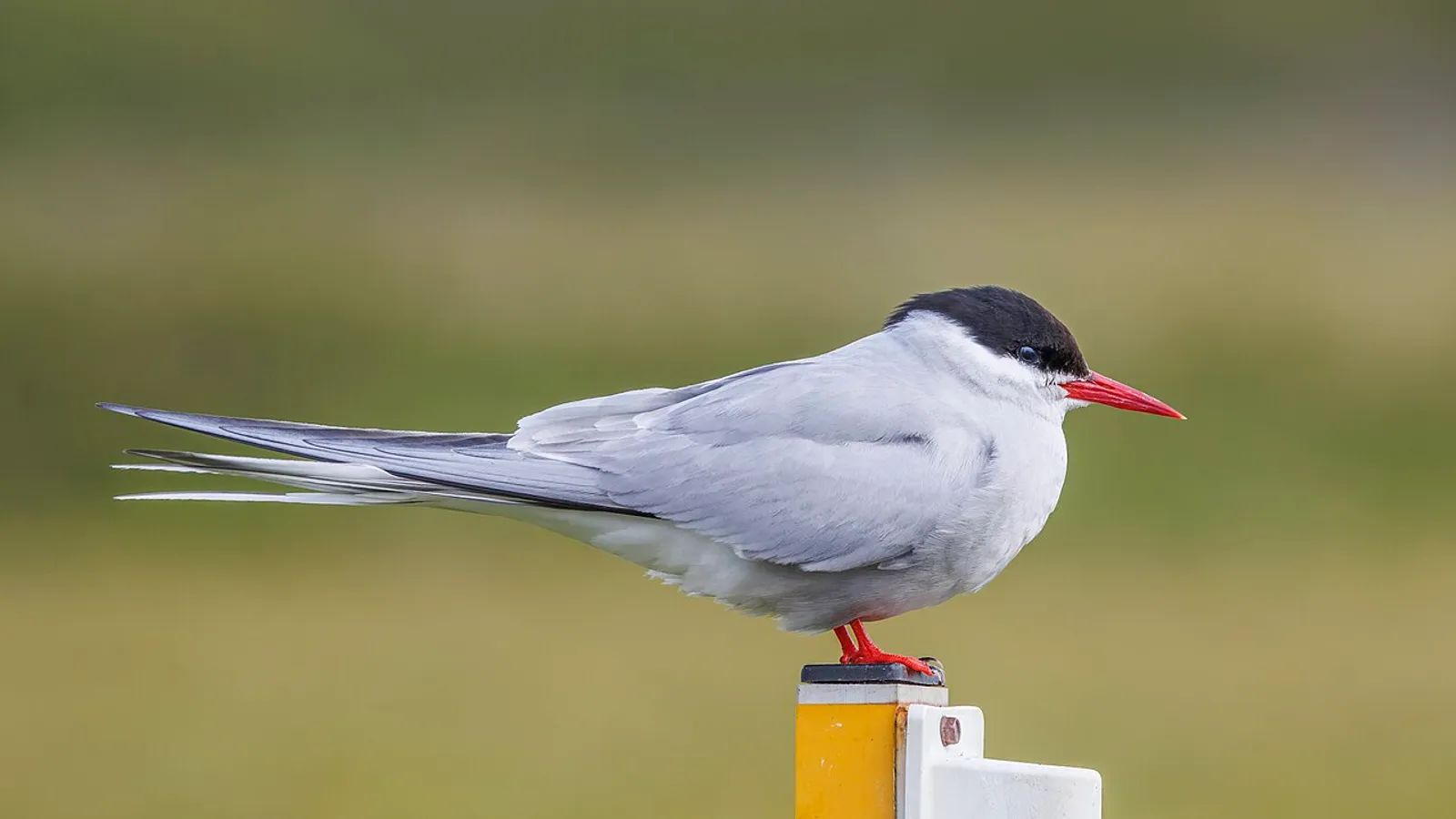
— Where the name comes from
Sterna comes from the Old English stearn, the name the fishermen of the North gave these birds; it is one of the Germanic words that entered scientific nomenclature straight from speech. Paradisaea, “of paradise”, was chosen in 1763 by the Danish pastor Erik Pontoppidan, and for once the emphasis is justified: no other animal sees so much daylight.
— Facts
- Group
- Birds · Aves
- Order
- Shorebirds
- Habitat
- Arctic coasts for nesting, the open sea for the rest of the year
- Range
- From the Arctic to the Antarctic, every year, out and back
- Size
- 33–39 cm, wingspan 76–85 cm, 86–127 g
- Diet
- Small fish and crustaceans taken by diving
- Lifespan
- 30 years in the wild
— Characteristics
- 01
It dive-bombs anything approaching the colony, people included.
- 02
It plunges from a few metres, without fully submerging.
- 03
It nests in a simple scrape on the shingle, with no material.
— What sets it apart
It makes the longest migration in the animal kingdom. Geolocators fitted to adults have recorded routes approaching ninety thousand kilometres a year, because the track is not a line but an S that follows the winds between the Atlantic and the Antarctic. The result is that it spends the Arctic summer in the north and the austral summer in the south: no other living thing sees so many hours of daylight. A thirty-year-old bird has flown the equivalent of three return trips to the Moon.
