
Black flying fox
Pteropus alecto
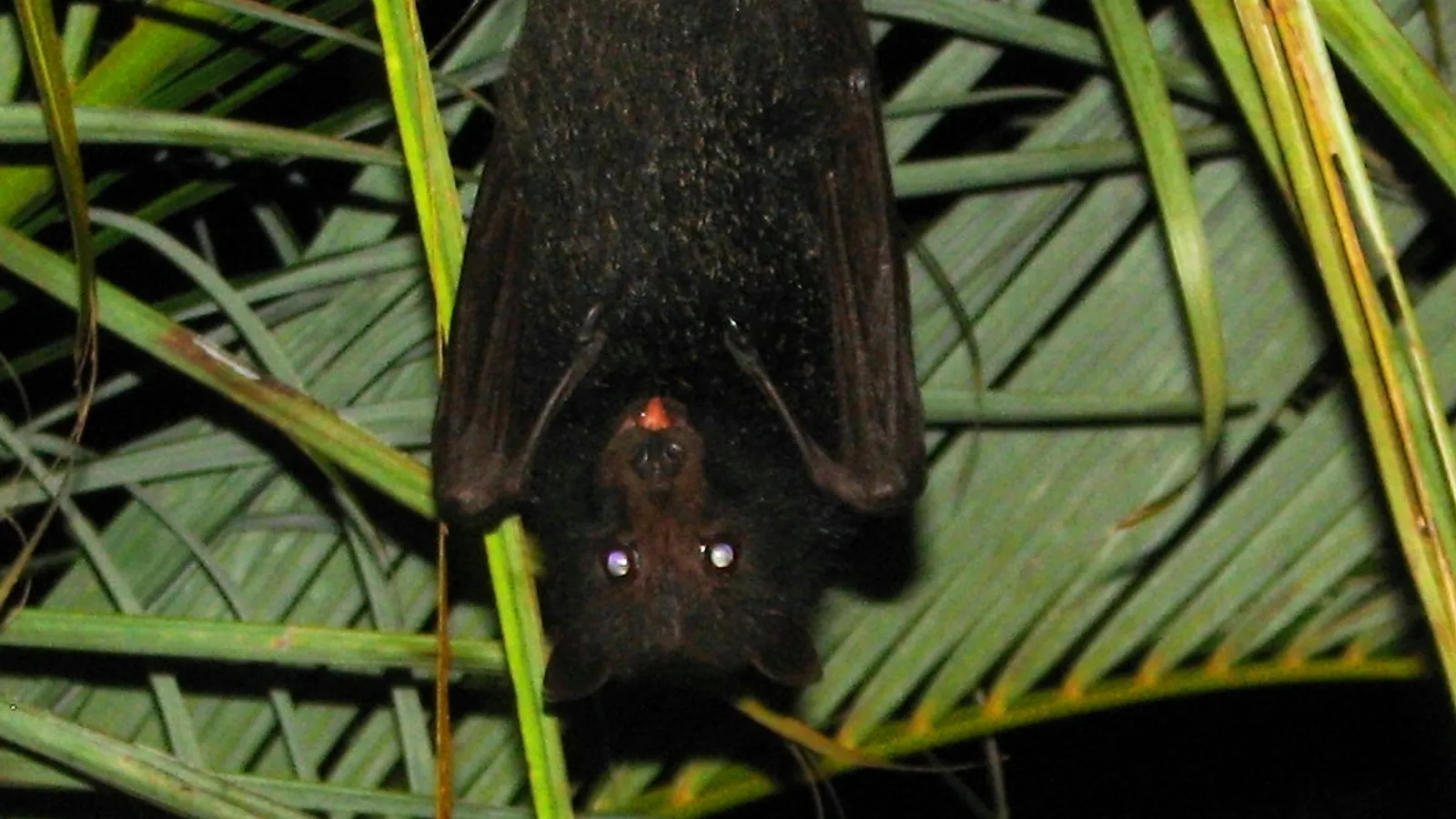
— Where the name comes from
Alecto is one of the three Erinyes, the Greek Furies: “the implacable”, she who never relents. Temminck named this animal so in 1837 for a coat of absolute black, almost without sheen. The choice says more about the 19th-century imagination regarding bats than about the animal, which is an entirely peaceable flower-eater and has never harmed anyone.
— Facts
- Group
- Mammals · Mammalia
- Order
- Bats
- Habitat
- Mangroves, rainforest, swamp woodland, suburbs
- Range
- Northern Australia, New Guinea, Sulawesi
- Size
- 24–28 cm of body, up to 1 m wingspan, 500–1,000 g
- Diet
- Nectar and fruit feeder — eucalyptus and paperbark blossom, figs
- Lifespan
- 12–15 years
— Characteristics
- 01
It is the darkest of the flying foxes: solid black, sometimes with a reddish nape.
- 02
It carries Australian bat lyssavirus without falling ill.
- 03
The colonies move about following blossom that shifts from year to year.
— What sets it apart
Its immune system has become a subject of medical research. Bats carry viruses that are devastating in humans — lyssaviruses, henipaviruses — without showing symptoms, and this species is one of the models used to study why: the inflammatory response is damped, and pathways that in land mammals set off a violent reaction stay quiet here. The most discussed hypothesis is that this is the price of flight, which raises body temperature and stresses DNA, and that it has selected for an organism used to living with damage rather than fighting it.
