
Spectacled flying fox
Pteropus conspicillatus
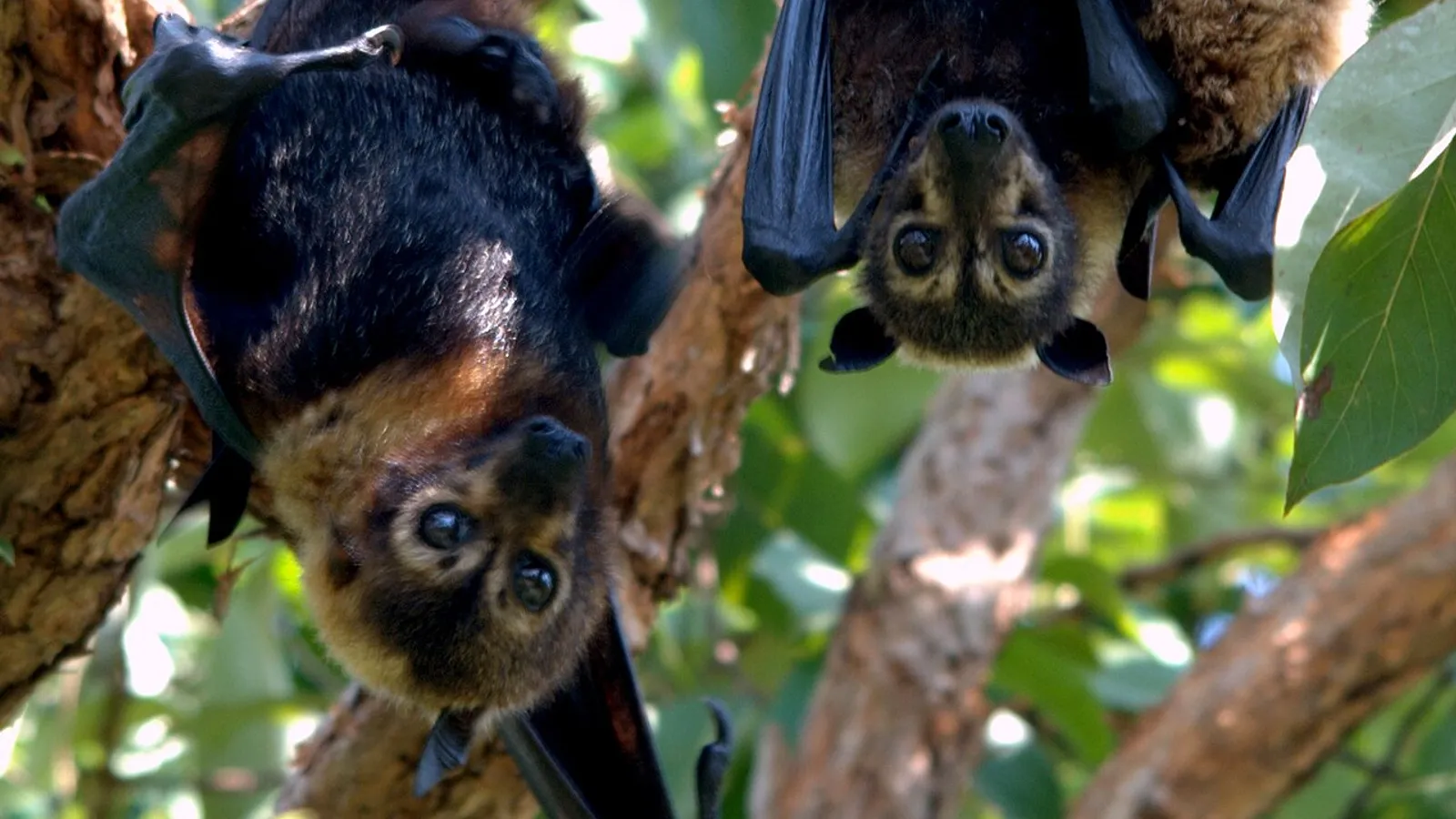
— Where the name comes from
Conspicillatus is late Latin for “spectacled”, from conspicillum, “lens”: around the eyes it carries two rings of pale yellow fur that look like frames. It is the same epithet as the spectacled bear’s and the spectacled penguin’s — three naturalists, on three continents, saw the same thing and reached for the same word.
— Facts
- Group
- Mammals · Mammalia
- Order
- Bats
- Habitat
- Lowland tropical rainforest and mangroves
- Range
- North-eastern Queensland, New Guinea, nearby islands
- Size
- 22–25 cm of body, 1 m wingspan, 500–1,000 g
- Diet
- Frugivore — figs and rainforest fruit
- Lifespan
- 12–17 years
— Characteristics
- 01
It is the chief long-distance seed disperser of the Australian rainforest.
- 02
It squeezes out the juice and spits the pulp, dropping the seeds intact.
- 03
The Queensland colonies have fallen by more than 75% since the 1980s.
— What sets it apart
It is the only animal that carries the seeds of the Australian rainforest far enough to matter. Birds and cassowaries move them tens or hundreds of metres; this bat flies fifty kilometres in a night with the seed in its stomach or its mouth, and is therefore the only one able to stitch together forest fragments separated by kilometres of farmland. If it goes, those fragments stay genetically isolated even though every single tree is still standing.
