
Large flying fox
Pteropus vampyrus
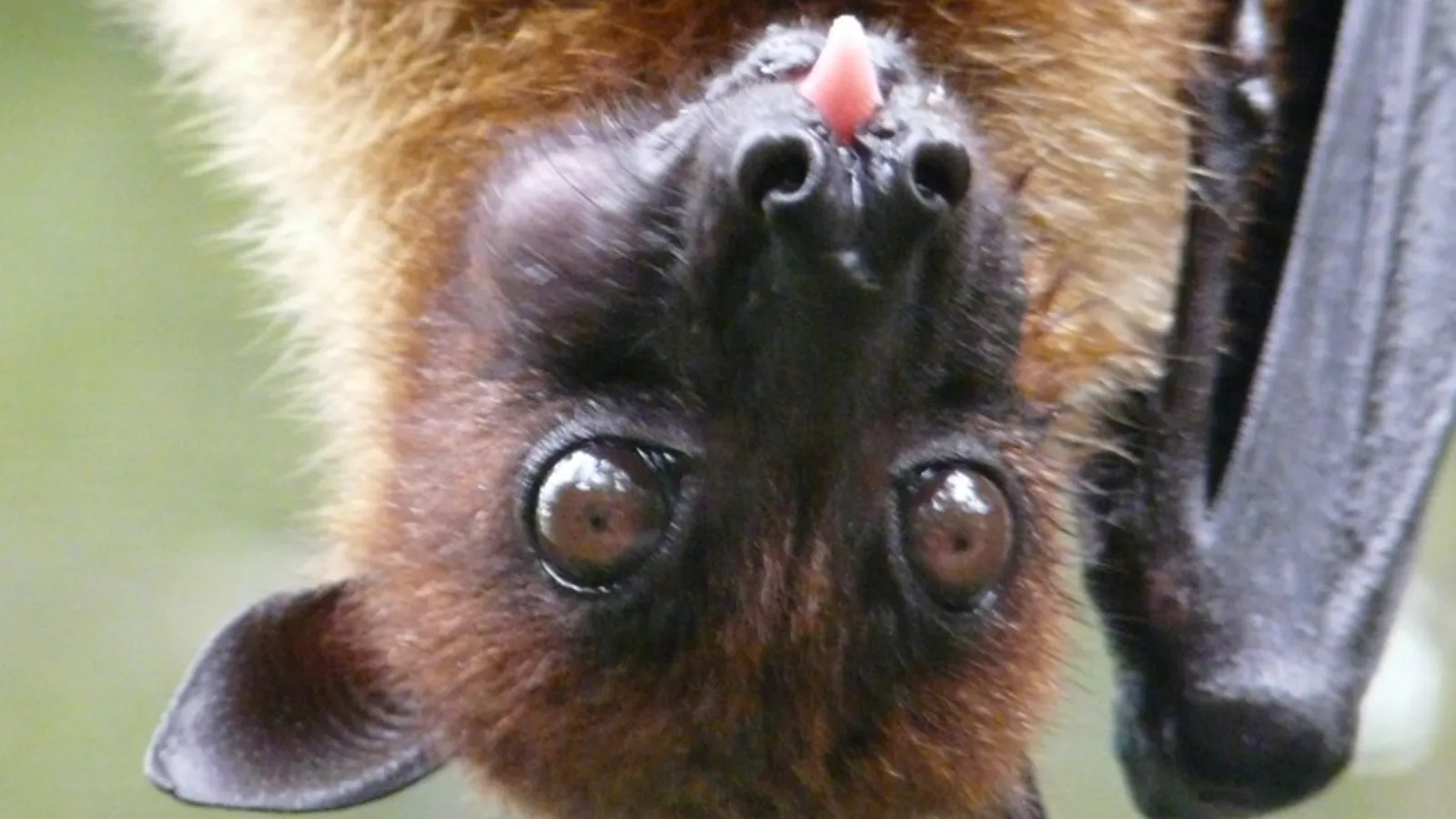
— Where the name comes from
Pteropus is Greek, pterón, “wing”, and poús, “foot”: the wing-foot, because in a bat the flight membrane joins the fingers of the hand to the ankle and the whole limb becomes flying surface. The epithet vampyrus is by contrast a misreading of the world — this animal eats fruit and nectar, not blood, but 18th-century naturalists named the large bats vampires before anyone knew which did what.
— Facts
- Group
- Mammals · Mammalia
- Order
- Bats
- Habitat
- Rainforest, mangroves, plantations; roosts in emergent trees
- Range
- South-East Asia: Malaysia, Indonesia, the Philippines, southern Thailand
- Size
- 27–32 cm of body, wingspan up to 150 cm, 0.6–1.1 kg
- Diet
- Frugivore and nectar feeder — figs, mangoes, durian flowers
- Lifespan
- About 15 years
— Characteristics
- 01
It has the largest wingspan of any bat in the world.
- 02
It does not echolocate: it navigates by large eyes and an excellent sense of smell.
- 03
It roosts in colonies that can pass twenty thousand animals in the same stand of trees.
— What sets it apart
The durian, the most commercially important fruit in South-East Asia, depends on it to exist: its flowers open at night and are pollinated almost exclusively by flying foxes that plunge their faces into them. In areas where the colonies have been exterminated as orchard pests, production has collapsed — the growers had killed the animal that made the harvest possible. A bat that eats fruit is not a thief in the orchard: it is the reason the orchard bears fruit.
