
Indian flying fox
Pteropus medius
— Where the name comes from
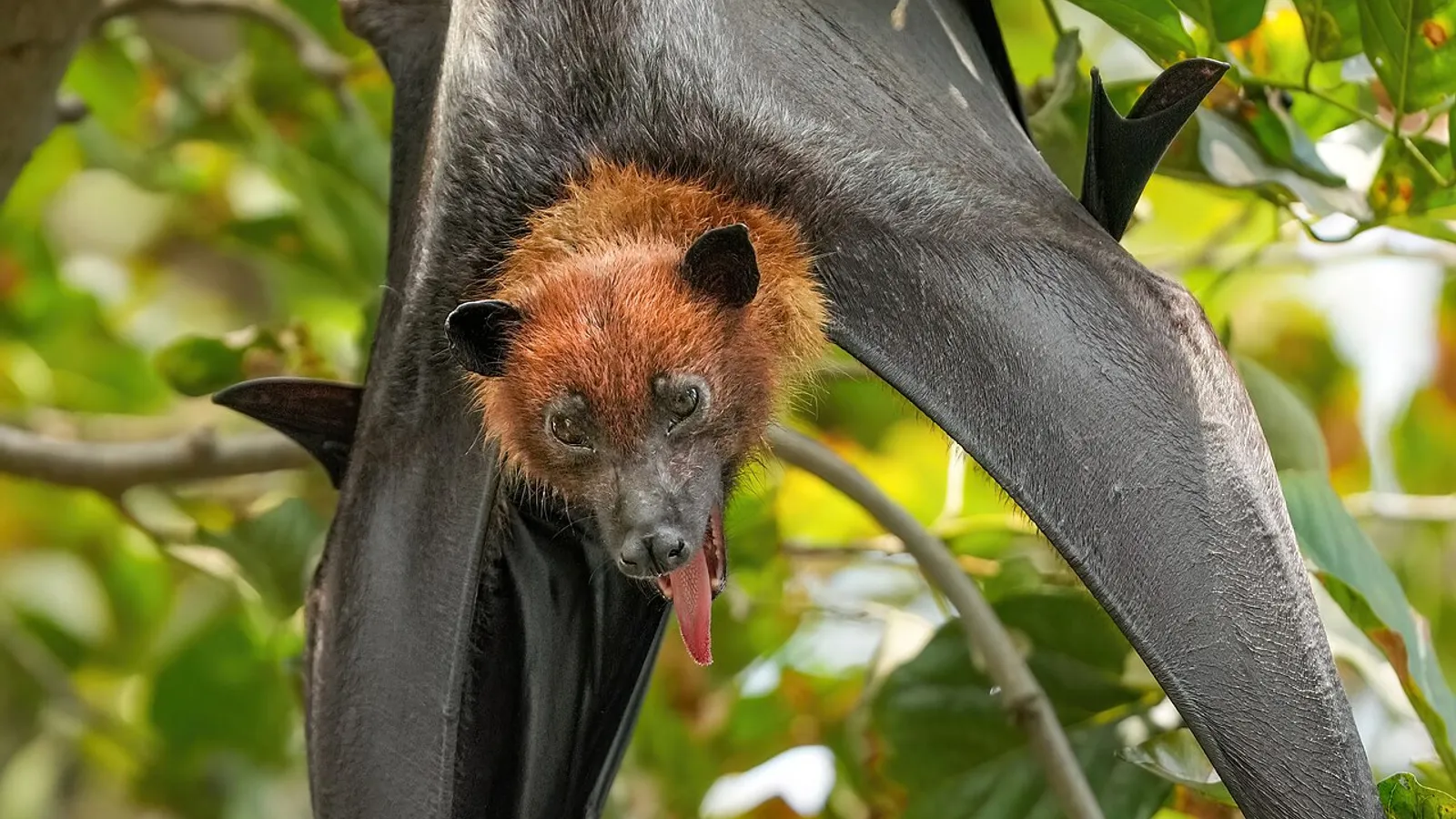
Pteropus is “winged foot”, from the Greek pterón and poús: in bats the membrane reaches all the way to the ankles, and the foot is literally part of the wing. Medius, “middle”, is recent — the species was called Pteropus giganteus until it was established that by priority another name was valid. “Flying fox” is no zoological metaphor but an honest description: the long muzzle, the large eyes and the small ears look nothing like a European bat’s.
— Facts
- Group
- Mammals · Mammalia
- Order
- Bats
- Habitat
- Forest, villages, temple gardens, always near very tall trees
- Range
- The Indian subcontinent: India, Pakistan, Bangladesh, Nepal, Sri Lanka, the Maldives
- Size
- 15–22 cm of body, 1.2–1.5 m wingspan, 0.6–1.6 kg
- Diet
- Frugivore — figs, mango, bananas, nectar, flowers
- Lifespan
- 15 years in the wild, over 30 in captivity
— Characteristics
- 01
It does not echolocate: it navigates by sight and smell, like a nocturnal bird.
- 02
The daytime colonies, called camps, number thousands of animals in a single tree.
- 03
It has colour vision and large eyes, tuned to twilight rather than to total darkness.
— What sets it apart
The trees it sleeps in are often the trees of temples, and that is part of why it still exists. In many Indian villages the flying fox camps sit on sacred fig trees inside religious enclosures, where nobody fells the trees and nobody shoots: the protection comes not from a wildlife law but from a taboo. It is one of the best-documented cases of unintended conservation, and it holds as long as the custom holds — where the temple is refurbished and the tree pruned, the colony is gone in a season.
