
Grey-headed flying fox
Pteropus poliocephalus
— Where the name comes from
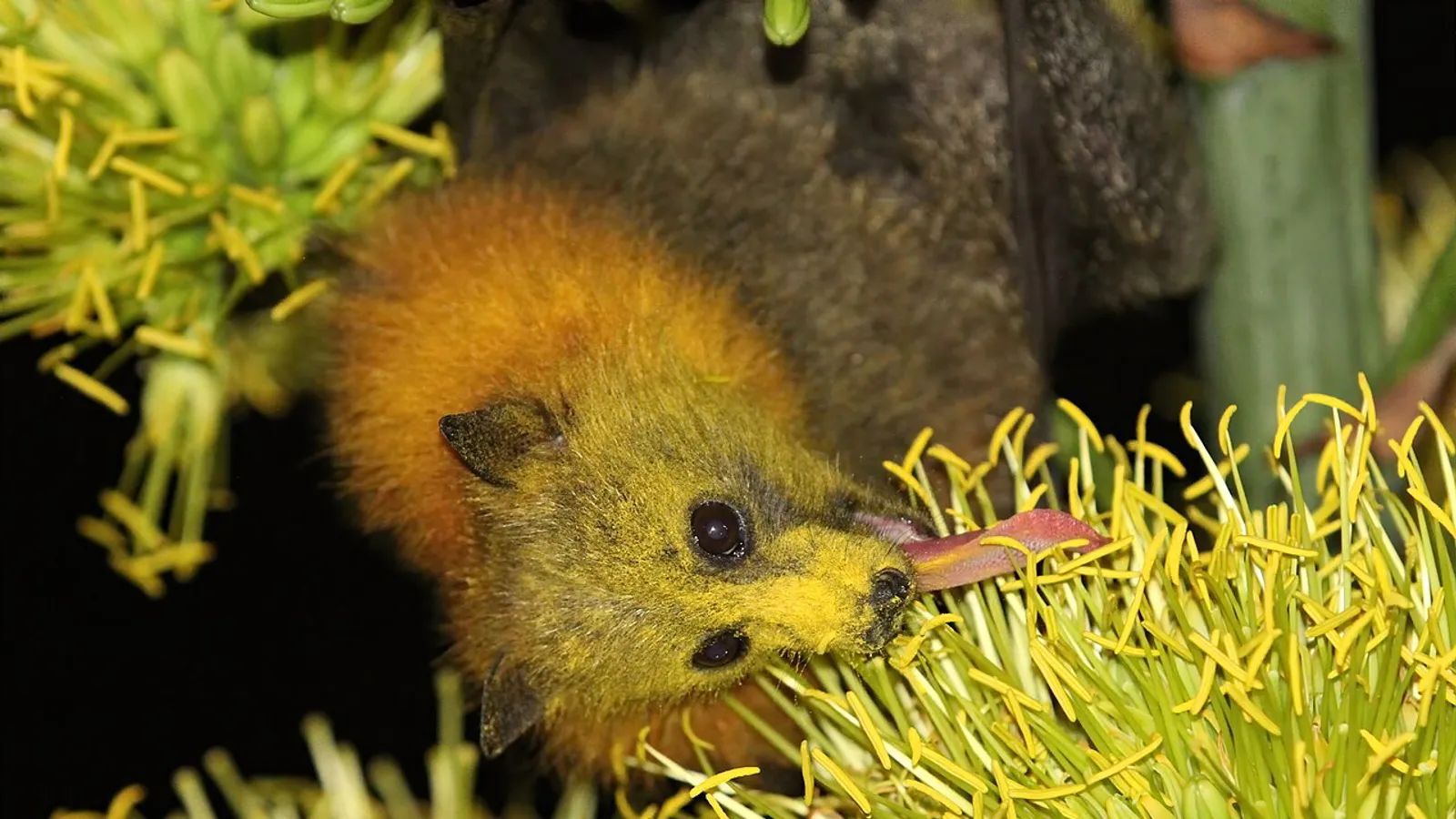
Poliocephalus is “grey head”, from the Greek poliós — the same adjective used for the hair of the old — and kephalḗ. The orange collar and the ash-grey head set it apart from the other Australian flying foxes. The genus name, Pteropus, “winged foot”, states the least intuitive thing about bat anatomy: the wing does not end at the hand, it runs on to the feet.
— Facts
- Group
- Mammals · Mammalia
- Order
- Bats
- Habitat
- Subtropical rainforest, eucalyptus woodland, urban parks and gardens
- Range
- Eastern Australia, from Queensland to Victoria
- Size
- 23–29 cm of body, up to 1 m wingspan, 600–1,000 g
- Diet
- Frugivore and nectar feeder — eucalyptus blossom, figs, cultivated fruit
- Lifespan
- 15 years in the wild
— Characteristics
- 01
It covers up to 50 km a night to reach trees in flower.
- 02
It pollinates eucalypts and paperbarks whose flowers open only at night.
- 03
It now lives permanently inside Australian cities, Sydney and Melbourne included.
— What sets it apart
It dies of heat, and the deaths can be counted. Above 42 °C this species cannot cope: the animals climb down the branches seeking shade, mass together low down, and then fall. In the heatwave of November 2018, in Queensland, tens of thousands died within a couple of days, about a third of that year’s young. Such events have been recorded for decades and are becoming more frequent: it is one of the very few species for which mortality from extreme heat is measured directly, by counting the bodies under the trees.
