
Giant golden-crowned flying fox
Acerodon jubatus
— Where the name comes from
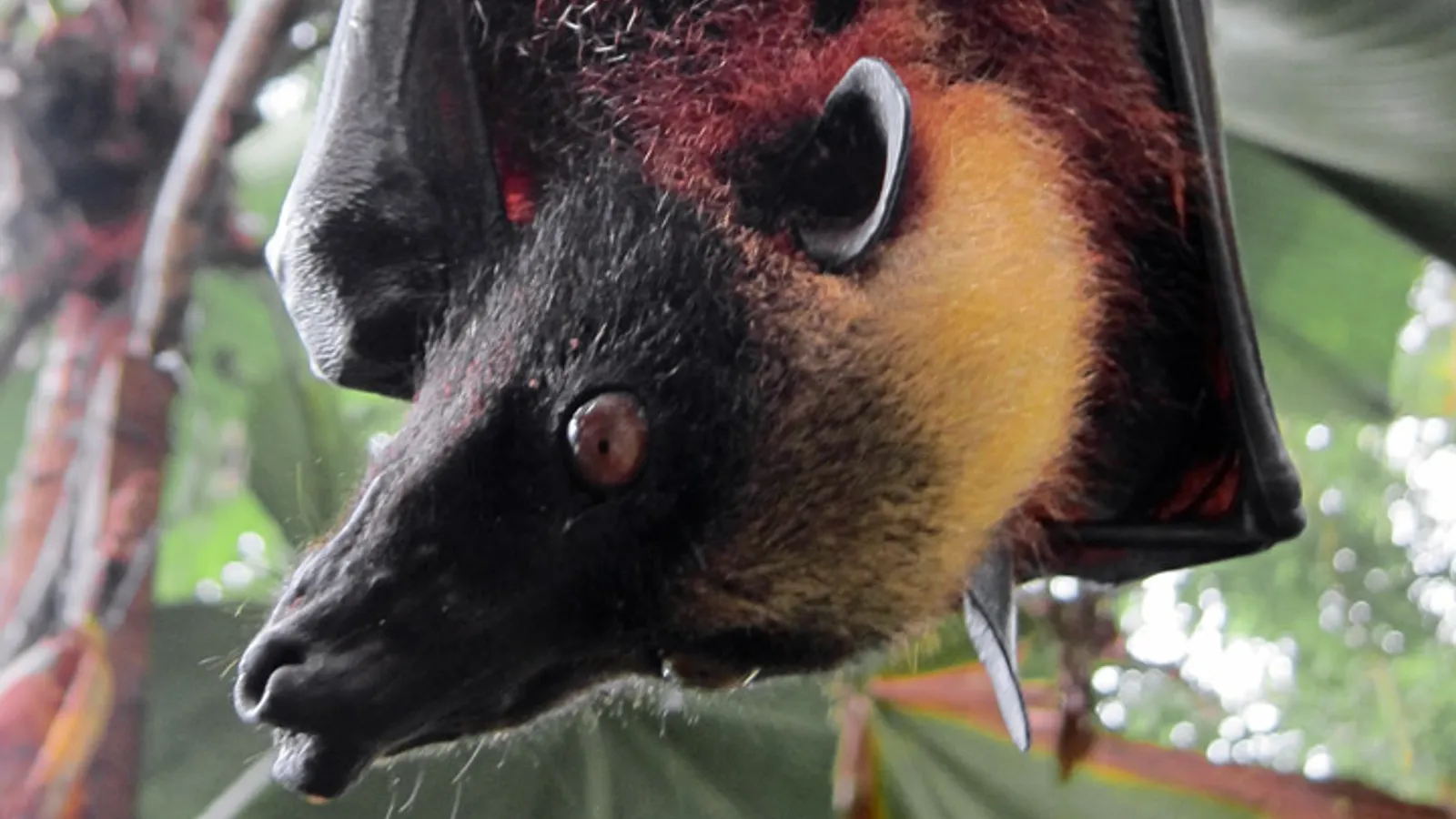
Jubatus is the Latin “maned”, for the golden mantle over nape and shoulders which in raking light looks like beaten metal. Acerodon is a Greek compound built on the shape of the teeth, and serves to separate this genus from the true flying foxes of the genus Pteropus — with which, however, it shares the same Philippine forests and often the same roosting trees.
— Facts
- Group
- Mammals · Mammalia
- Order
- Bats
- Habitat
- Primary lowland rainforest, near rivers and coasts
- Range
- Endemic to the Philippines
- Size
- 17–29 cm of body, up to 1.7 m wingspan, 0.7–1.4 kg
- Diet
- Frugivore — almost exclusively figs
- Lifespan
- About 20 years
— Characteristics
- 01
It has the greatest wingspan of any living bat: up to 1.7 metres.
- 02
It depends almost entirely on figs, and with them on primary forest.
- 03
It roosts in mixed colonies with the giant flying fox, which belongs to another genus.
— What sets it apart
It is the largest bat in the world by wingspan — one metre seventy, the height of a short person lying down — and it eats nothing but figs. That specialisation ties it to virgin forest, because great centuries-old figs do not regrow in plantations, and it explains why it is endangered while other flying foxes thrive in villages: the species that will take the garden mango survive, the one that demands a ripe fig disappears along with the tree.
