
Straw-coloured fruit bat
Eidolon helvum
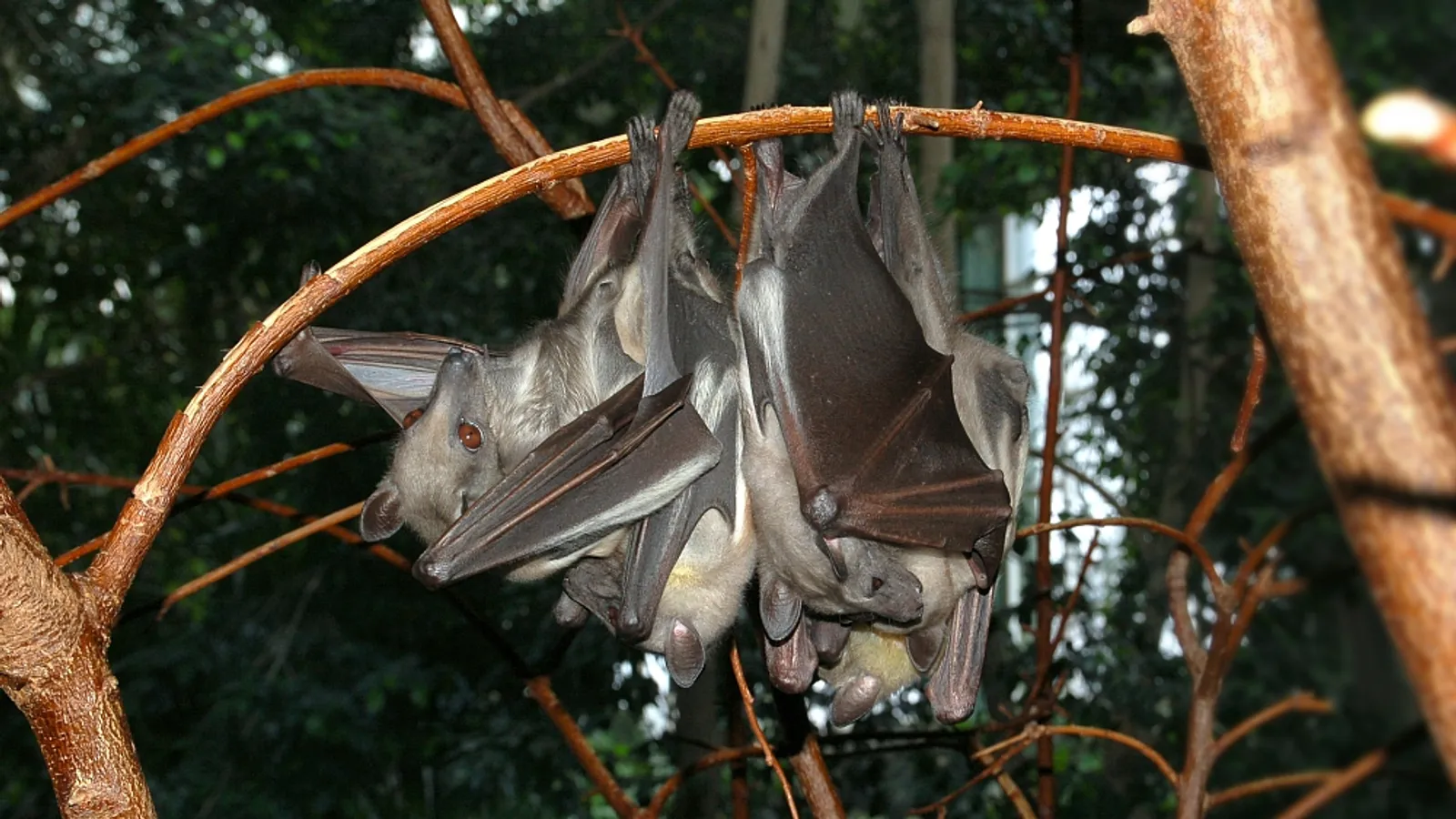
— Where the name comes from
Eidolon is the Greek eídōlon, “image, phantom, apparition” — the same word behind “idol”. Helvum is the Latin for the pale yellow of dry straw, which in this animal applies to the collar and shoulders. Together they make “the straw-coloured phantom”, and for a species that rises at dusk in clouds of millions it is more exact than the describer could have imagined.
— Facts
- Group
- Mammals · Mammalia
- Order
- Bats
- Habitat
- Forest, wooded savannah, African cities, always in enormous colonies
- Range
- Sub-Saharan Africa, from Senegal to Ethiopia and down to South Africa
- Size
- 14–21 cm of body, 75–95 cm wingspan, 230–350 g
- Diet
- Frugivore and nectar feeder — fruit, flowers, leaves chewed for the juice
- Lifespan
- About 15 years in the wild
— Characteristics
- 01
It makes seasonal migrations of over 2,500 kilometres.
- 02
Urban colonies, such as the one in Kampala, number hundreds of thousands.
- 03
It disperses the seeds of dozens of African trees, the iroko among them.
— What sets it apart
Every year, between October and December, some ten million of these bats gather in a scrap of swamp forest in Kasanka park, in Zambia: it is the largest concentration of mammals on the planet and it fits into little more than a hectare. Where exactly they come from is still unclear — satellite tracking points to a catchment running from the Congo to Tanzania — and nobody can explain why there. For two months that patch of woodland bears the weight of ten million animals, then empties all at once.
