
Egyptian fruit bat
Rousettus aegyptiacus
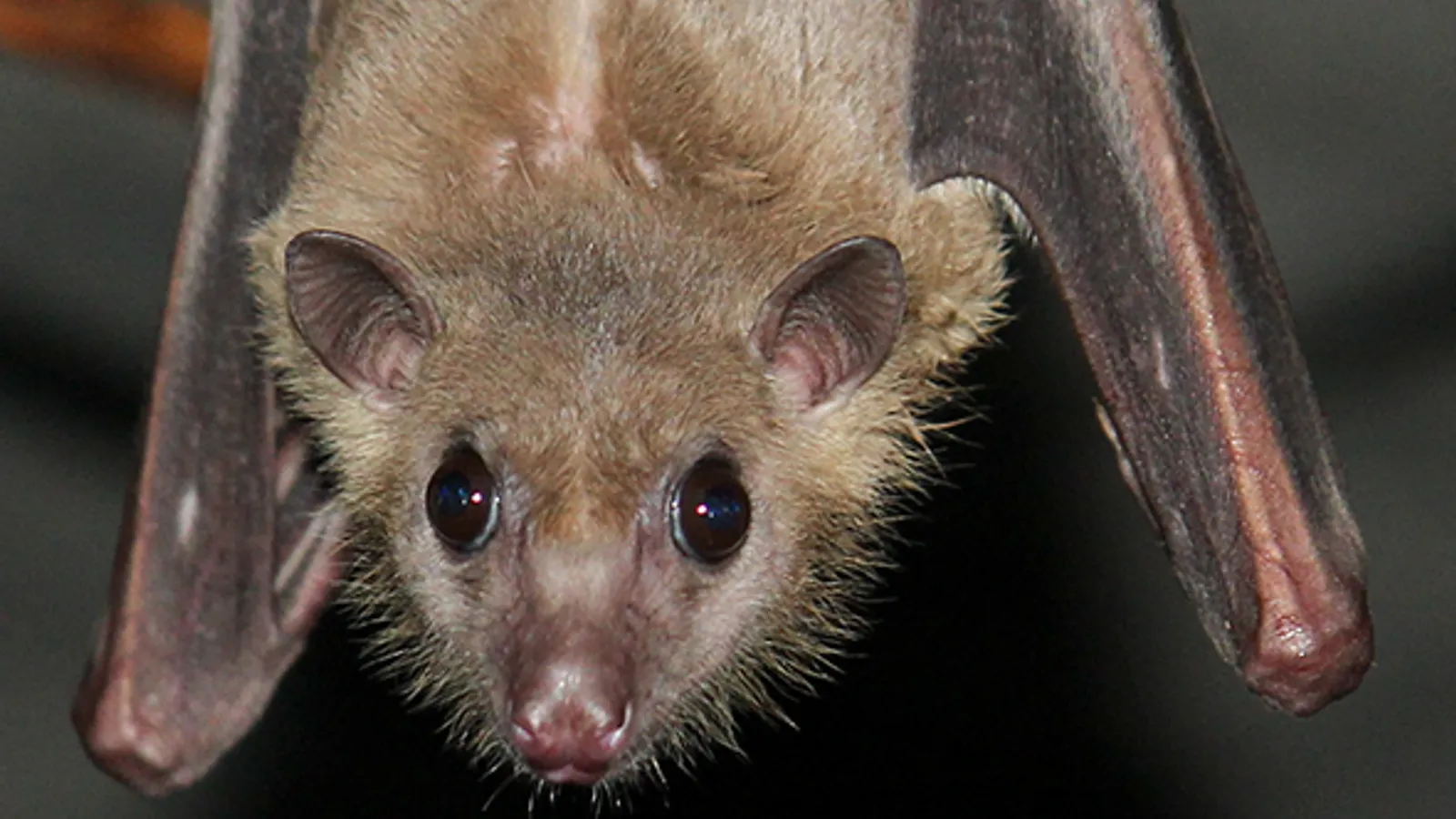
— Where the name comes from
Rousettus latinises the French roussette, “reddish”, the name French naturalists gave fruit bats for their tawny colour. The Italian rossetto comes from that and has nothing to do with lipstick: it is the same root as rosso, red. Aegyptiacus names Egypt, where it was described — and where it appears in the reliefs of pharaonic tombs.
— Facts
- Group
- Mammals · Mammalia
- Order
- Bats
- Habitat
- Caves and tombs, forests, orchards, cities, from the coast to the mountains
- Range
- Sub-Saharan Africa, Egypt, the Middle East, Cyprus, southern Turkey
- Size
- 12–16 cm of body, 60 cm wingspan, 80–170 g
- Diet
- Frugivore — figs, dates, cultivated fruit, nectar
- Lifespan
- 22 years in the wild, over 25 in captivity
— Characteristics
- 01
It lives in cave colonies that can pass forty thousand animals.
- 02
It is the chief model for the study of bat immunity.
- 03
It remembers for years where the fruit trees are and returns to them in a straight line.
— What sets it apart
It is the only fruit bat that echolocates, and it does so in a way with nothing in common with other bats: it does not use the larynx, it clicks its tongue against the palate. What comes out is a crude sonar, enough to move about in the total darkness of a cave but not to chase an insect in flight, and it evolved entirely independently. Among mammals echolocation has been invented at least twice, and one of those times happened here, with the tongue instead of the throat.
