
Geoffroy's rousette
Rousettus amplexicaudatus
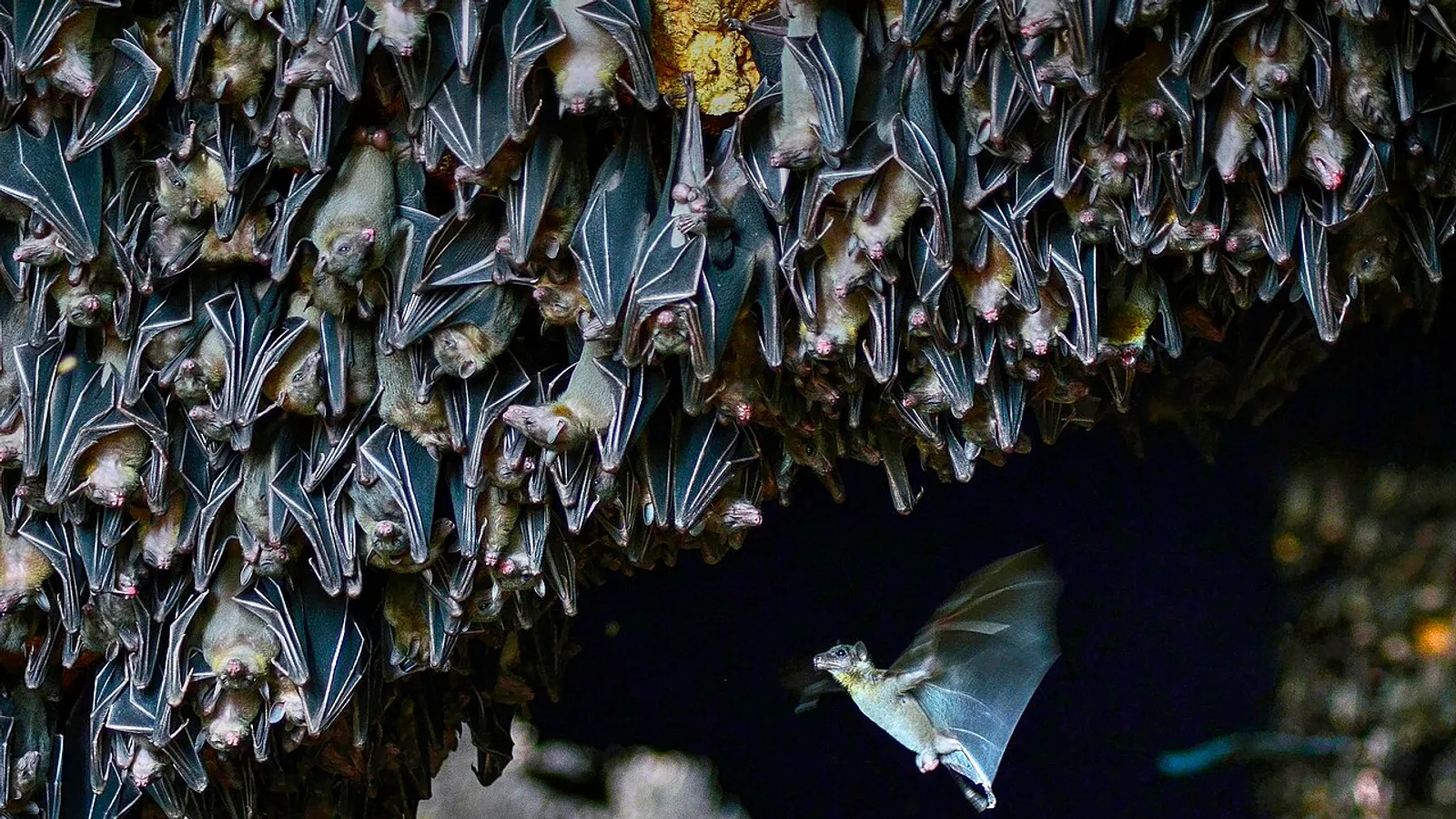
— Where the name comes from
Amplexicaudatus means “with an embraced tail”, from the Latin amplexus, “embrace”, and cauda: the short tail is partly wrapped by the interfemoral membrane without being wholly enclosed in it. It is a minute anatomical detail, which served to tell it from its congeners before genetics existed, and it is typical of how species were named in the 19th century.
— Facts
- Group
- Mammals · Mammalia
- Order
- Bats
- Habitat
- Limestone caves, tunnels, tropical forest and plantations
- Range
- South-East Asia, from Burma to the Philippines, New Guinea and the Solomons
- Size
- 9–13 cm of body, 60 cm wingspan, 60–140 g
- Diet
- Nectar and fruit feeder — banana flowers, durian, various fruit
- Lifespan
- 10–15 years
— Characteristics
- 01
Like its Egyptian congener it navigates in the dark by tongue clicks.
- 02
Cave colonies can pass a hundred thousand animals.
- 03
It pollinates the durian and several species of wild banana.
— What sets it apart
The caves it sleeps in are guano mines, and that made it economically relevant before it was biologically interesting. In the Philippines and Indonesia the deposits built up beneath the colonies have been dug out and sold as fertiliser for generations, with the paradoxical result that certain caverns are protected not for the bats but for their droppings. Where the digging is done during breeding, however, the colony abandons the cave, and the mine exhausts itself within a few years.
