
Wahlberg's epauletted fruit bat
Epomophorus wahlbergi
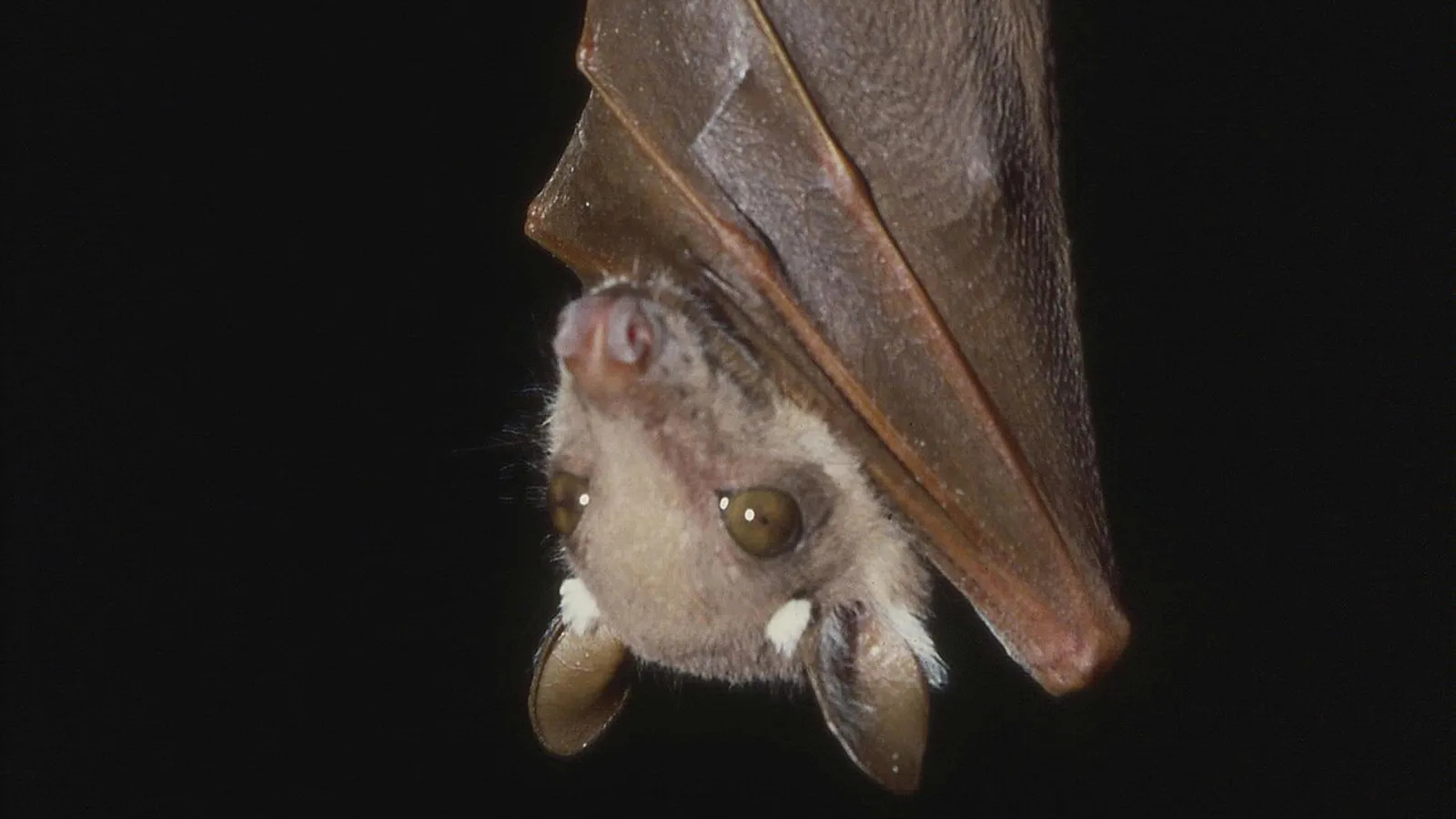
— Where the name comes from
Epomophorus is “epaulette bearer”, from the Greek epōmís, the part of a garment covering the shoulder, and phoréō: the male has two tufts of white hair inside two skin pockets, which he turns outward as he calls. Wahlbergi recalls Johan August Wahlberg, a Swedish naturalist who collected in southern Africa for twenty years and died there in 1856, gored by an elephant.
— Facts
- Group
- Mammals · Mammalia
- Order
- Bats
- Habitat
- Coastal forest, wooded savannah, gardens and orchards
- Range
- Eastern and southern Africa, from Sudan to South Africa
- Size
- 12–16 cm of body, 50 cm wingspan, 65–120 g
- Diet
- Frugivore — figs above all, then guava, mango, nectar
- Lifespan
- 8–10 years
— Characteristics
- 01
The male everts the white epaulettes only during courtship.
- 02
It gives a metallic call repeated all night, audible from gardens.
- 03
It spits out large seeds and swallows small ones: it disperses both, but in two different ways.
— What sets it apart
The male spends the night repeating a single note. Hanging from a branch, he gives a dry metallic call up to a hundred and twenty times a minute for hours on end, inflating his throat sacs and everting the white epaulettes with every beat. In the cities of southern Africa it is one of the most familiar night sounds and one of the least recognised: nearly everyone puts it down to a bird or a frog, and very few know they are listening to a bat advertising itself.
