
Red fox
Vulpes vulpes
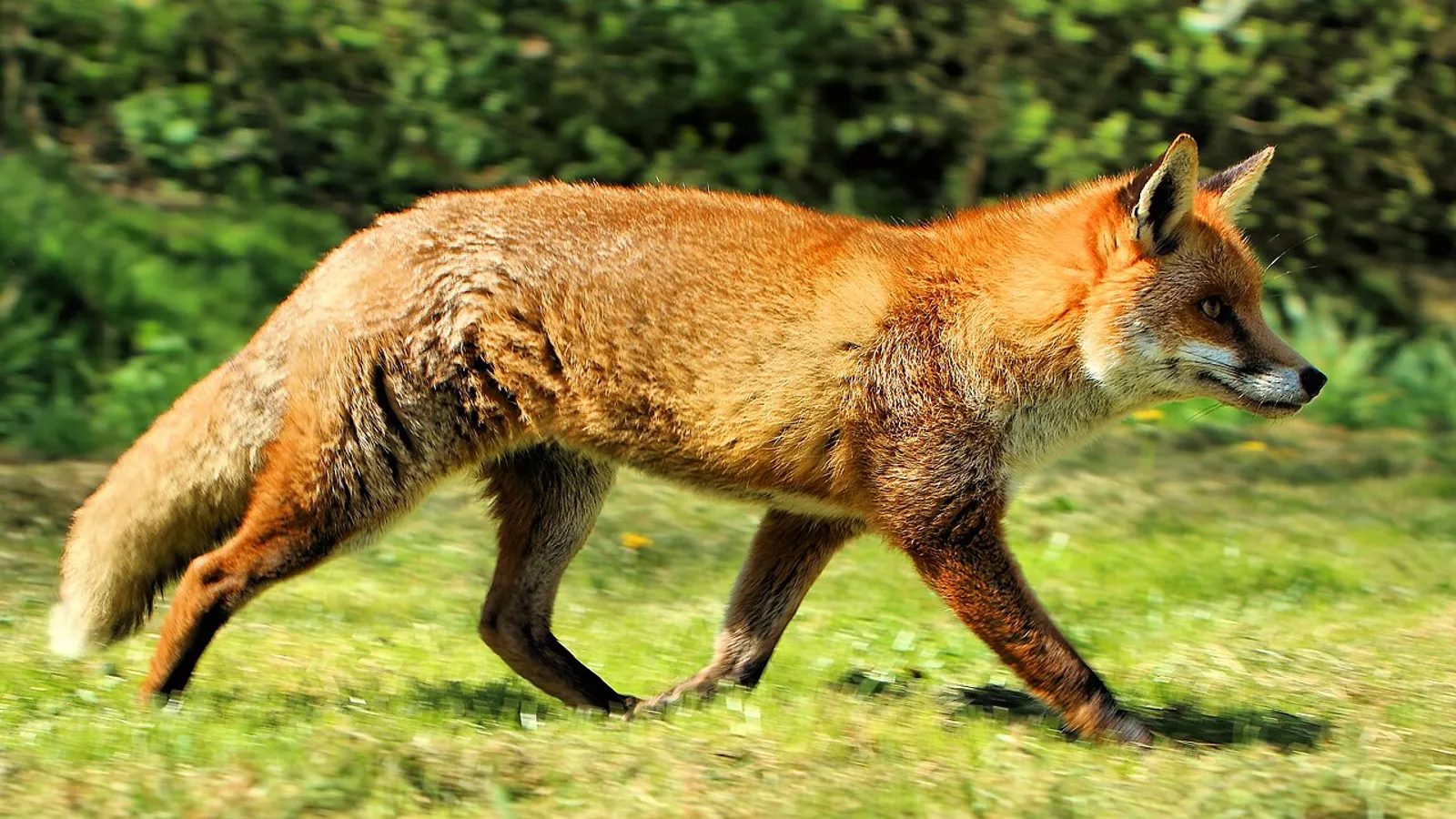
— Where the name comes from
From the Latin vulpes, of uncertain etymology but perhaps tied to an Indo-European root for the tail. In many European languages the fox’s name is a superstitious nickname: people avoided naming the animal directly.
— Facts
- Group
- Mammals · Mammalia
- Order
- Carnivores
- Habitat
- Everywhere: woodland, farmland, tundra, city outskirts
- Range
- The most widely distributed land carnivore in the world
- Size
- 60–90 cm plus 30–50 cm of tail, 4–8 kg
- Diet
- Omnivore — rodents, birds, insects, fruit, refuse
- Lifespan
- 3–5 years in the wild
— Characteristics
- 01
Extreme adaptability: it thrives in central London as it does in the Arctic tundra.
- 02
The vertical pounce on prey hidden under snow, called mousing, is learnt and refined.
- 03
The tail works as a rudder when running and as a blanket when sleeping.
— What sets it apart
When the fox pounces on prey buried in snow it does so with a clear preference: it faces north-east. The hypothesis is that it uses the Earth’s magnetic field as a sight, laying the tilt of the field lines over the sound beneath the snow to judge the distance. Pounces aligned to the north succeed more than twice as often.
