
Eurasian lynx
Lynx lynx
Conservation status IUCN: Least concern· LC
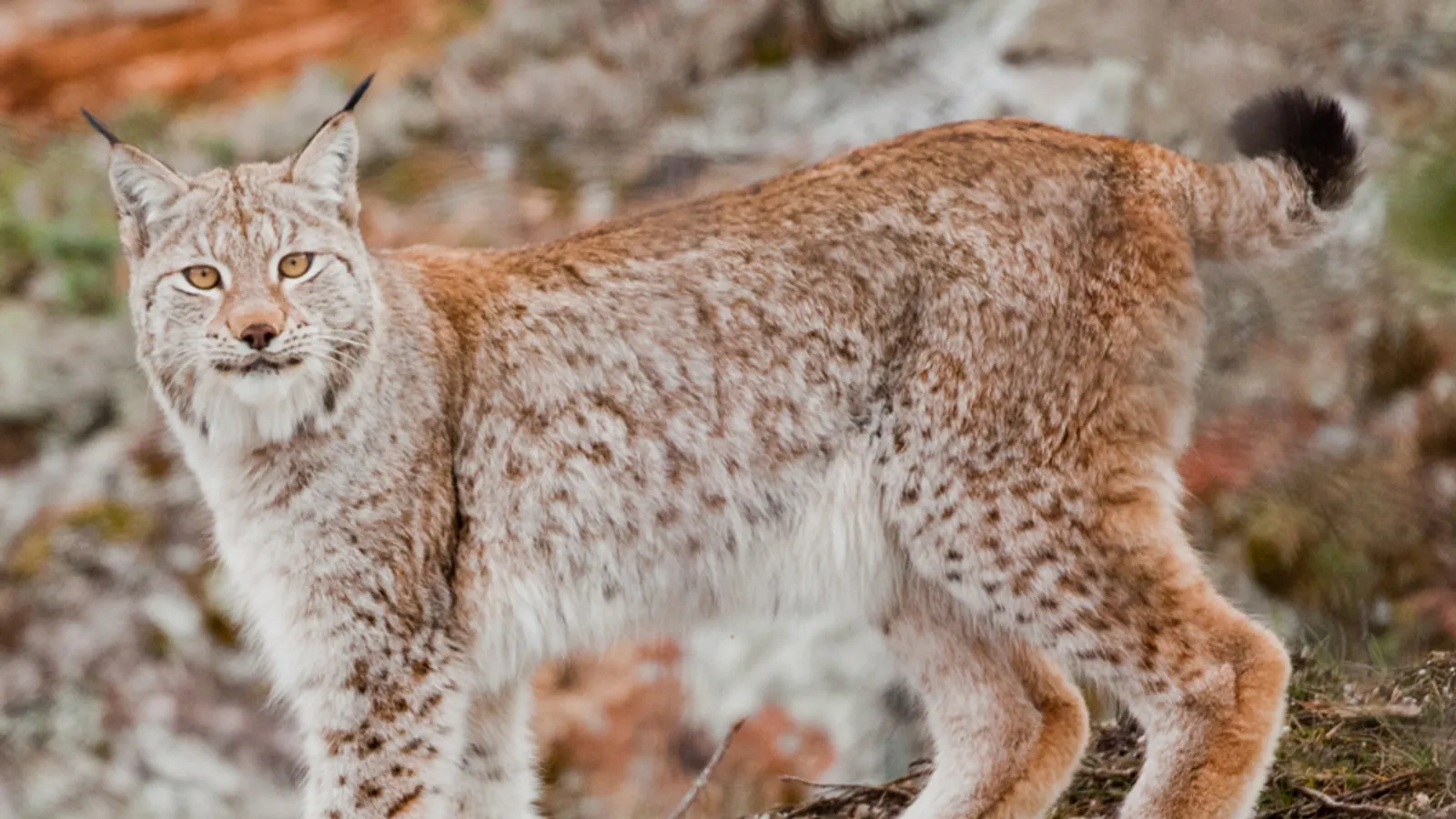
— Where the name comes from
From the Greek lýnx, from the Indo-European root *leuk-, “light, to shine” — the same one behind lux and lucere. The name captures the shine of the eyes in the dark, thrown back by the tapetum lucidum behind the retina.
— Facts
- Group
- Mammals · Mammalia
- Order
- Carnivores
- Habitat
- Mature forest, mountains up to the treeline
- Range
- Scandinavia, the Carpathians, the Balkans, Siberia; tiny nuclei in the Alps
- Size
- 80–130 cm, 18–30 kg
- Diet
- Carnivore — roe deer, hares
- Lifespan
- about 15 years
— Characteristics
- 01
The black tufts on the ears sharpen its directional hearing.
- 02
The broad paws work as snowshoes.
- 03
An ambush predator: it hunts in silence, never in a long chase.
— What sets it apart
The legend of eyesight that passes through walls comes from Lynceus, the mythical Argonaut of prodigious sight, and not from the animal. But there is something to it: the lynx makes out a mouse at 75 metres and a hare at 300, and sees at light levels where we are effectively blind.
