
Giant panda
Ailuropoda melanoleuca
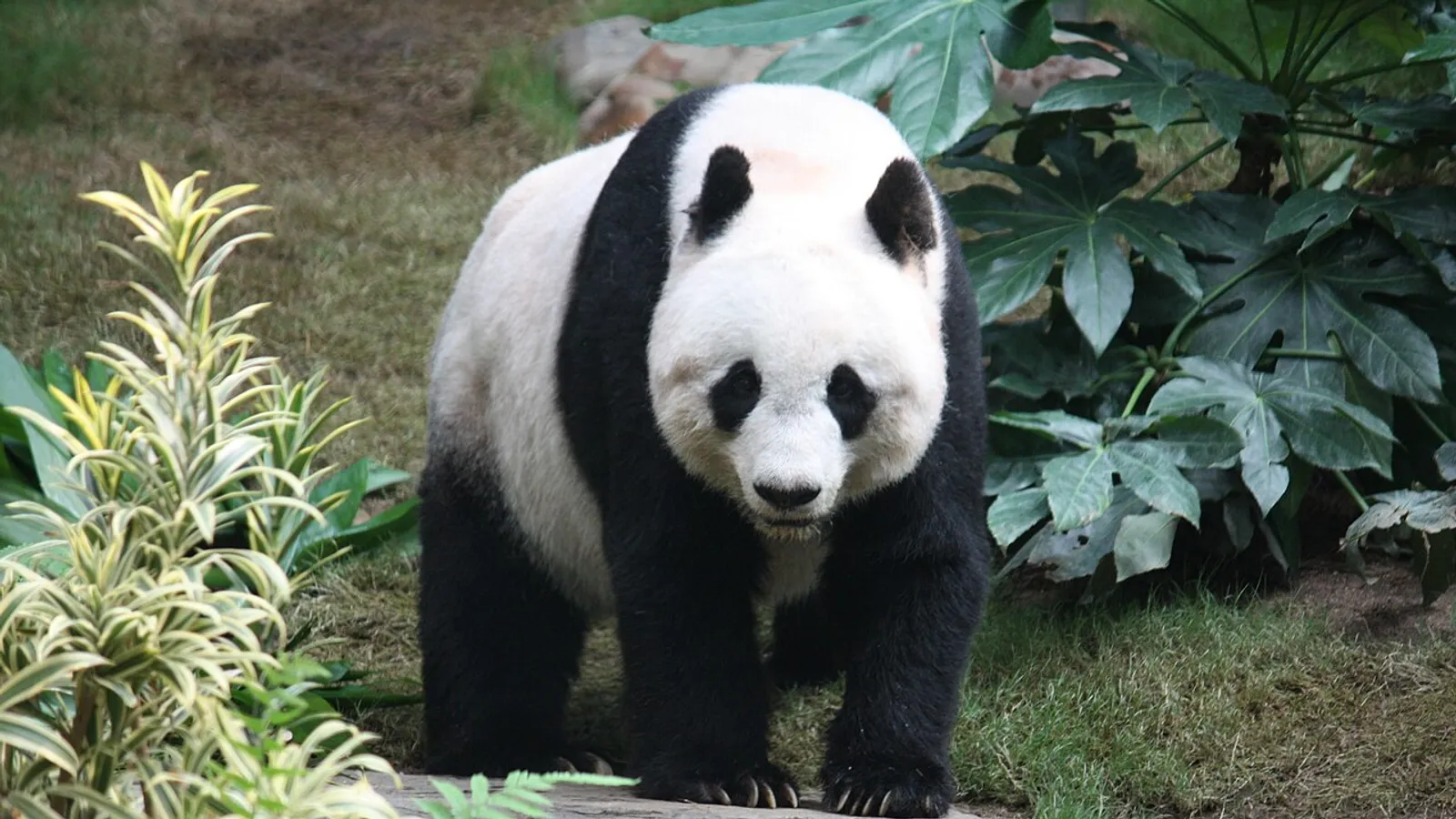
— Where the name comes from
Panda probably comes from the Nepali nigalya ponya, “bamboo eater”, a name that originally belonged to the red panda. The scientific name means “cat foot, black and white” (aíluros cat, poús foot; mélas black, leukós white).
— Facts
- Group
- Mammals · Mammalia
- Order
- Carnivores
- Habitat
- Montane bamboo forest between 1,200 and 3,400 m
- Range
- Sichuan, Shaanxi and Gansu, in central China
- Size
- 120–190 cm, 70–125 kg
- Diet
- A herbivore in practice — 99% bamboo, 12–38 kg a day
- Lifespan
- 20 years in the wild
— Characteristics
- 01
It belongs to the order Carnivora but eats an almost entirely vegetable diet.
- 02
The “false thumb” is an elongated wrist bone, not a finger.
- 03
Spends up to 14 hours a day eating.
— What sets it apart
The panda still has the short gut of a carnivore, hopeless for cellulose: it absorbs barely 17% of what it swallows. The gene T1R1, which codes for the umami taste receptor — the taste of meat — is mutated and inactive. The panda did not stop eating meat because it stopped tasting it: it stopped tasting it because it had already stopped eating it.
