
Arctic fox
Vulpes lagopus
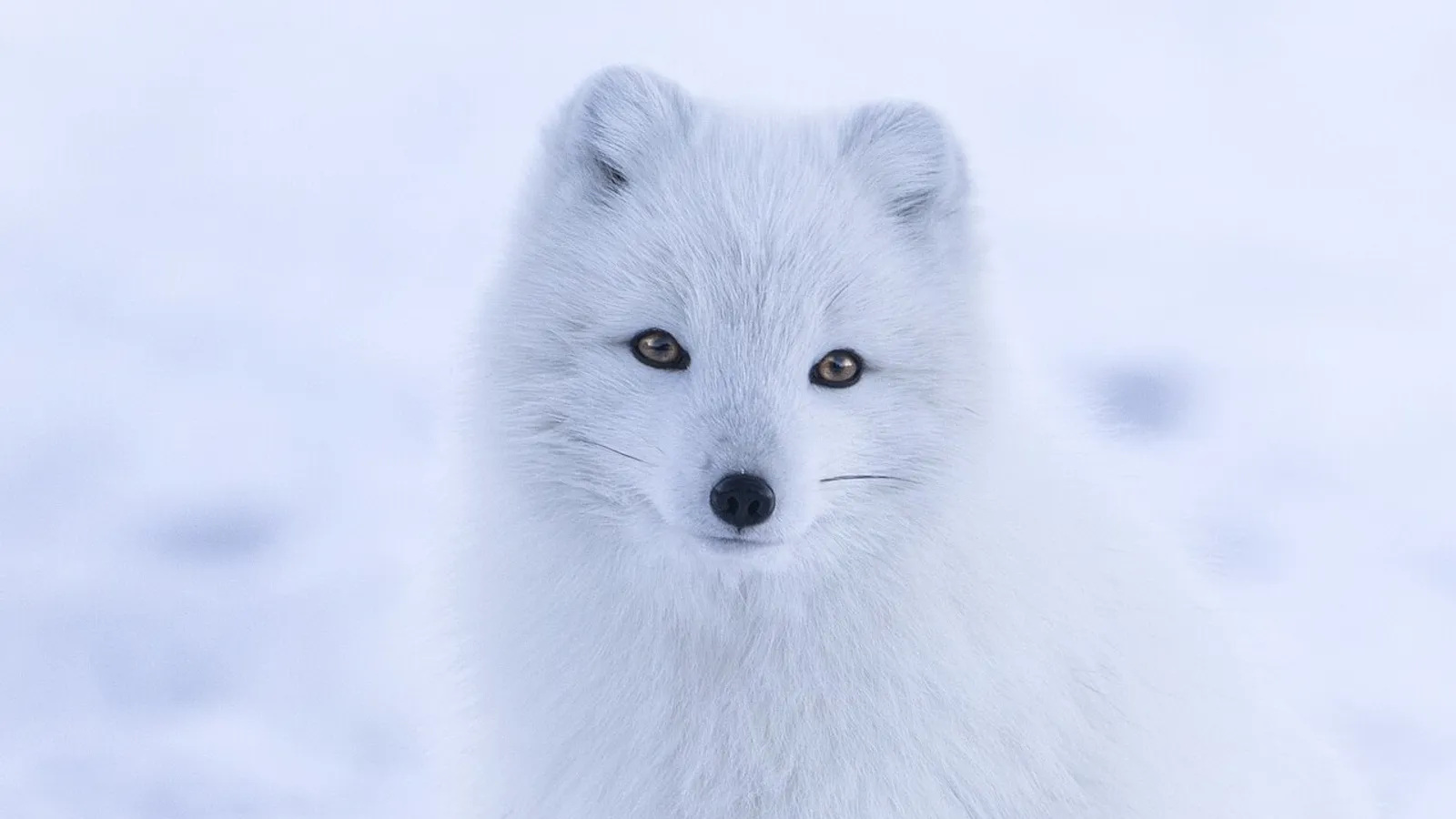
— Where the name comes from
Vulpes is the Latin for fox, of uncertain etymology but belonging to the same lexical field as the Greek alṓpēx. The epithet lagopus is a small Greek description: lagṓs, “hare”, and poús, “foot” — the hare’s foot, for the sole covered in dense fur that insulates it from ice. The ptarmigan carries the same name, for the same reason: in the Arctic, whoever walks puts shoes on.
— Facts
- Group
- Mammals · Mammalia
- Order
- Carnivores
- Habitat
- Arctic tundra, frozen coasts, pack ice
- Range
- Circumpolar Arctic: Alaska, Canada, Greenland, Scandinavia, Siberia, Iceland
- Size
- 50–70 cm long plus 30 of tail, 3–5 kg
- Diet
- Omnivore — lemmings above all, birds, eggs, carrion, berries
- Lifespan
- 3–6 years in the wild
— Characteristics
- 01
It has the most insulating fur of any mammal: it does not shiver down to −40 °C.
- 02
It changes colour twice a year, white in winter and brown-grey in summer.
- 03
It hears lemmings moving under the snow and dives head first, punching through the crust with its muzzle.
— What sets it apart
Its numbers do not vary at random: they follow a three- to four-year cycle, exactly that of the lemmings it lives on. When the rodents are plentiful a female may bear up to eighteen pups, the largest litter of any carnivore; when they crash, many pairs do not breed at all. It is one of the most regular predator-prey systems known in nature, so much so that it has ended up in ecology textbooks as the standard example — and in the North you can read last year’s abundance of lemmings by counting this year’s foxes.
