
Plains viscacha
Lagostomus maximus
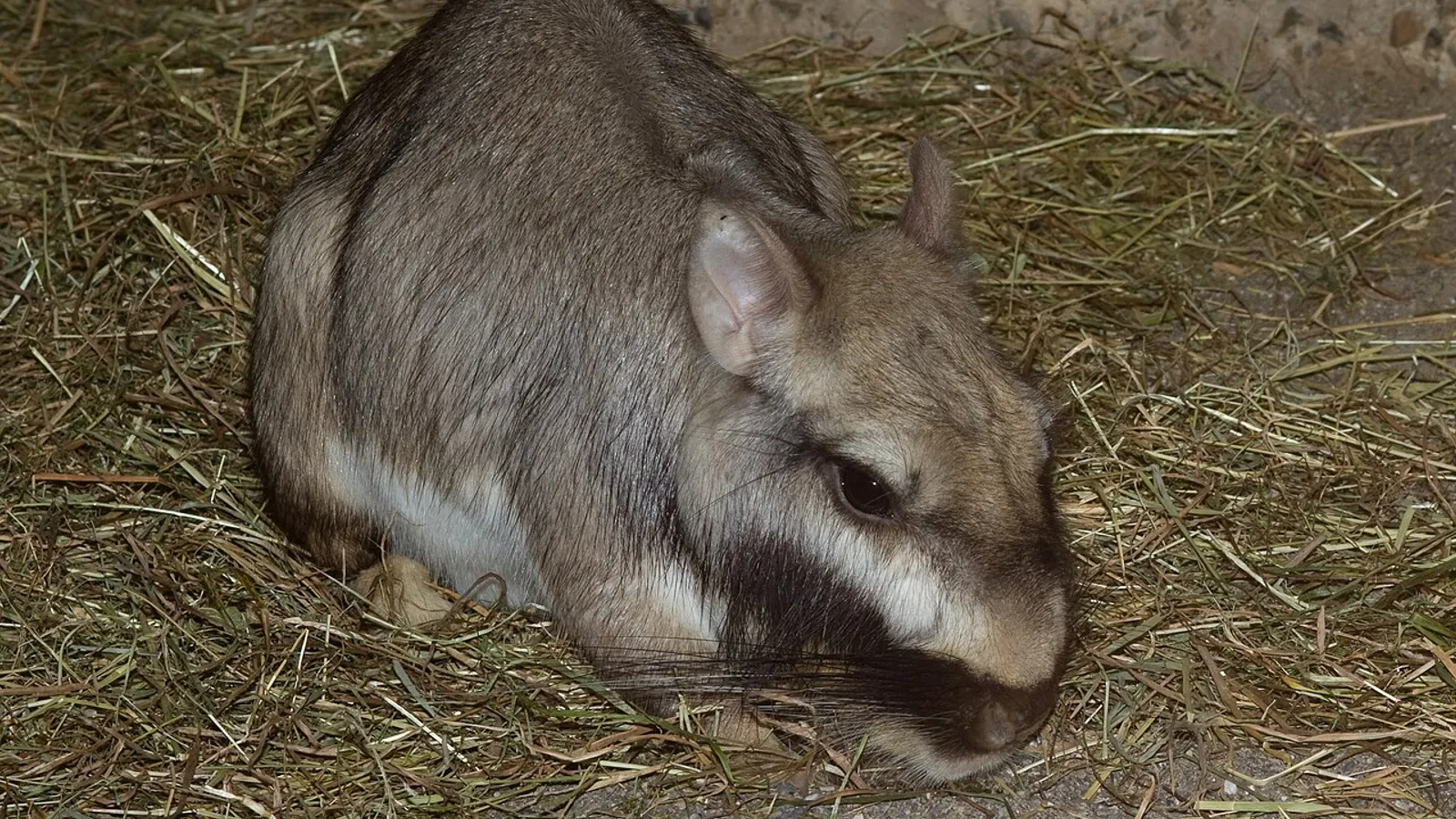
— Where the name comes from
Lagostomus is “hare mouth”, from lagṓs and stóma, for the cleft upper lip and protruding teeth. Maximus sets it apart by size. Viscacha renders the Quechua wisk’acha, the Andean name of these rodents, which reached Europe through the Spanish of the conquistadors.
— Facts
- Group
- Mammals · Mammalia
- Order
- Rodents
- Habitat
- Pampas, shrubby steppe, dry ground
- Range
- Argentina, Paraguay, southern Bolivia
- Size
- 47–66 cm, tail 15–20 cm, 2–8 kg
- Diet
- Grasses, seeds, roots
- Lifespan
- 8 years
— Characteristics
- 01
It lives in underground colonies, the vizcacheras, which may hold fifty animals.
- 02
Males weigh twice as much as females, extreme dimorphism for a rodent.
- 03
The female ovulates hundreds of eggs per pregnancy and carries two to term.
— What sets it apart
It piles on the roof of its burrow everything it finds: bones, branches, dry dung, and since humans arrived also bottles, cutlery, watches and tools. The gauchos knew it and would go to the vizcacheras to look for what they had lost. Charles Darwin noted it in the Beagle diary, wondering what the heap was for; the current hypothesis is that it marks the entrance and protects it from flooding, but nobody has yet explained why the choice falls on any object at all and not on branches alone.
