
Saw-scaled viper
Echis carinatus
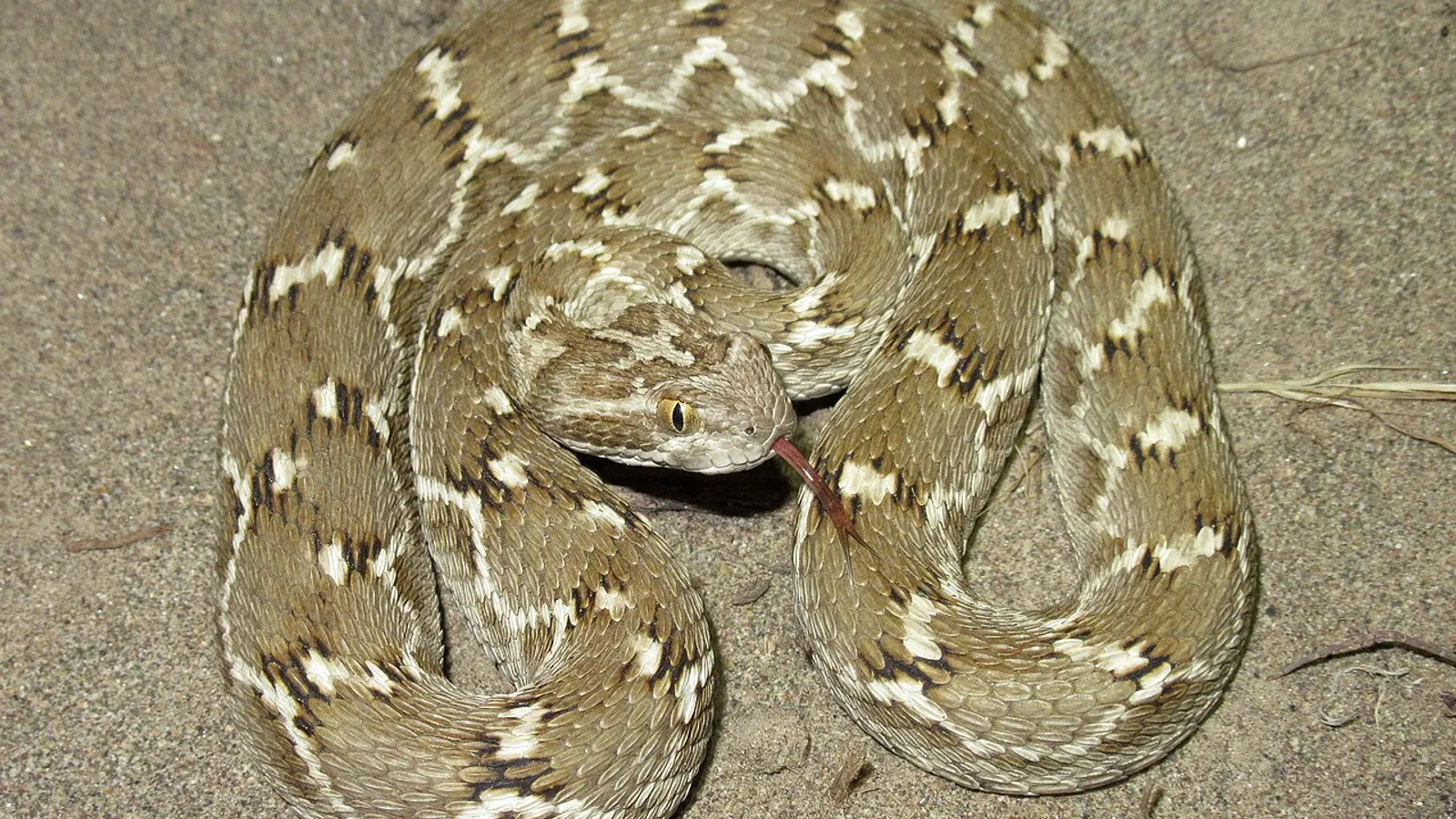
— Where the name comes from
Échis is the viper in Greek, and it is the same word as Echidna, the monstrous mother of Cerberus and the Chimaera, half woman and half snake. Carinatus means “keeled”, because every scale on the flanks carries a serrated ridge: it is not an ornament, it is a musical instrument.
— Facts
- Group
- Reptiles · Reptilia
- Order
- Squamates
- Habitat
- Arid ground, steppe, fields, walls, sandy terrain
- Range
- From the Middle East to India and Sri Lanka
- Size
- 40–60 cm, up to 80 cm; 60–200 g
- Diet
- Mice, lizards, frogs, scorpions, centipedes
- Lifespan
- 12 years
— Characteristics
- 01
It is small and slender but extremely irritable.
- 02
It moves sideways over sand, like the desert vipers.
- 03
It is one of India’s “big four”.
— What sets it apart
It does not hiss: it saws. Instead of blowing air — which in a desert means losing water — it folds its body into C-shaped coils and rubs them against each other, making the serrated keels of the scales rasp: the result is a dry, continuous grating audible several metres off. The solution is so efficient that the genus adopted it in place of hissing, and many herpetologists think this small, extremely common snake kills more people than any other in the world.
