
Eastern diamondback rattlesnake
Crotalus adamanteus
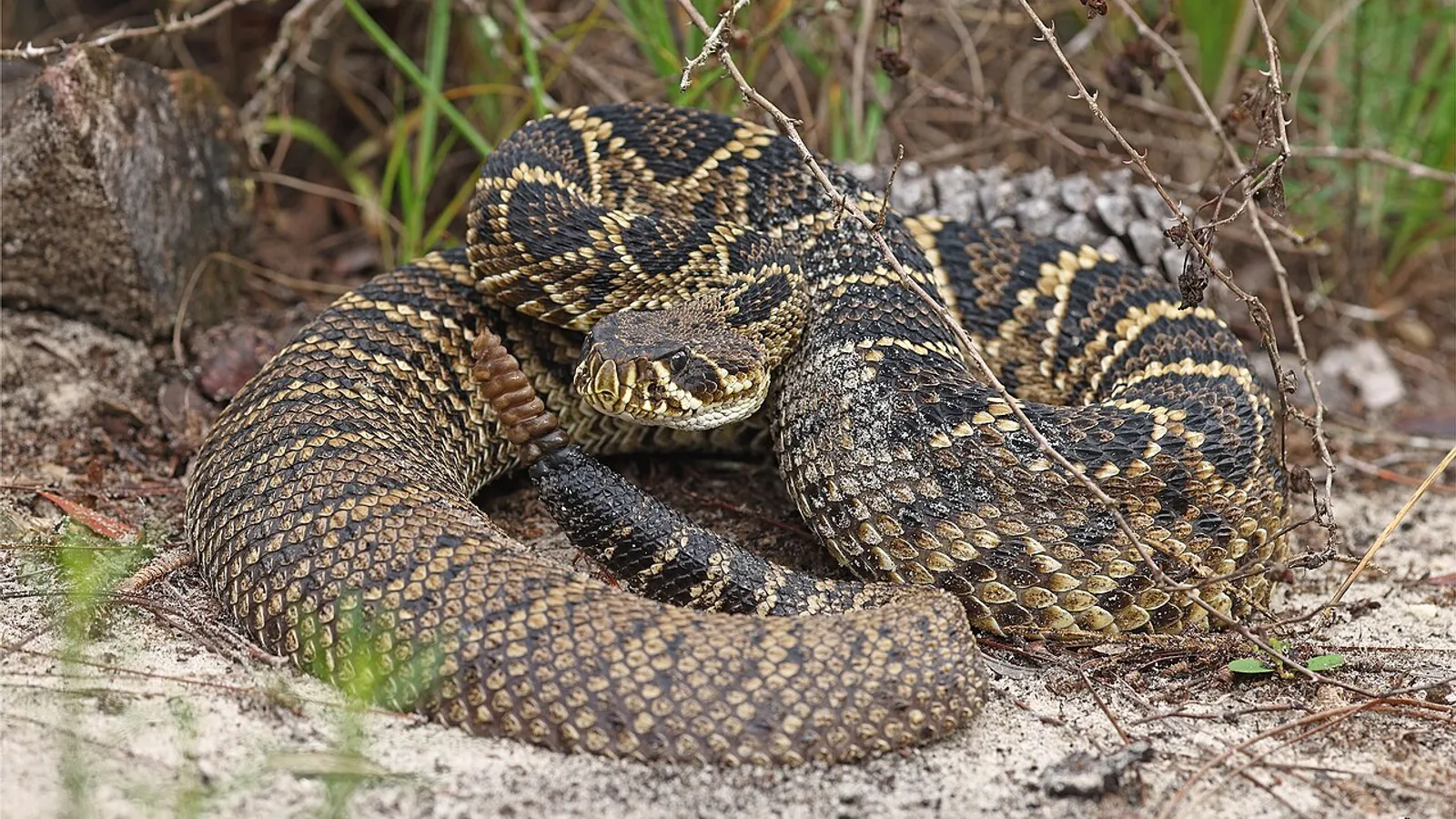
— Where the name comes from
Crotalus comes from the Greek krótalon, the rattle or castanet shaken in ritual dances; adamanteus is “of diamond”, both for hardness and for the diamond pattern of the back, edged in yellow. It is the largest venomous snake in the Americas.
— Facts
- Group
- Reptiles · Reptilia
- Order
- Squamates
- Habitat
- Sandy pinewoods, saw palmetto, coastal scrub
- Range
- The south-eastern United States, from the Carolinas to Louisiana
- Size
- 120–180 cm, up to 240 cm; 2–5 kg
- Diet
- Rabbits, squirrels, rats, birds
- Lifespan
- 20 years
— Characteristics
- 01
It shelters in gopher tortoise burrows, on which it depends.
- 02
It has heat pits between eye and nostril that see warmth.
- 03
The rattle is made of interlocking horny rings, one added at each moult.
— What sets it apart
Counting the rings of the rattle to tell a snake’s age is a mistake repeated for centuries: a young rattlesnake moults two or three times a year, and the end rings break off constantly, so a ten-year-old animal may have eight of them or three. The rattle does not tell you its age; it tells anyone approaching, only, that they have come close enough. In the south-eastern United States the species is declining because of the round-ups in which thousands are collected and killed in public, a tradition several counties are now abandoning.
