
Cottonmouth
Agkistrodon piscivorus
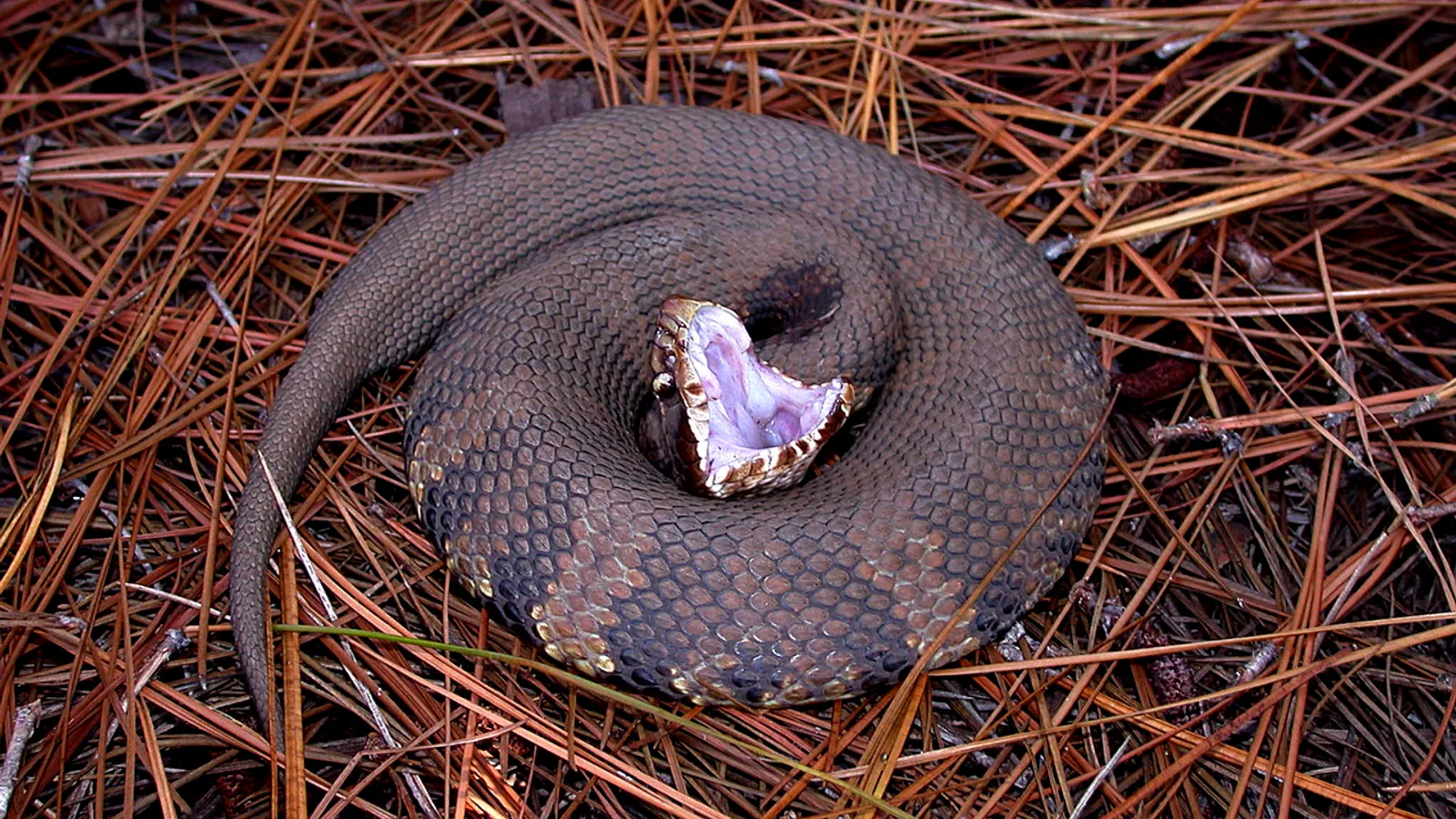
— Where the name comes from
Agkistrodon is “fish-hook tooth”, from ánkistron, the hook, and odoús: the fangs are curved like hooks. Piscivorus means “fish-eating”. The English name, cottonmouth, looks instead at the inside of the mouth, white as cotton wool, which the animal gapes when threatened.
— Facts
- Group
- Reptiles · Reptilia
- Order
- Squamates
- Habitat
- Swamps, marshes, riverbanks, canals, bayous
- Range
- The south-eastern United States
- Size
- 80–120 cm, up to 180 cm; 500 g–2 kg
- Diet
- Fish, frogs, turtles, snakes, carrion
- Lifespan
- 20 years
— Characteristics
- 01
It swims at the surface with its whole body afloat, not just the head.
- 02
It gapes its white mouth as a warning instead of fleeing.
- 03
It eats carrion, which is unusual among snakes.
— What sets it apart
In the American South it is said to chase boats and attack swimmers. A study in 2002 tested forty-five wild specimens by having a researcher approach in rubber boots with a false hand: more than half tried to escape, nearly all the rest gaped without moving, and only one in twenty attempted to bite when actually touched. None chased anybody. It is one of those cases in which a reputation was measured and did not hold up.
