
Russell's viper
Daboia russelii
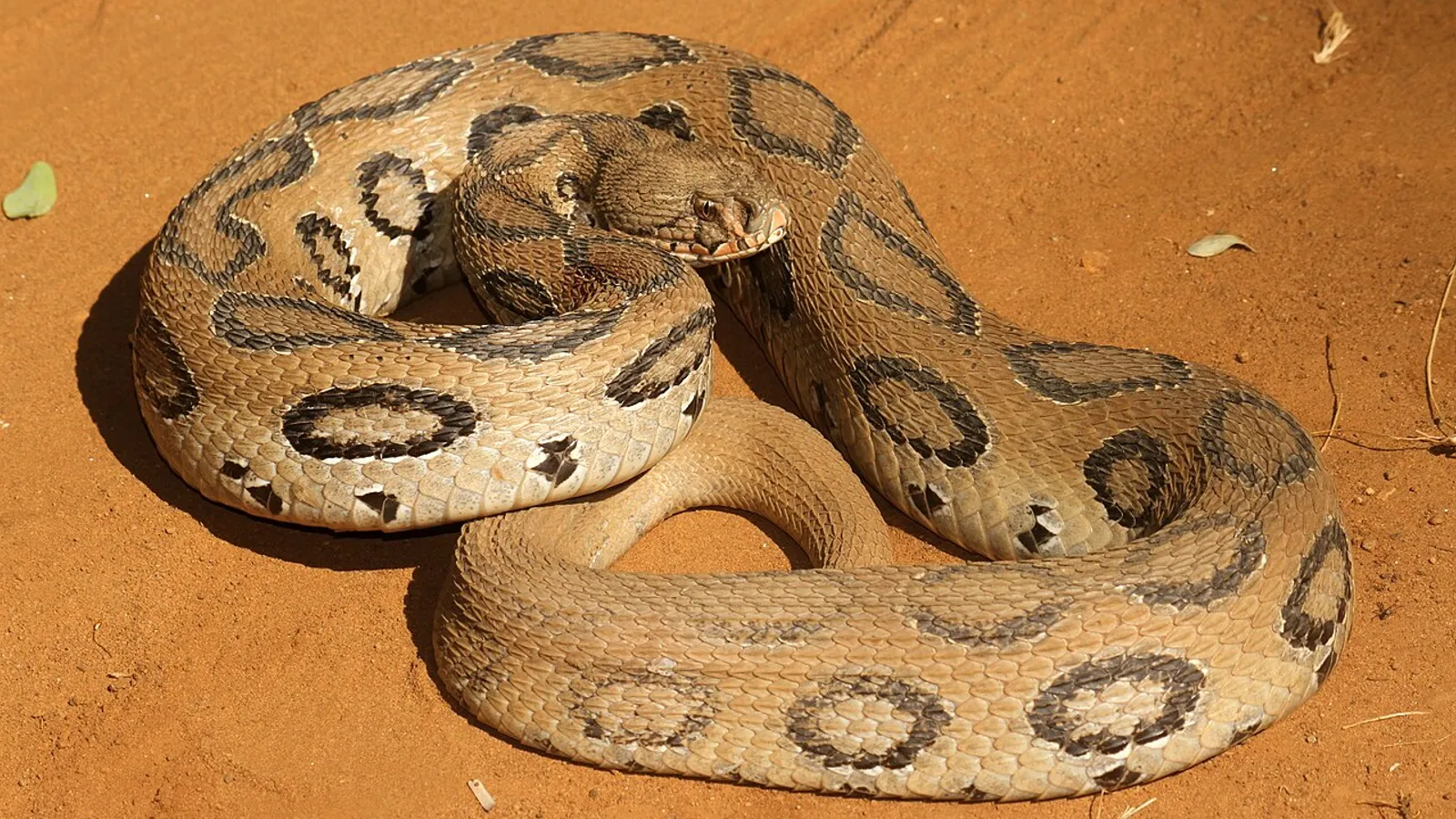
— Where the name comes from
Daboia comes from Hindi and means “the one that lies in wait”; russelii recalls Patrick Russell, the Scottish physician who at the end of the eighteenth century compiled in India the first systematic study of that country’s snakes and their bites, distinguishing the venomous from the harmless by anatomical criteria for the first time.
— Facts
- Group
- Reptiles · Reptilia
- Order
- Squamates
- Habitat
- Cultivated fields, pasture, scrub, the surroundings of villages
- Range
- India, Pakistan, Bangladesh, Sri Lanka, Nepal, Myanmar
- Size
- 100–120 cm, up to 166 cm; 2–3 kg
- Diet
- Rats, mice, lizards, paddy-field crabs
- Lifespan
- 15 years
— Characteristics
- 01
It hisses more loudly than any other Indian snake.
- 02
It follows rodents into rice fields and granaries.
- 03
The venom acts on clotting and on the kidneys.
— What sets it apart
Those who survive the bite may stay ill for the rest of their lives. The venom also strikes the pituitary, the gland that governs the hormones, and in a proportion of survivors — documented above all in Sri Lanka and Burma — it produces, months or years later, chronic exhaustion, loss of body hair, impotence and adrenal failure, a syndrome that for decades was not connected to the bite. It is one of the few animal venoms that leaves a chronic disease rather than an acute episode.
