
Asp viper
Vipera aspis
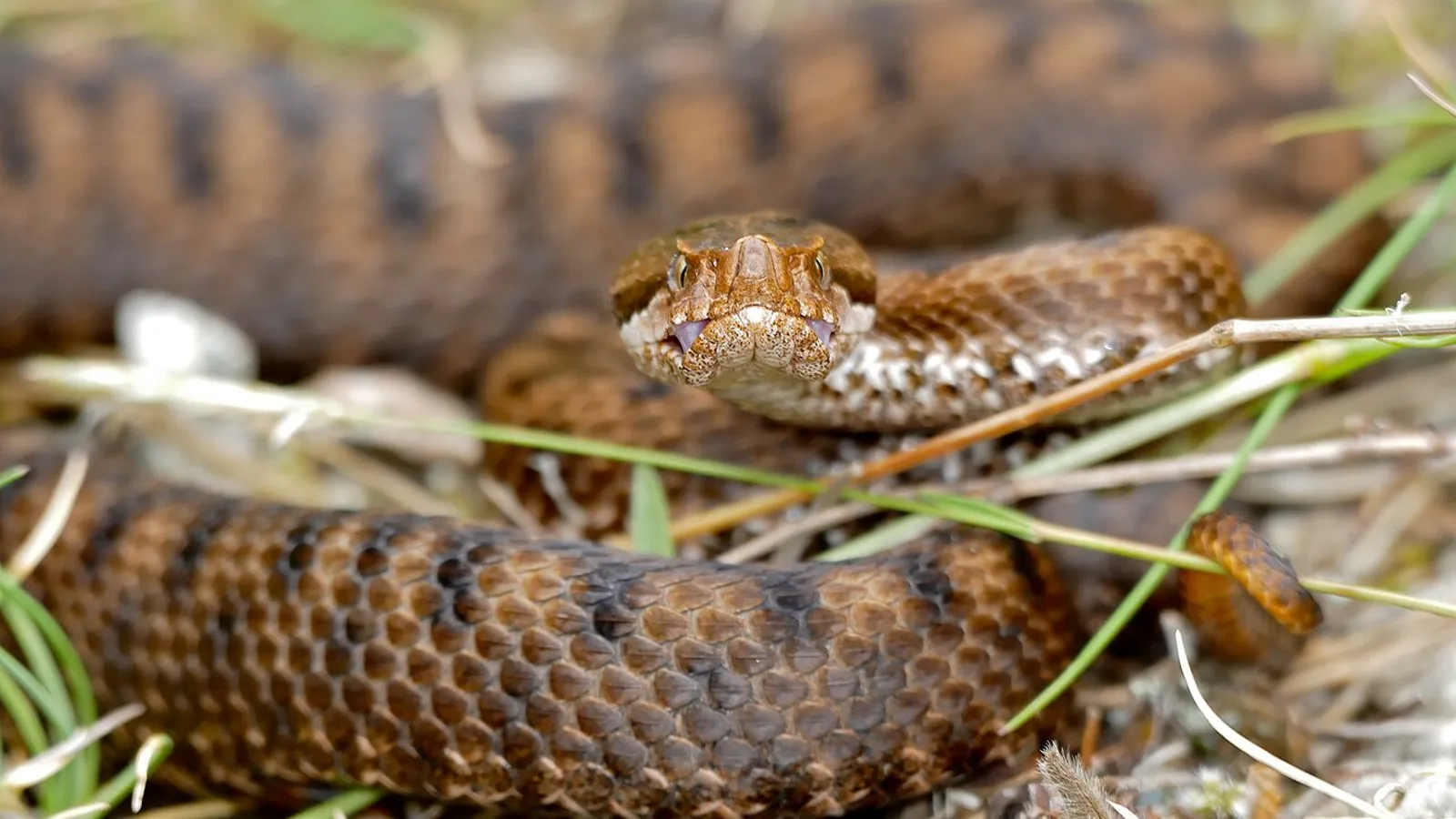
— Where the name comes from
Vipera is a contraction of vivipara, “bearing live young”: the Romans had noticed that these snakes lay no eggs, and made it the creature’s name. Aspis is the Greek for “shield”, and it is the name of the asp that killed Cleopatra — which was not this species but almost certainly an Egyptian cobra, so that what remains of the whole affair is the most famous misunderstanding in natural history.
— Facts
- Group
- Reptiles · Reptilia
- Order
- Squamates
- Habitat
- Scree, sunny pasture, dry-stone walls, woodland edges
- Range
- Italy, France, Switzerland, north-eastern Spain
- Size
- 60–75 cm, up to 90 cm; 100–300 g
- Diet
- Mice, voles, lizards, nestlings
- Lifespan
- 15 years
— Characteristics
- 01
The pupil is vertical and the snout slightly turned up.
- 02
It bears five to fifteen young, venomous from birth.
- 03
It chases nobody: it bites only if trodden on or seized.
— What sets it apart
It is the commonest venomous snake in Italy and the one about which most falsehoods are told. It does not leap at people, does not give chase, does not drop out of trees and does not come into houses for milk; in a year Italy records a few hundred bites and deaths are very rare, one every several years. Meanwhile the species is declining nearly everywhere as pastures close in and dry-stone walls vanish, and it is protected across much of its range: the danger, today, runs the other way.
