
Aesculapian snake
Zamenis longissimus
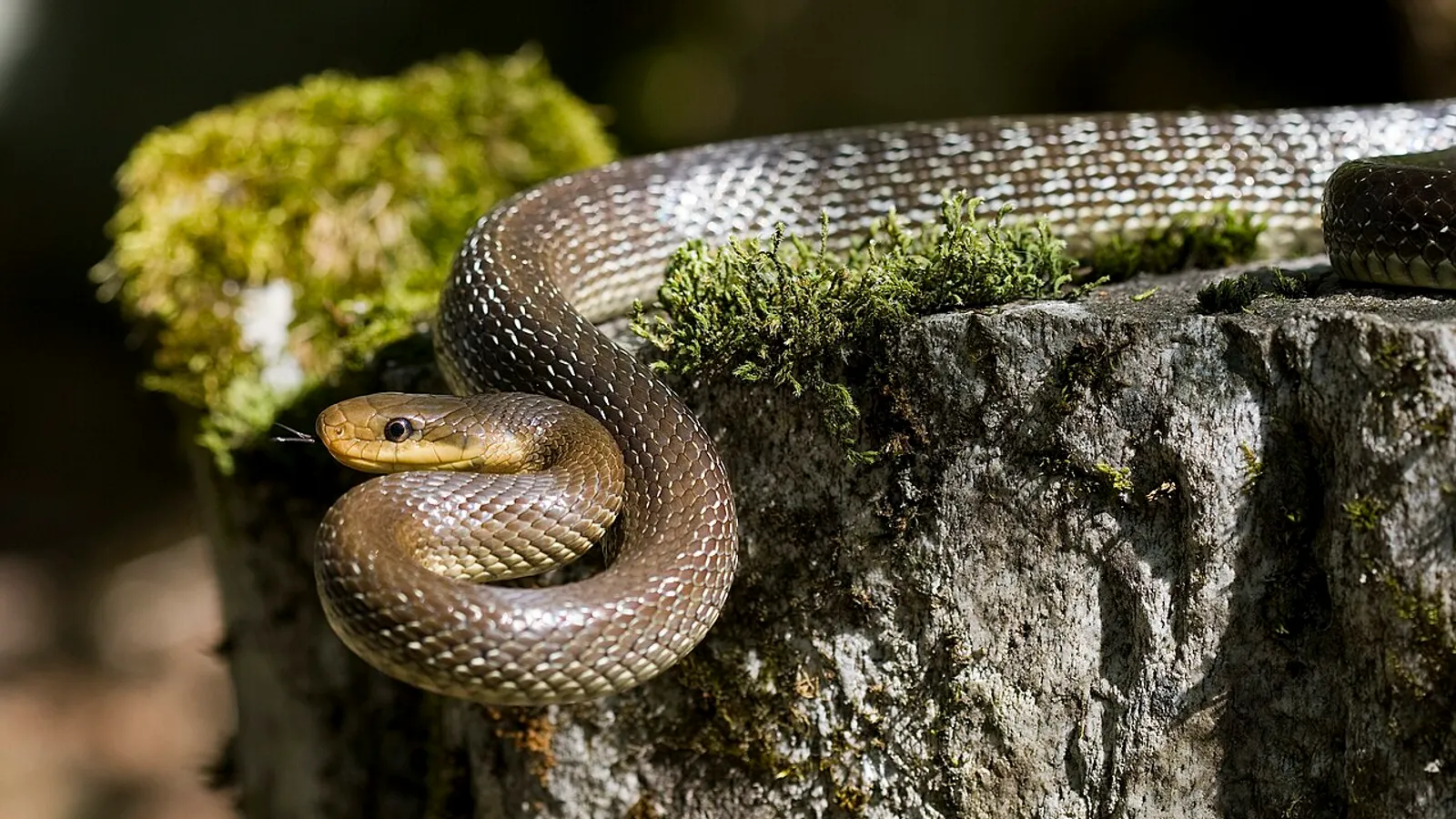
— Where the name comes from
Zamenḗs in Greek means “very angry”, which suits a snake as mild as this one not at all; longissimus, on the other hand, is exact — it is among the longest in Europe. The common name comes from Aesculapius, the god of medicine, and this is the snake coiled around the staff in the symbol of medicine the world over.
— Facts
- Group
- Reptiles · Reptilia
- Order
- Squamates
- Habitat
- Open woodland, hedges, ruins, walls, wooded countryside
- Range
- Southern and central Europe, from Spain to Iran
- Size
- 140–160 cm, up to 200 cm; 400–900 g
- Diet
- Mice, voles, birds, eggs
- Lifespan
- 25 years
— Characteristics
- 01
It climbs trees and vertical walls by levering on its belly scales.
- 02
It is not venomous: it kills by constriction.
- 03
The young have a yellow collar and are mistaken for grass snakes.
— What sets it apart
A few isolated populations north of the Alps — in Germany, Czechia, Poland — live hundreds of kilometres from the rest of the species, always around hot springs. The favoured explanation is that they descend from snakes brought by the Romans: the sanctuaries of Aesculapius kept dozens of them so that they might touch the sick as they slept in the temple, and the temples were built where the water was warm. They would be the last living remnants of a religion, outlasting the ruins.
