
Greater mouse-eared bat
Myotis myotis
— Where the name comes from
Myotis is “mouse ear”, from the Greek mŷs and oûs, ōtós, and the binomial doubles it. Vespertilio is the Latin name of the bat, from vesper, “evening”: the same root as vespers and as the evening star. Curiously the Italian pipistrello comes from that very vespertilio, through a chain of popular mangling — vipistrello, pipistrello — that has erased the evening from it.
— Facts
- Group
- Mammals · Mammalia
- Order
- Bats
- Habitat
- Hunts in mature woodland with open floor; colonies in attics and caves
- Range
- Central and southern Europe, Turkey, the Levant
- Size
- 6.7–8.4 cm of body, 20–40 g, wingspan up to 45 cm
- Diet
- Insectivore — mostly ground beetles picked straight off the ground
- Lifespan
- 15 years on average, with records past 37
— Characteristics
- 01
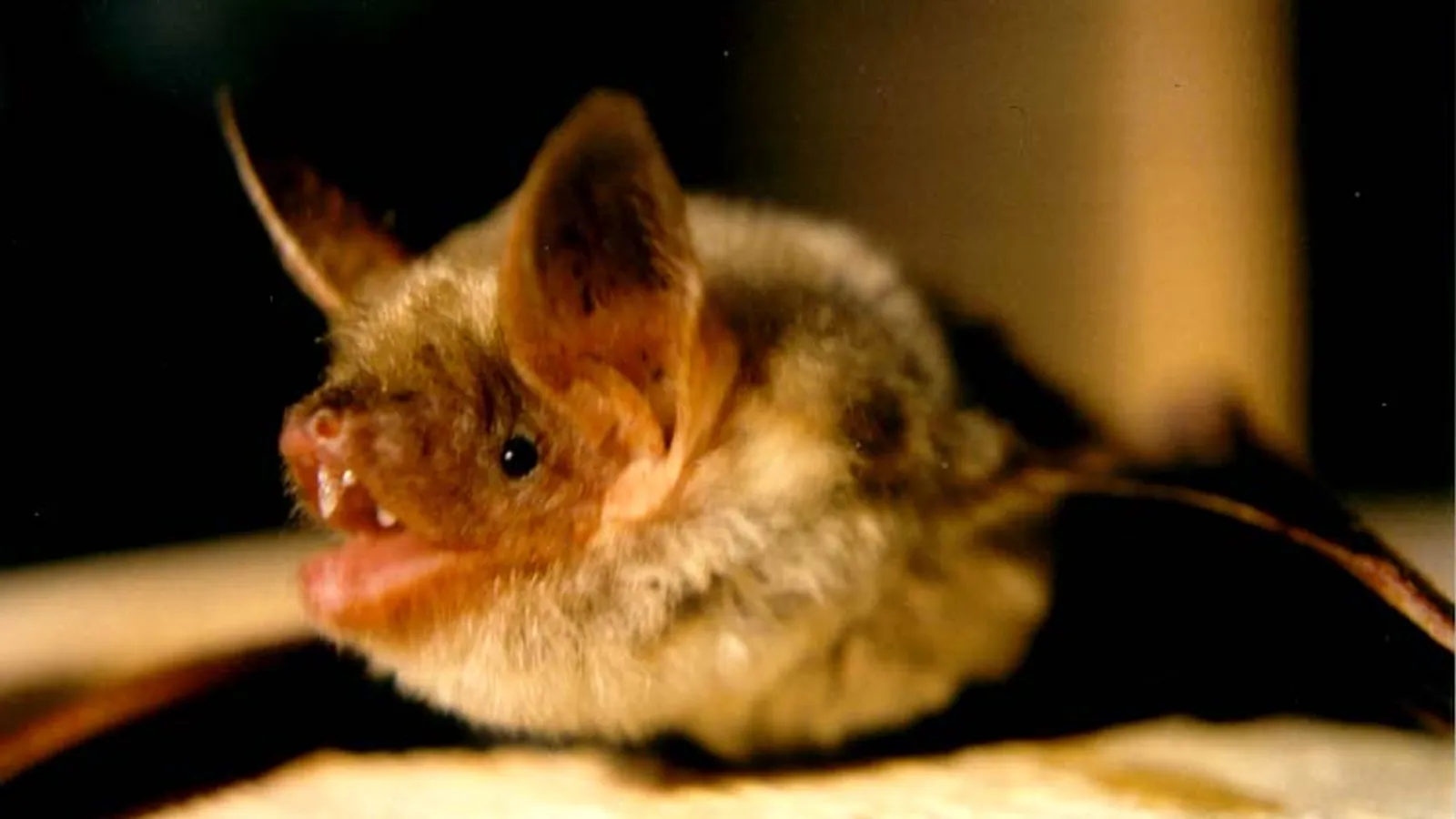
It is among the largest bats in Europe.
- 02
It hunts on the ground: it finds prey by the sound of their footsteps, not by echo.
- 03
Breeding colonies in attics can exceed a thousand animals.
— What sets it apart
It often does not use echolocation to find prey: it listens. A ground beetle walking on the leaf litter makes a rustle, and this bat flies low and slow with its ears cocked, locates the sound, lands and catches it on foot. Echolocation, in an understorey full of leaves and twigs, would return an unusable chaos of echoes: the solution was to switch off the sonar and switch on passive hearing. It is why this species needs woodland with a clear floor, and vanishes where the undergrowth thickens.
