
Kitti's hog-nosed bat
Craseonycteris thonglongyai
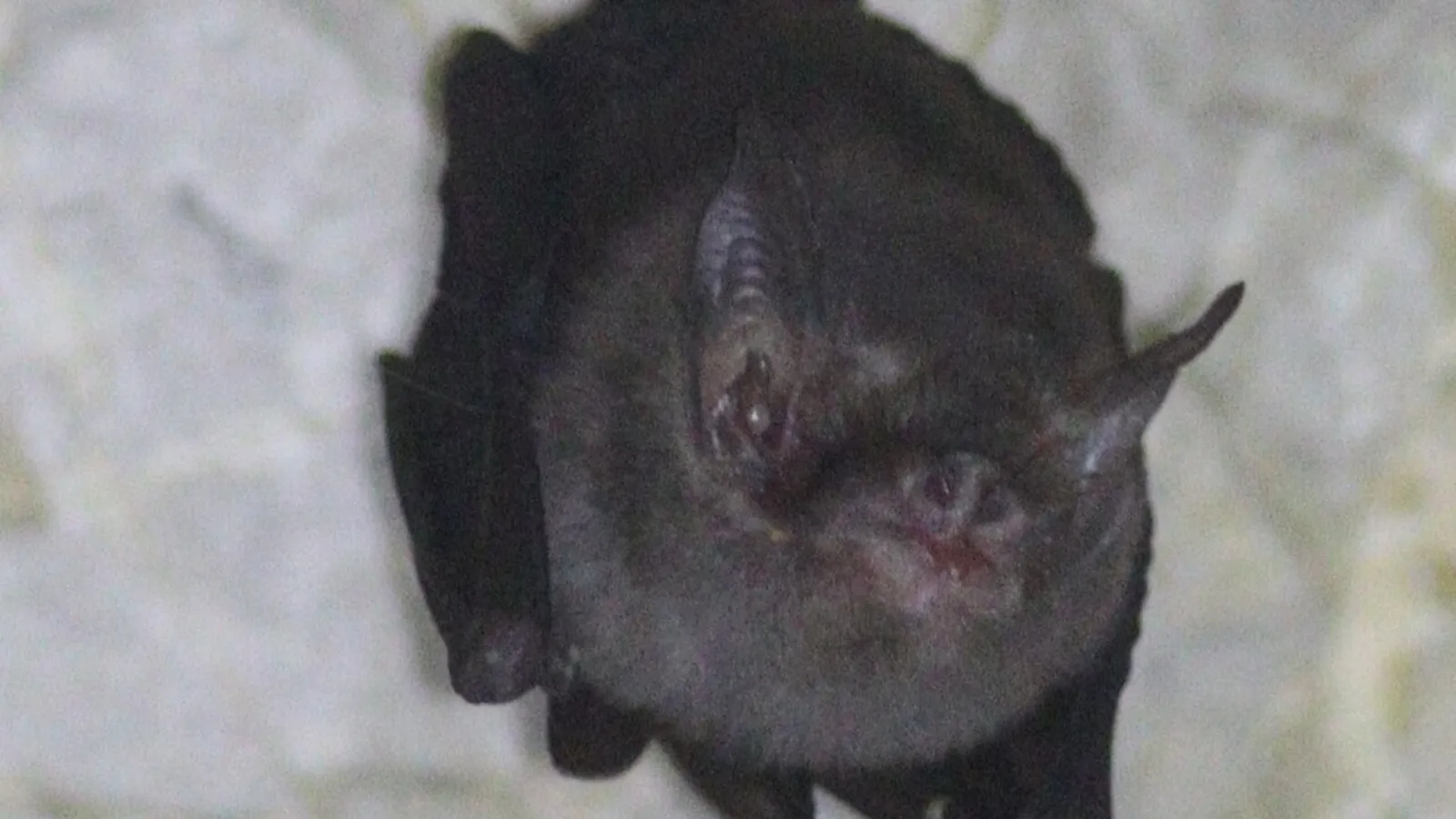
— Where the name comes from
The second half of the genus is the Greek nykterís, “bat”. The epithet recalls Kitti Thonglongya, the Thai zoologist who discovered this species in 1973 and died the following year, before the description was published: his colleagues completed it and dedicated it to him. In English it is called the bumblebee bat, and that is the only name that conveys how small it is.
— Facts
- Group
- Mammals · Mammalia
- Order
- Bats
- Habitat
- Limestone caves near watercourses, in deciduous forest
- Range
- Western Thailand and southern Myanmar, in a few dozen caves
- Size
- 2.9–3.3 cm, 1.5–2 g
- Diet
- Insectivore — minute flies and wasps taken on the wing
- Lifespan
- Unknown in the wild
— Characteristics
- 01
It weighs as much as two paperclips: it vies with the Etruscan shrew for the title of smallest mammal.
- 02
It is the only living member of its family, the Craseonycteridae.
- 03
It hunts in windows of barely half an hour at dawn and dusk.
— What sets it apart
It is the sole living representative of an entire family, which means that if it disappeared we would lose not a species but a whole branch of the mammal tree, with no relatives to keep its genetic memory. It lives in a handful of caves along a single river basin, comes out to hunt for windows of barely half an hour, and weighs two grams. The zoologist who found it did not live to see it published: the species carries his name because his colleagues wanted it to stay attached to this discovery.
