
Onager
Equus hemionus
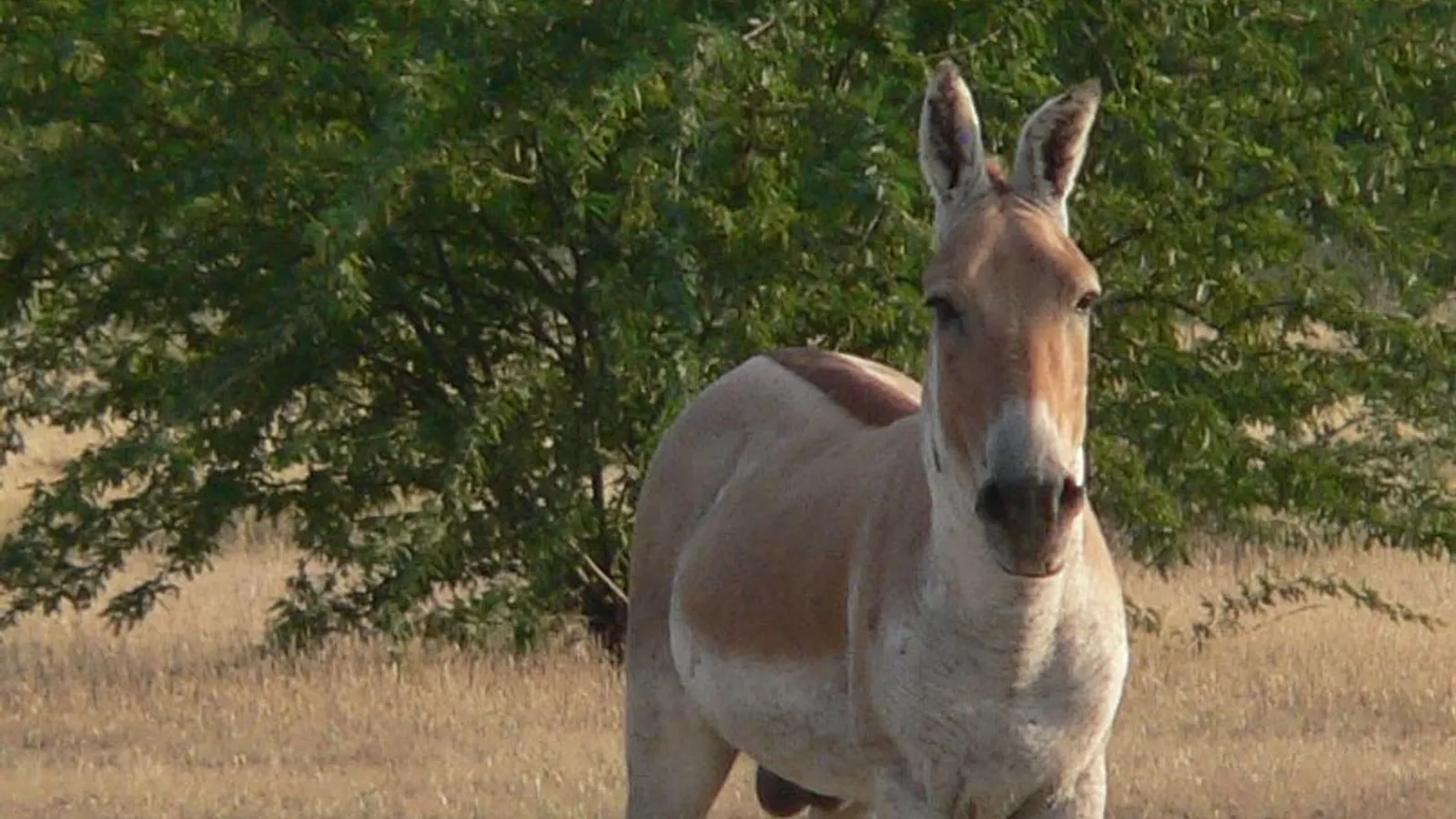
— Where the name comes from
Hemionus is the Greek hēmíonos, “half ass”, from hḗmi- and ónos: neither horse nor donkey, something in between. Onager comes from ónagros, a contraction of ónos ágrios, “wild ass”. The word had a second, military life: the Romans called an onager a swing-arm siege engine, because the recoil of the shot resembled the animal’s kick.
— Facts
- Group
- Mammals · Mammalia
- Order
- Odd-toed ungulates
- Habitat
- Arid steppe, semi-desert, gravel desert
- Range
- Central and south-western Asia, in fragmented populations
- Size
- 200–250 cm of body, 200–260 kg
- Diet
- Herbivore — tough grasses, shrubs, salt-tolerant plants
- Lifespan
- 14 years in the wild
— Characteristics
- 01
It is the fastest of the wild equids: it reaches 70 km/h.
- 02
It digs holes in dry riverbeds to reach the water table.
- 03
It tolerates brackish water other ungulates cannot drink.
— What sets it apart
In the desert it digs wells, and not only for itself. With its hooves it opens holes up to a metre deep in dry riverbeds until it reaches groundwater, and those holes stay: gazelles, birds and small mammals use them, and vegetation grows around them that would take hold nowhere else. Studies in American deserts on feral equids have shown that wells dug by donkeys measurably raise local biodiversity. A herbivore behaving like water infrastructure.
