
Common wasp
Vespula vulgaris
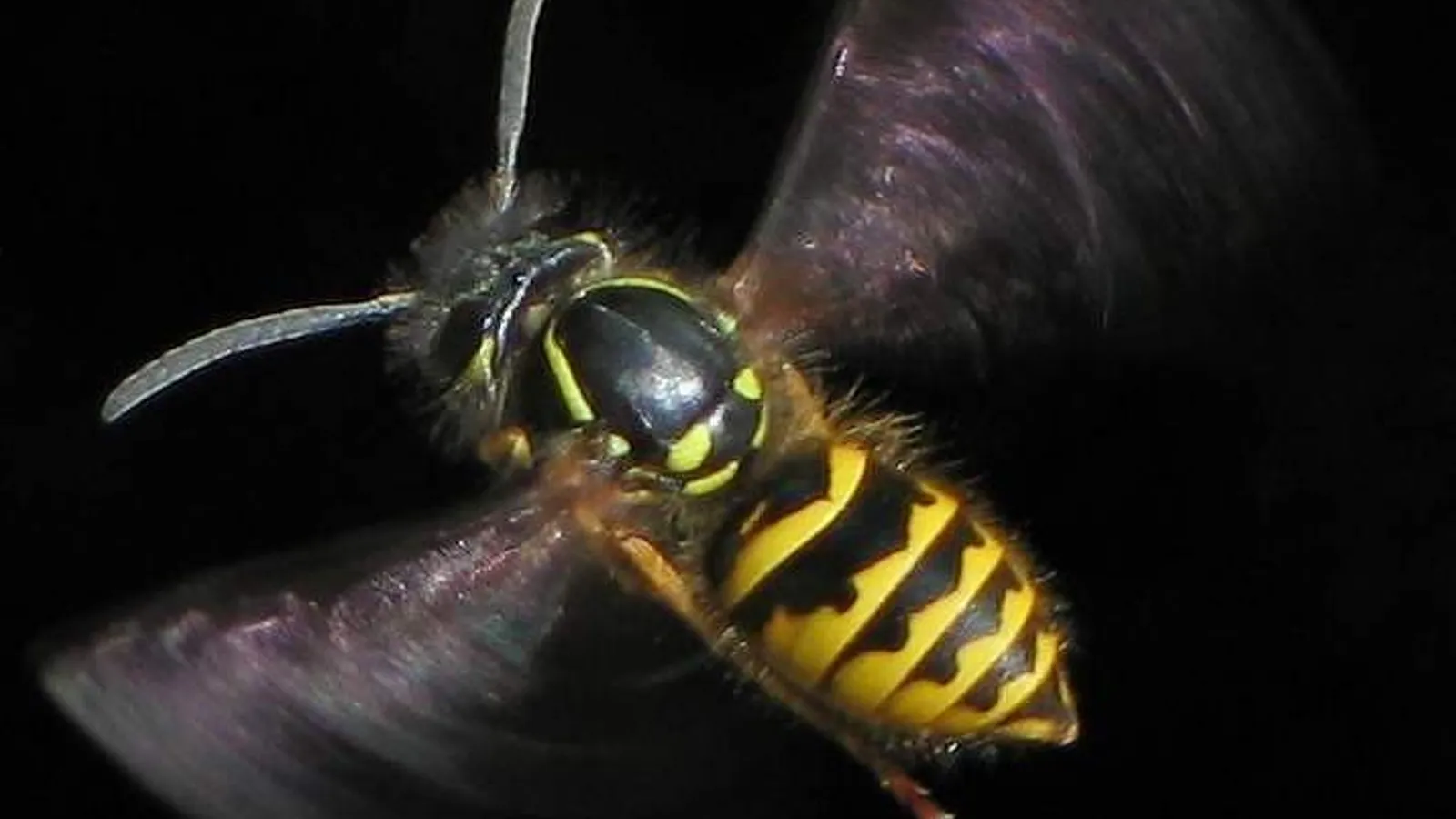
— Where the name comes from
Vespula is the diminutive of vespa, and vulgaris says it is the one met everywhere. The Latin vespa goes back to an Indo-European root meaning “to weave” — the same behind the English weave and the German Wespe — and refers not to the sting but to the nest: a construction of paper woven fibre by fibre, which is these animals’ real invention.
— Facts
- Group
- Insects · Insecta
- Order
- Bees, wasps and ants
- Habitat
- Nests underground or in cavities: abandoned burrows, bins, roof spaces
- Range
- Europe and Asia; introduced to New Zealand and Australia
- Size
- Worker 12–17 mm, queen up to 20 mm
- Diet
- Insects and meat for the larvae; sugars and fruit for the adults
- Lifespan
- The colony one season; only queens overwinter
— Characteristics
- 01
It builds the nest from chewed wood and saliva: paper, in effect.
- 02
The sting is smooth and can be used many times over.
- 03
The colony reaches ten thousand individuals and dies in autumn.
— What sets it apart
Wasps invented paper millennia before the Chinese: they rasp wood with their mandibles, work it with saliva and produce a pulp of cellulose fibres that, spread and dried, is paper in every respect — a light, stiff, insulating material. The nest must be built afresh each year, because in autumn everything dies: the workers, the males, the founding queen. Only the young mated queens survive, spending the winter curled in a crevice, and in spring they begin again alone, building the first cells and raising the first workers unaided.
