
Mediterranean black widow
Latrodectus tredecimguttatus
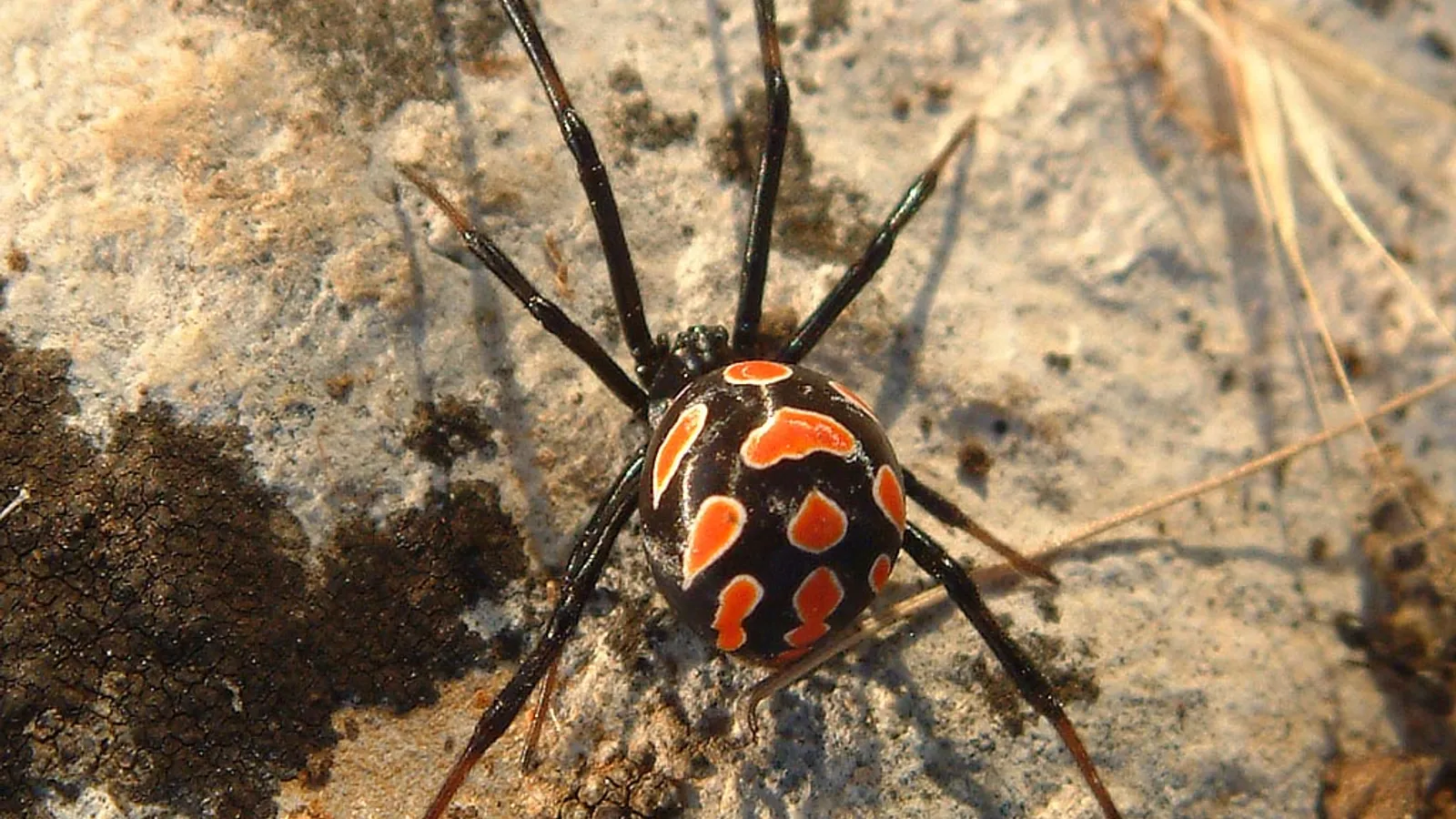
— Where the name comes from
Latrodectus is traced to the Greek láthrā (in secret) and dḗktēs (biter): “she who bites unseen”. The epithet tredecimguttatus is Latin for “thirteen-spotted”, after the red marks studding the black abdomen. The common name “widow” comes from the reputation, often exaggerated, that the female devours the male after mating.
— Facts
- Group
- Arachnids · Arachnida
- Order
- Spiders
- Habitat
- Dry ground, waste land, dry-stone walls, sunbaked fields
- Range
- The Mediterranean basin and Central Asia
- Size
- Female 1–1.5 cm of body; male far smaller
- Diet
- Insects and other arthropods caught in the web
- Lifespan
- 1–3 years for the female
— Characteristics
- 01
Only the female is dangerous to humans; the tiny male cannot bite through skin.
- 02
It spins an irregular, strong web of taut threads close to the ground.
- 03
The venom is neurotoxic but rarely lethal, and an antivenom now exists.
— What sets it apart
The reputation as a husband-eater is largely a slander: in most black widows the male mates and leaves unharmed. The venom, a neurotoxin called latrotoxin, works by emptying the nerve endings all at once: it causes “latrodectism”, with violent pain and cramps, but in these parts almost never death. In Mediterranean fields the harvesters feared it more than any snake — and gave it the name malmignatta.
