
Common octopus
Octopus vulgaris
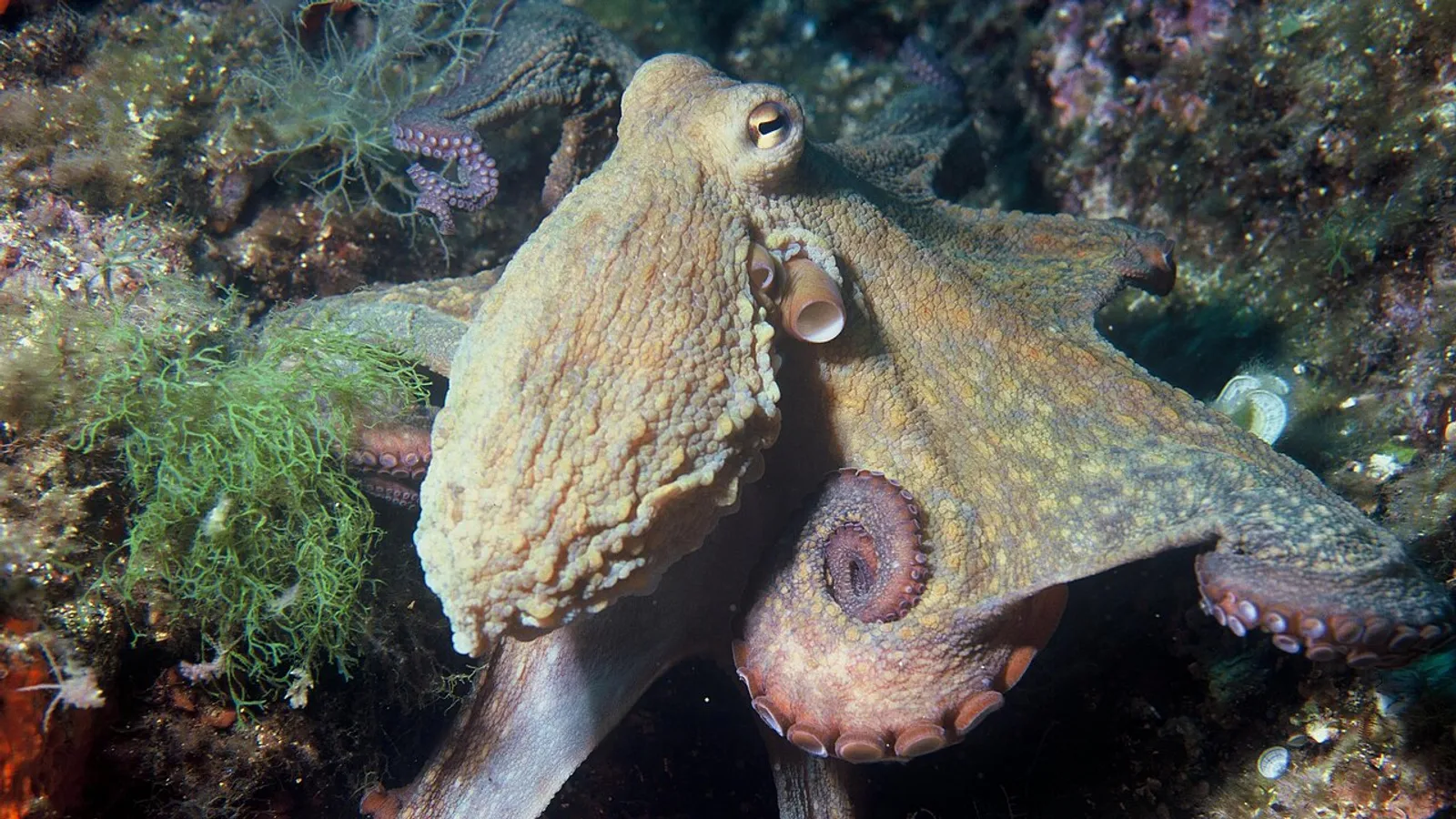
— Where the name comes from
From the Greek októpous, “eight feet”. The Italian polpo comes instead from polypus, “many feet”, the same word behind the medical “polyp” — the fleshy growth that reminded ancient physicians of a small octopus fastened to a membrane.
— Facts
- Group
- Molluscs · Mollusca
- Order
- Octopuses
- Habitat
- Rocky coastal bottoms, seagrass meadows
- Range
- The Mediterranean and the eastern Atlantic
- Size
- 60–100 cm, 3–10 kg
- Diet
- Carnivore — crabs, molluscs, fish
- Lifespan
- 1–2 years
— Characteristics
- 01
It has three hearts and blue blood, based on haemocyanin.
- 02
It changes the colour and texture of its skin in under a second.
- 03
It opens jars, uses shells as shelter, and recognises human faces.
— What sets it apart
Of its 500 million neurons, nearly two thirds sit not in the brain but in the arms. Each arm processes, decides and acts with remarkable autonomy: a severed arm goes on reacting in a coordinated way. And it is colour-blind — a single type of photoreceptor — yet it matches the colours of the seabed perfectly. The leading idea is that it sees colour with its skin, which contains the same opsins as the retina.
