Long-tailed widowbird
Euplectes progne
— Where the name comes from
Euplectes joins the Greek eû, “well”, and plektós, “woven”: they are relatives of the weavers, builders of tightly woven nests. Progne is Procne, the princess of myth turned into a swallow: a tribute to the long, slender tail, a swallow’s tail blown out of all proportion.
— Facts
- Group
- Birds · Aves
- Order
- Passerines
- Habitat
- Open, damp highland grassland
- Range
- The highlands of Kenya, Angola, Zambia and southern Africa
- Size
- Male up to 70 cm including tail, body about 20 cm; female 15 cm
- Diet
- Grass seeds, insects
- Lifespan
- A few years
— Characteristics
- 01
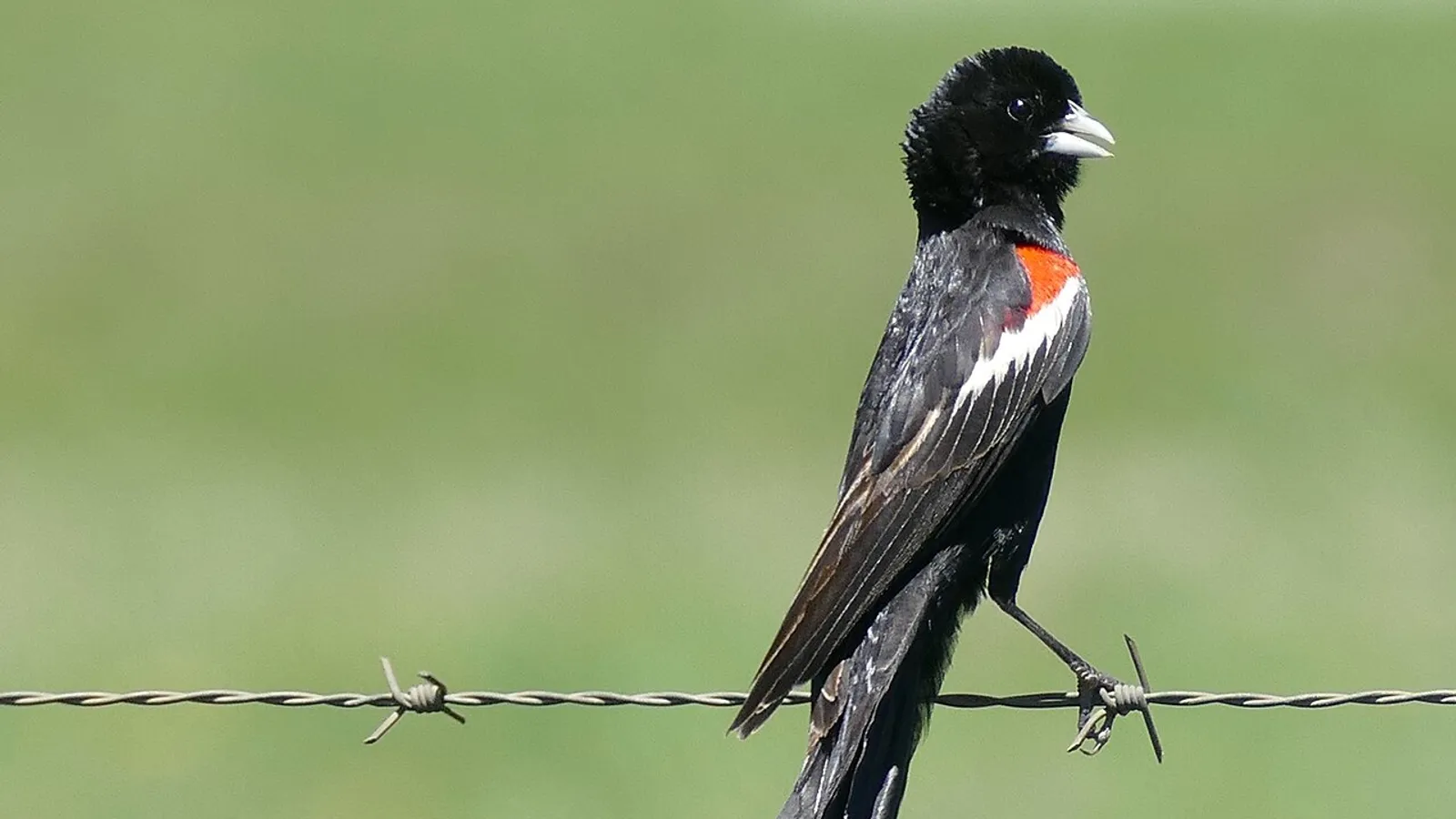
The breeding male is black with red shoulders and a tail over half a metre long.
- 02
It flies slowly over the grassland with its tail hanging and rippling.
- 03
After breeding it loses the tail and turns brown like the female.
— What sets it apart
It is the bird that proved Darwin right with a pair of scissors. Darwin argued that certain exaggerated ornaments exist because females prefer them, but for a century nobody had proved it. In 1982 the Swedish biologist Malte Andersson went to the highlands of Kenya, caught dozens of males and altered their tails: some he shortened, and on others he glued the cut-off pieces, lengthening them by several centimetres. The males with lengthened tails attracted more females to their territory than any others. It was the first experimental proof of sexual selection.