Fork-tailed drongo
Dicrurus adsimilis
— Where the name comes from
Dicrurus joins the Greek díkros, “forked”, and ourá, “tail”. Adsimilis in Latin means “similar”, because the species closely resembles other drongos. Drongo is the Malagasy name of a relative from Madagascar, later extended to the whole family.
— Facts
- Group
- Birds · Aves
- Order
- Passerines
- Habitat
- Savannah, open woodland, forest edges, gardens
- Range
- Sub-Saharan Africa
- Size
- 23–26 cm, 40–55 g
- Diet
- Insects caught in flight, food stolen from other animals
- Lifespan
- Not precisely known
— Characteristics
- 01
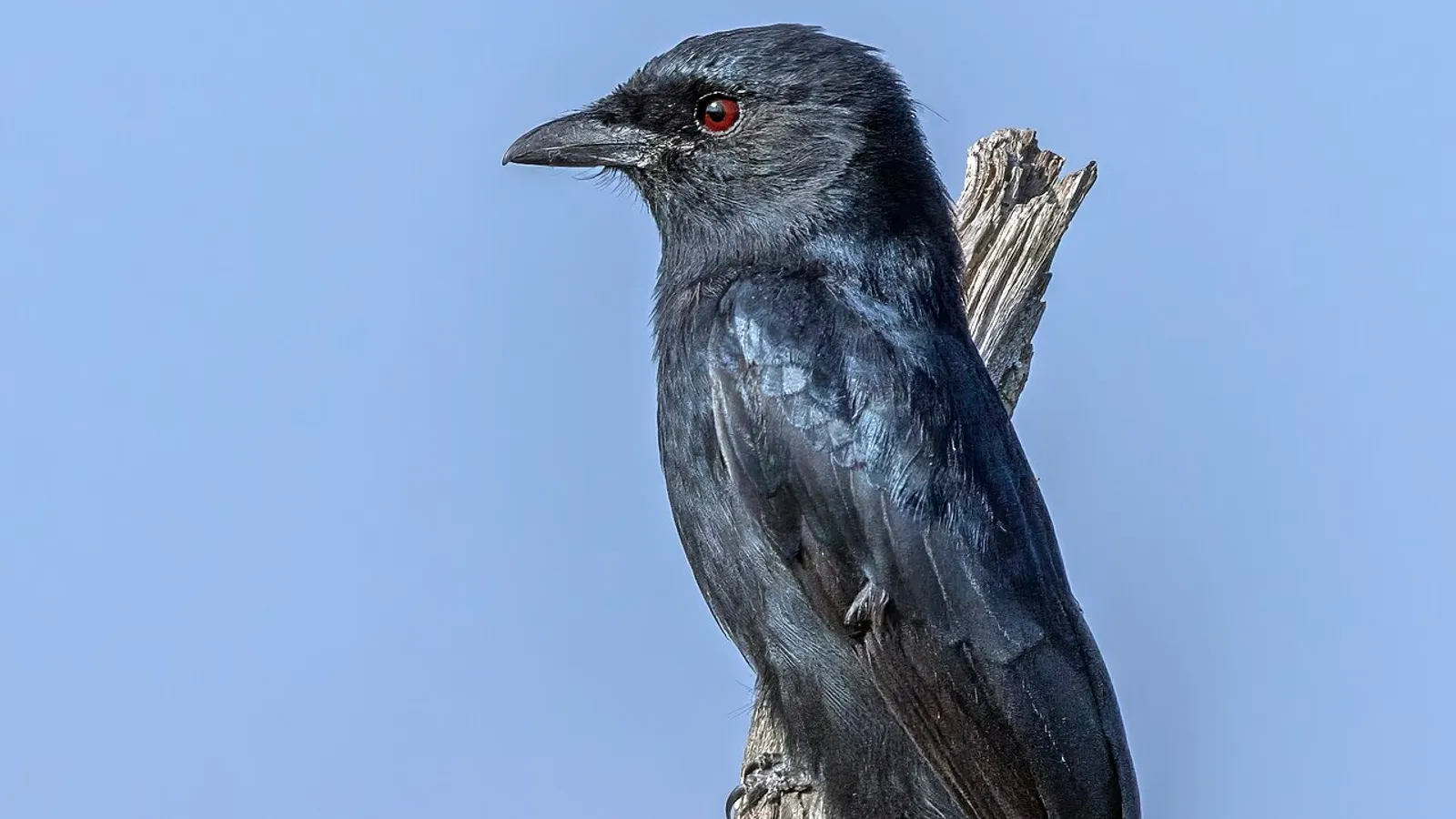
It is all glossy black with a long tail splayed like scissors.
- 02
It fearlessly attacks birds of prey far larger than itself.
- 03
It follows herds and fires to catch the insects that flee.
— What sets it apart
It is a professional con artist. In the Kalahari it follows meerkats and babblers as they forage, and when a real predator approaches it gives the alarm, doing them a service. But when a meerkat has just dug up a juicy grub, the drongo gives a false alarm, perfectly imitating the meerkats’ own alarm call: the animals bolt for cover and it swoops down to take the morsel. A 2014 study showed that if its victims stop believing one call, the drongo switches to imitating another.