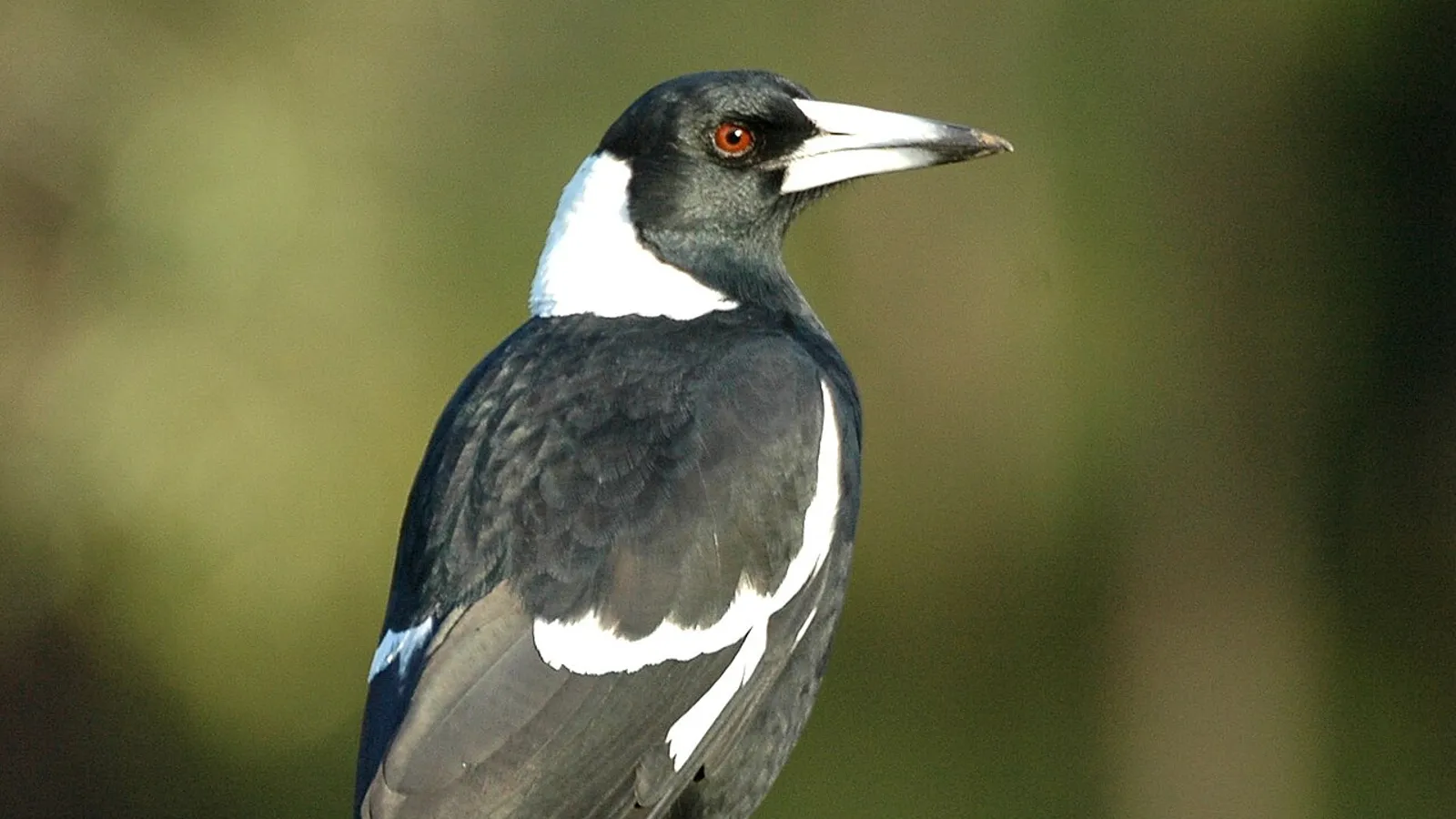
Australian magpie
Gymnorhina tibicen
— Where the name comes from
Gymnorhina joins the Greek gymnós, “bare”, and rhís, rhinós, “nose”: its nostrils are not covered by feathers. Tibicen in Latin is the “flute player”, for the fluting, melodious song with which the group greets the dawn. It is not related to the European magpie: settlers called it that only for its black and white plumage.
— Facts
- Group
- Birds · Aves
- Order
- Passerines
- Habitat
- Grassland with scattered trees, farmland, city parks and gardens
- Range
- Australia and southern New Guinea; introduced to New Zealand
- Size
- 37–43 cm, 220–350 g
- Diet
- Insects and grubs from the ground, small animals
- Lifespan
- 25–30 years
— Characteristics
- 01
It lives in family groups that defend the same territory for years.
- 02
Its choral song is considered one of the most complex of any Australian bird.
- 03
It recognises and remembers individual humans.
— What sets it apart
In spring Australians fear it. For a few weeks males defend the nest by swooping at anyone who passes, especially cyclists and pedestrians, and every year newspapers count the injuries; many cyclists fit their helmets with plastic cable ties sticking out like spines. But it is also a surprisingly cooperative animal: in 2022 researchers fitted some birds with small trackers held on by a harness, and within days the magpies had learnt to free one another, snipping through their companions’ harnesses with their beaks.