
Common nightingale
Luscinia megarhynchos
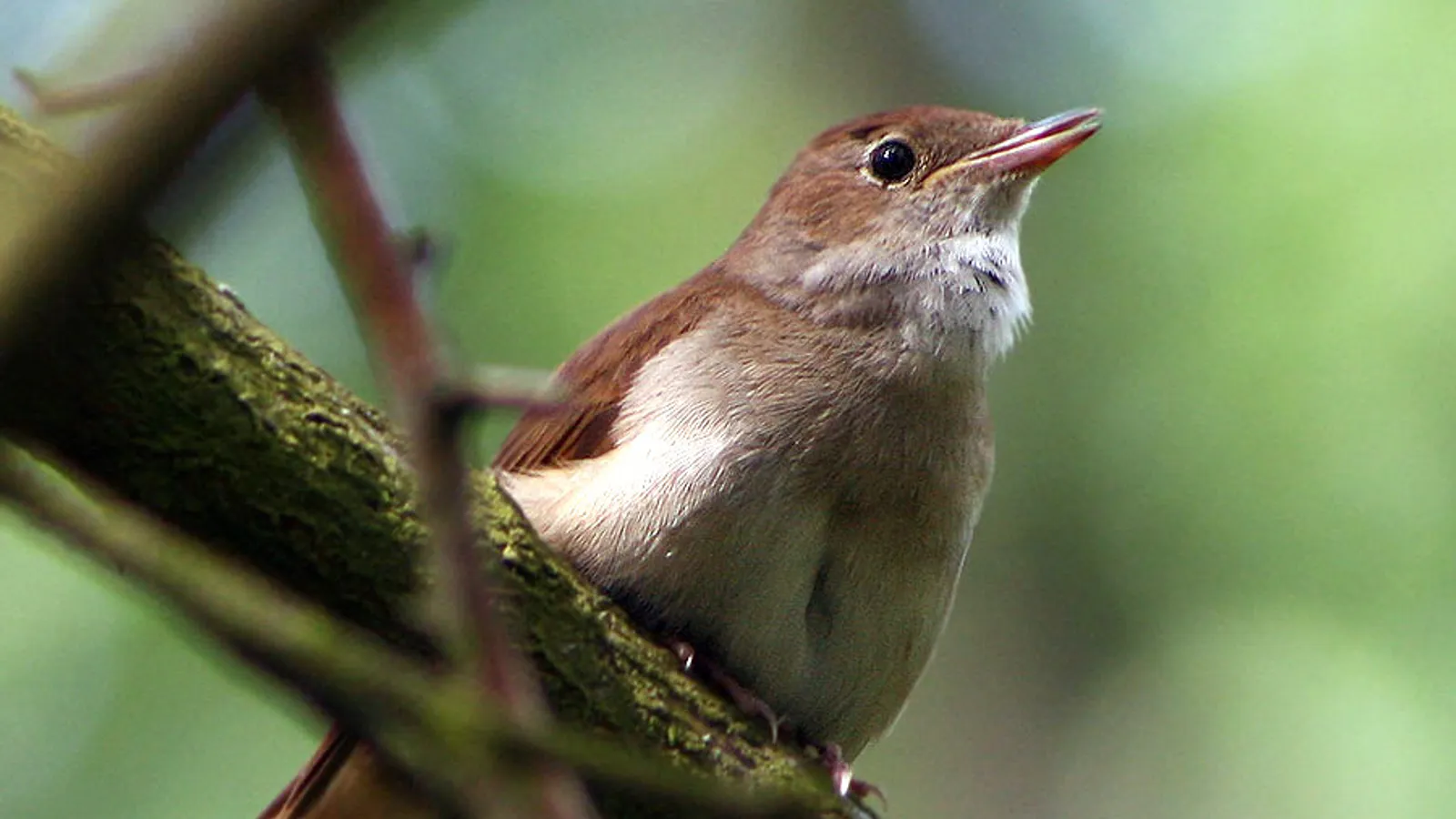
— Where the name comes from
Luscinia is the Latin name of the nightingale; megarhynchos is Greek for “large-billed”, which is the least interesting thing about this animal. The Italian name comes from the affectionate diminutive lusciniolus. In Greek the nightingale was Philomela, the princess whose tongue was cut out and whom the gods turned into a bird so that she could tell the story anyway: the finest song in the wood is born, in the myth, out of an imposed silence.
— Facts
- Group
- Birds · Aves
- Order
- Passerines
- Habitat
- Dense scrub, hedges, damp understorey, maquis
- Range
- Southern and central Europe, western Asia; winters in Africa
- Size
- 15–17 cm, wingspan 23–26 cm, 18–27 g
- Diet
- Insects, larvae, earthworms, berries in autumn
- Lifespan
- 3 years in the wild
— Characteristics
- 01
It is a brown, unremarkable bird: it is hardly ever seen.
- 02
It sings at night only while unpaired; as soon as it mates it stops.
- 03
It returns each year to the same bush after five thousand kilometres.
— What sets it apart
An adult male’s repertoire holds between a hundred and eighty and two hundred and fifty different phrases, and the females count them. The night song exists to intercept females migrating overhead in darkness: the wider the repertoire, the better the chance of bringing one down. Berlin has one of the densest urban populations in Europe, and for years thousands of citizens have recorded its nightingales on their phones for a scientific project: the oldest song in European literature has ended up in a digital archive built by people who get up at three in the morning.
