
Eurasian blackcap
Sylvia atricapilla
— Where the name comes from
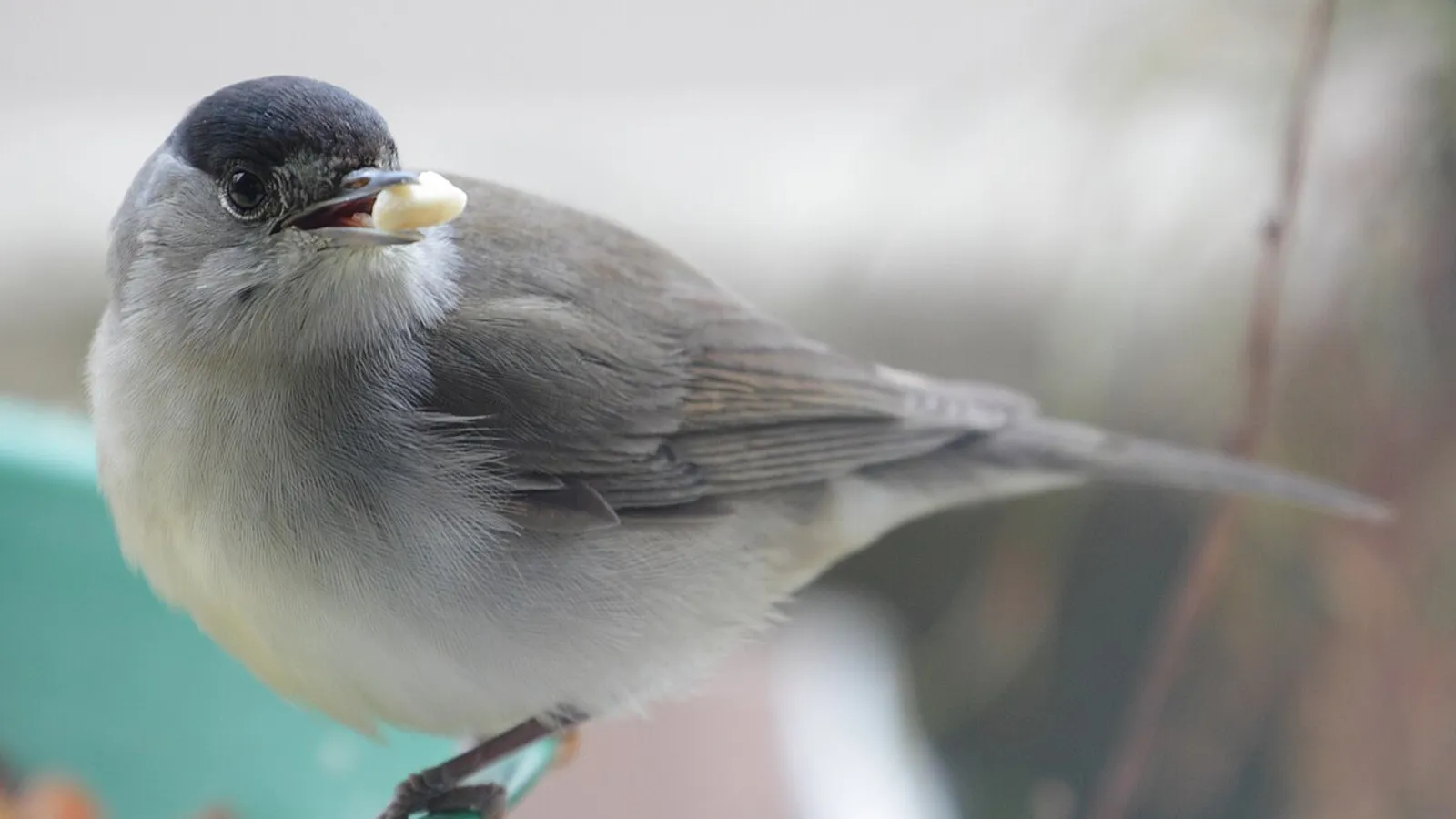
Sylvia is “she of the woods”, from silva, and atricapilla is “black-haired”, from ater and capillus. The Italian name translates the second half: the male’s black cap, which in the female is rusty brown instead. It is one of the few species whose common name across half of Europe describes a hat.
— Facts
- Group
- Birds · Aves
- Order
- Passerines
- Habitat
- Woodland with understorey, gardens, parks, hedges
- Range
- Europe, North Africa, western Asia
- Size
- 13–15 cm, wingspan 20–23 cm, 14–20 g
- Diet
- Insects in spring, berries and fruit in autumn
- Lifespan
- 5 years in the wild
— Characteristics
- 01
The song begins with a mutter and ends in a clear fluting.
- 02
In autumn it switches almost entirely to fruit and fattens quickly.
- 03
The male wears the black cap, the female a reddish one.
— What sets it apart
In the 1960s some German blackcaps, instead of going down to Spain, began wintering in English gardens, where people had taken to putting food out. Sixty years on, the ones that go to England are a distinct group: they leave later, they have rounder wings and narrower bills, and because they get back to Germany before the others they end up breeding among themselves. It is a separation in progress, begun at a bird table, and one of the very few whose beginning anyone has been able to watch.
