
Egyptian mastigure
Uromastyx aegyptia
— Where the name comes from
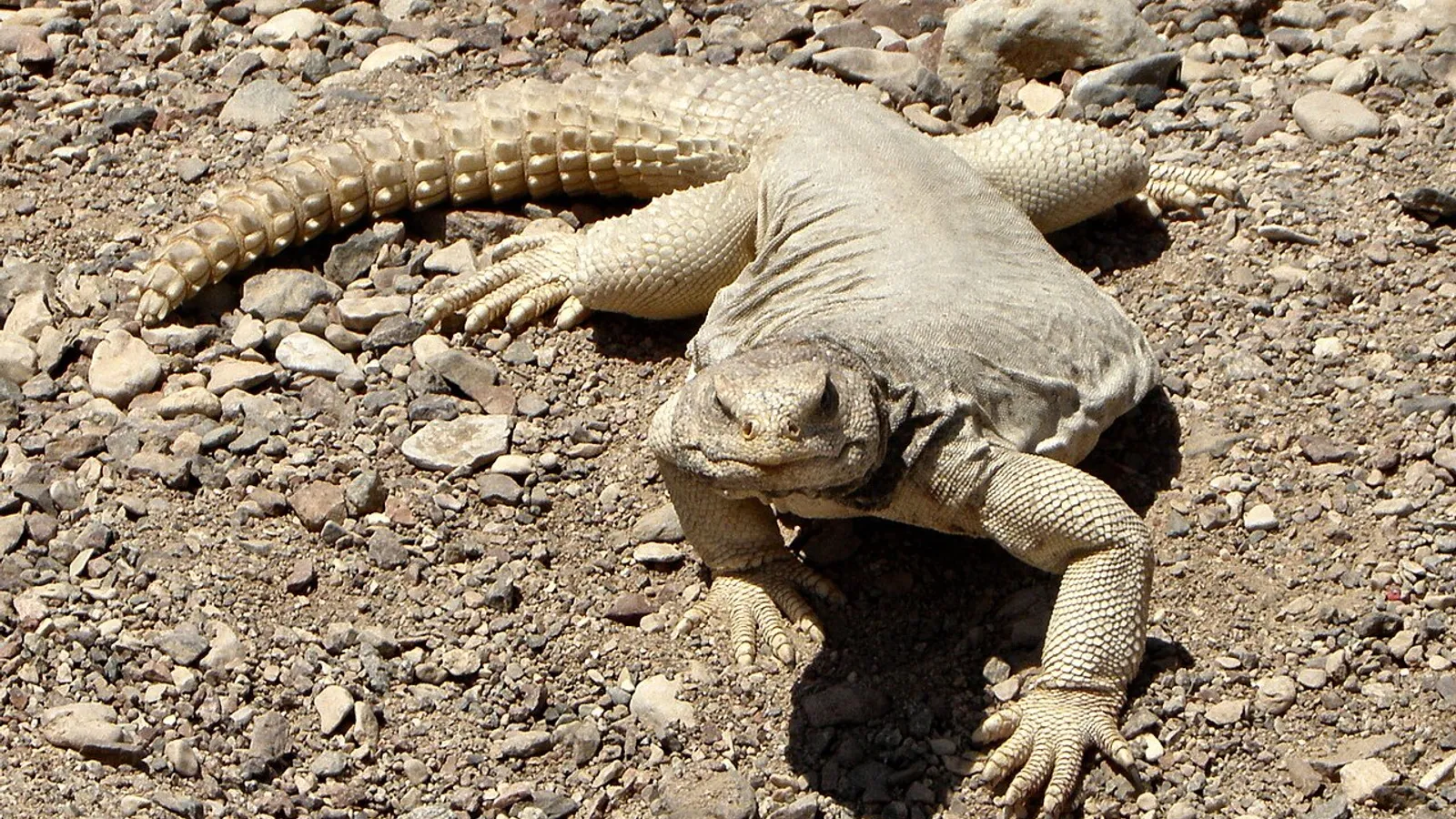
Uromastyx is “whip tail”, from ourá and mástix, and it is an exact description of this animal’s weapon: a short, broad tail covered in rings of spiny scales, used like a mace. Aegyptia names Egypt. In Arabic it is the dhab, a word that has appeared in chronicles and in Bedouin cooking for centuries.
— Facts
- Group
- Reptiles · Reptilia
- Order
- Squamates
- Habitat
- Stony and clay deserts, hammada, wadis
- Range
- North Africa and the Arabian Peninsula, from Libya to Iraq
- Size
- 50–75 cm including the tail, 1–2 kg
- Diet
- Grasses, leaves, desert flowers
- Lifespan
- over 30 years
— Characteristics
- 01
It is almost entirely herbivorous, which is rare among lizards.
- 02
It does not drink: it takes water from plants and voids salt through the nostrils.
- 03
It changes colour with heat: dark grey at dawn, pale yellow at noon.
— What sets it apart
It digs a tunnel up to three metres long and uses it as an armoured door: threatened, it backs in and blocks the passage with its spiny tail, which fills the shaft and offers no grip. Anyone trying to pull it out grasps only spines. It is the principle of the barred gate, and it works against everything but one thing — people, who simply dig in from the side. Hunting for the meat, prized across the Arabian Peninsula, is why the species is declining.
