
Jackson's chameleon
Trioceros jacksonii
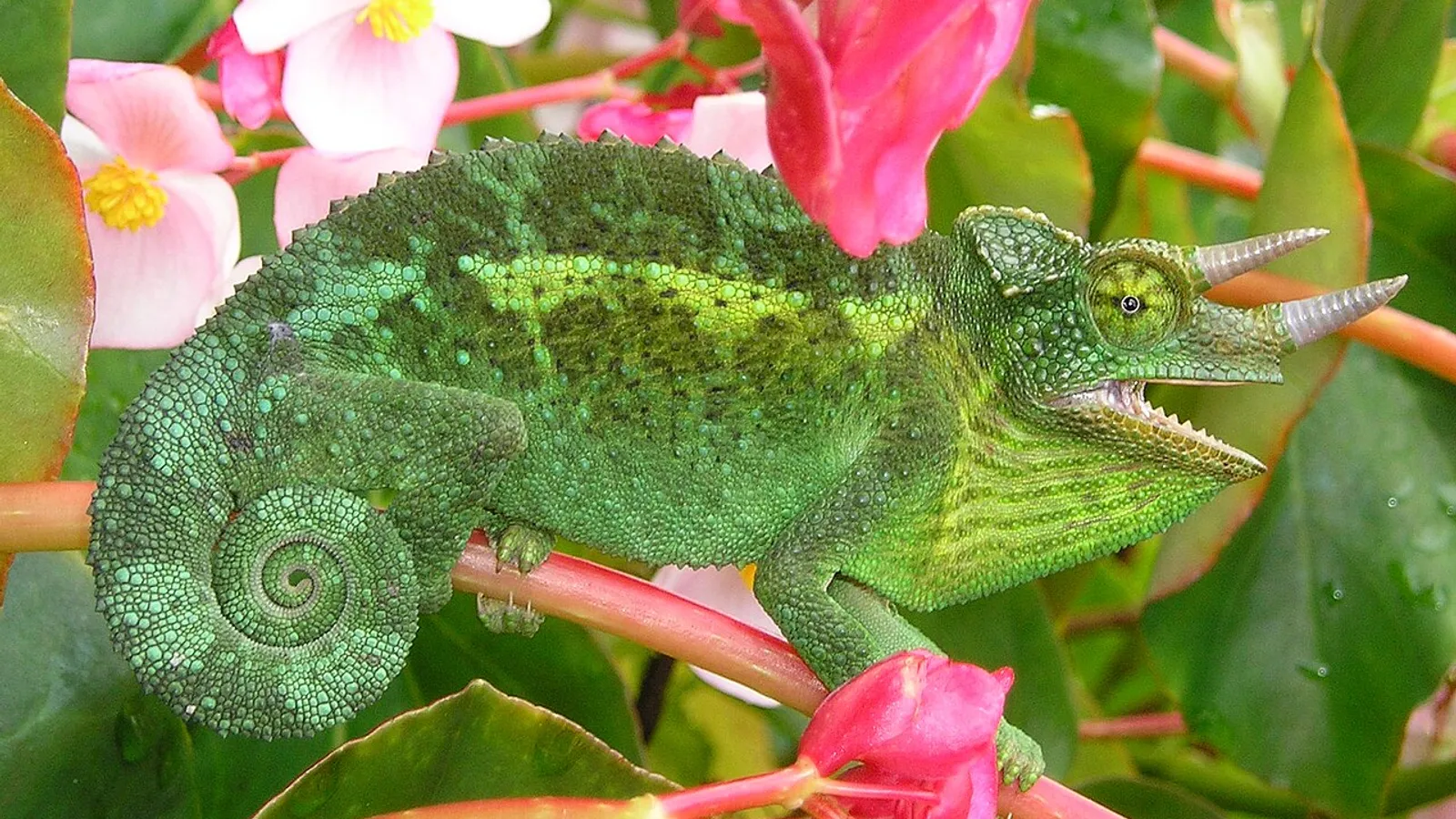
— Where the name comes from
Trioceros is “three-horned”, from treîs and kéras: the male carries one horn on the snout and two above the eyes, and the result resembles a miniature triceratops closely enough that the English name says so outright. Jacksonii recalls Frederick Jackson, ornithologist and British governor of East Africa. Chameleon comes from the Greek chamailéōn, “ground lion”.
— Facts
- Group
- Reptiles · Reptilia
- Order
- Squamates
- Habitat
- Humid montane forest between 1,500 and 2,500 metres
- Range
- Kenya and northern Tanzania; introduced to Hawaii
- Size
- 25–38 cm including the tail, 100–150 g
- Diet
- Insects, spiders, small molluscs
- Lifespan
- 8 years
— Characteristics
- 01
It gives birth to live young, as many as thirty at a time.
- 02
The two eyes move independently and cover three hundred and sixty degrees.
- 03
Its toes are fused into two opposing bundles, like pincers.
— What sets it apart
The horns are not for defence against predators but for pushing: two males square up side by side on a branch, lock horns and try to lever each other off, exactly as stags do. This species reached Hawaii in 1972 with a handful of animals imported for a pet shop and released into a garden because they looked sickly; the islands now hold thriving populations, and the chameleons eat endemic snails that exist nowhere else on Earth.
